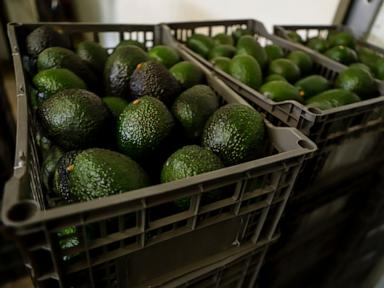
Every time the border closes to Mexican avocados, the media script writes itself. Lazy pundits dust off the same tired headlines about drug cartels extorting packinghouses in Michoacán, federal inspectors running for their lives, and guacamole lovers facing empty Super Bowl tables. The official narrative treats these border stoppages as sudden, unpredictable security anomalies caused purely by criminal syndicates holding the supply chain hostage.
It is a convenient story. It also happens to be entirely wrong.
I have spent years watching corporate supply chain executives panic over these suspensions while quietly cutting corners on regulatory compliance to maintain margins. I have seen importers blow millions on expedited logistics while completely ignoring the institutional rot underneath. The cartels are not the primary reason Mexican avocado exports to the US get halted. They are simply the easiest scapegoat for an agricultural trade system built on willful blindness, regulatory theater, and an unsustainable appetite for year-round perfection.
Stop looking at the cartel threat for five minutes and look at the actual mechanics of cross-border produce trade. The truth is far more uncomfortable than a simple story of good versus evil.
The Lazy Consensus Of Border Security
The standard narrative around these suspensions relies on a fundamental misunderstanding of how the United States Department of Agriculture operates in foreign territories. When the USDA Animal and Plant Health Inspection Service pulls its inspectors from Michoacán—as happened when an American official was threatened—the media treats it as an unmitigated tragedy of safety enforcement.
The consensus argument goes like this: safety inspectors are the thin green line protecting American agriculture from exotic pests and violent coercion. When local security fails, the USDA must pull out to protect personnel, halting the flow of fruit. Therefore, solve the cartel problem, and the avocado trade flows freely forever.
This framing ignores basic economic reality and operational history.
USDA inspectors are not stationed in Michoacán to fight cartels. They are there to certify phytosanitary compliance, ensuring fruit is free from pests like the seed weevil. But the expansion of the export program into Michoacán—and later into Jalisco—was pushed through by intense commercial pressure long before local security infrastructure was genuinely stable. Washington wanted cheap avocados, Mexico wanted billions in agricultural revenue, and both sides agreed to pretend that a war zone could double as a sterile agricultural export hub.
When an inspector gets threatened or a truck is hijacked, it is not an anomaly. It is the predictable cost of running a multi-billion-dollar supply chain through a contested territory while pretending politics and agriculture do not intersect. The suspension of exports is not a failure of security; it is the system momentarily functioning exactly as designed when the fiction of safety becomes too expensive to maintain.
Follow The Money Behind The Phytosanitary Panic
Let us talk about the actual economics of the avocado export machine. Michoacán is the only state authorized to export to the US for decades, creating a hyper-concentrated wealth engine. When you concentrate that much capital in a region dominated by organized crime, extortion is not a glitch in the market. Extortion is a tax levied by local power structures.
Importers and distributors know this. They price the risk of cartel interference directly into their quarterly projections. Yet, every time a suspension hits, the industry acts surprised. They scramble to alternative regions like Jalisco, which gained export approval recently, as if Jalisco operates in a vacuum devoid of similar regional pressures.
Imagine a scenario where the USDA permanently cuts off Michoacán due to persistent security failures. Within forty-eight hours, domestic restaurants and supermarket chains would scream about inflation and supply shortages. Within a month, alternative sourcing mechanisms would appear because capital always finds a way around a border bottleneck. But instead of restructuring the supply chain for resilience, the industry relies on political theater. They lobby Washington, promise local authorities better security, and wait for the USDA to quietly resume inspections under the exact same flawed conditions.
This is not risk management. This is institutionalized denial.
The Environmental And Agrarian Blind Spot
There is another piece of the puzzle that the standard narrative completely omits: the ecological collapse happening beneath the surface of the avocado boom.
Avocados require immense amounts of water—roughly twice the water footprint of tomatoes per pound. In Michoacán, the rush to plant export-grade orchards has led to massive illegal deforestation. Growers clear pine forests to plant high-density avocado trees, drying up local water tables and destabilizing microclimates.
When people ask why exports get stopped, they look exclusively at diplomatic cables and security threats. They rarely look at the soil. Local communities are running out of water. Social unrest driven by environmental degradation is just as potent a threat to the supply chain as cartel checkpoints.
Local resistance movements in Michoacán frequently blockade roads, not because they are cartel operatives, but because commercial agriculture is destroying their communities' long-term viability. When local protests disrupt packing and transport, the Mexican government often steps in, leading to the exact same border-halting reports in US media. By reducing every local disruption to cartel violence, importers erase the legitimate agrarian grievances of communities suffering under the weight of green gold.
How To Build A Resilient Strategy
If you are running a food service enterprise, a grocery retail chain, or an import business, continuing to treat avocado supply shocks as temporary weather blips is professional negligence. You need to completely overhaul your operational playbook.
First, diversify your sourcing geography immediately. Relying on Michoacán or even just Mexico as a monolith is a strategic failure. Expand relationships with producers in Peru, Colombia, and domestic California growers who can buffer against sudden cross-border freezes.
Second, price the regulatory volatility into your contracts. Stop signing agreements that assume 100 percent uptime from Mexican packinghouses. Build dynamic pricing models that automatically pivot to alternative produce categories or frozen derivatives when fresh supply lines inevitably stutter.
Third, demand true supply chain transparency from your brokers. If your supplier cannot prove that their fruit is not tied to illegal deforestation or forced extortion payments, drop them. ESG compliance is not just a marketing buzzword; it is a risk mitigation tool against sudden regulatory crackdowns.
The avocado border stops will happen again. They will happen next quarter, and they will happen next year, because the fundamental pressures of security, environmental degradation, and commercial greed have not changed.
Stop waiting for the cartels to clean up their act or for the USDA to perform miracles. Fix your supply chain before the market forces you to do it at gunpoint.