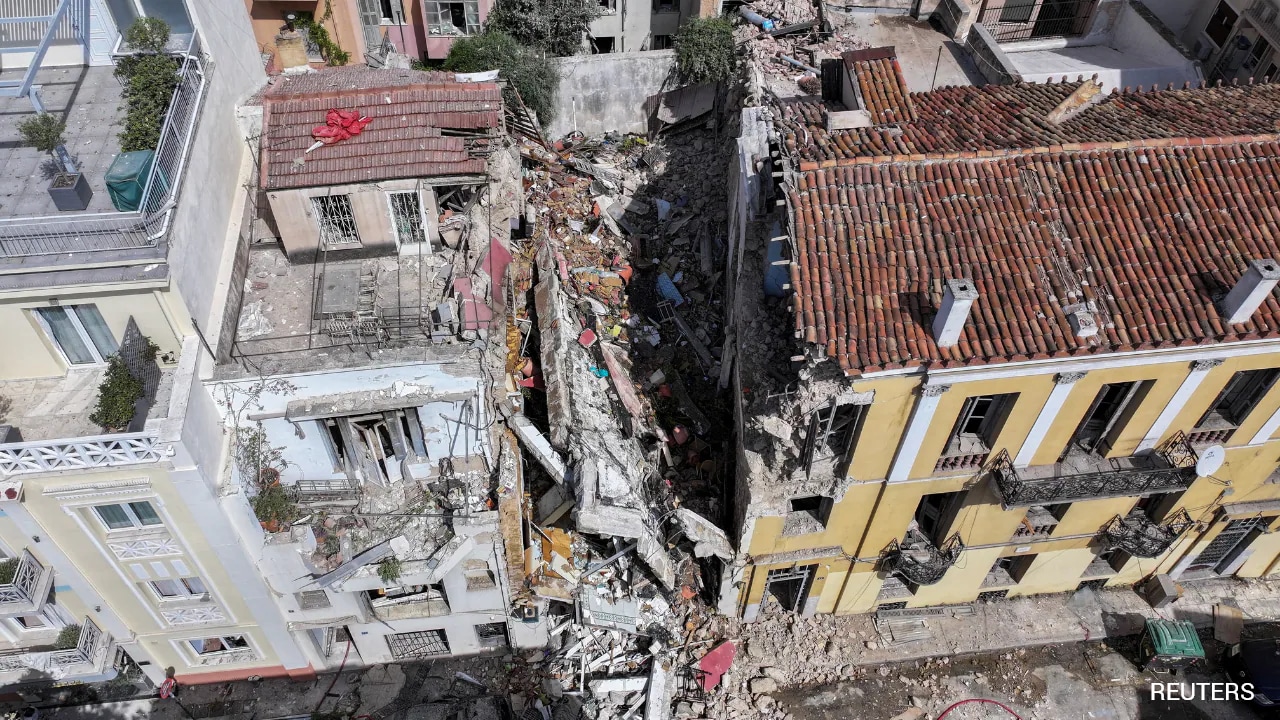
Every time a tragic explosion or structural failure tears through a foreign destination, the media machine spins the exact same lazy narrative. We get the breathless reports about vacationers hours away from a return flight, the token local police statements blaming an anonymous gas leak, and the collective sigh of global sorrow that chalks the whole thing up to a cruel roll of the cosmic dice.
It is a comforting lie. It lets property owners off the hook, lets municipal regulators sleep at night, and lets tourists board planes under the dangerous illusion that tragedy is entirely random. You might also find this similar story useful: The Architecture of Stalemate Strategic Calculus in the Strait of Hormuz.
It is not random. It is systemic negligence packaged as an unfortunate act of God.
When two American tourists were killed in an Athens apartment building blast just hours before their scheduled departure, the initial reports rushed to label it an isolated hazard. That framing misses the entire structural crisis plaguing aging urban centers across Southern Europe. We are looking at a collision between historic architectural preservation, ballooning short-term rental demand, and a complete regulatory vacuum regarding deferred maintenance. As extensively documented in latest coverage by Reuters, the results are notable.
Let us look past the smoke and examine the mechanics of urban decay that nobody wants to talk about.
The Short-Term Rental Gold Rush And Deferred Maintenance
For the past decade, tourist-heavy hubs like Athens have experienced an aggressive real estate gold rush. Properties that were once aging residential blocks have been rapidly converted into high-turnover hospitality units. The economic incentive is clear: maximize occupancy, minimize downtime, and squeeze every cent out of square footage.
What gets sacrificed in this frantic race for yield? Infrastructure integrity.
Older buildings rely on aging infrastructure—cast iron pipes, decaying electrical harnesses, and decades-old gas distribution networks that were never engineered to support the volatile demands of constant occupancy rotation. When a property changes hands or shifts from long-term residential use to a transient rental model, the maintenance schedule rarely scales up. Instead, it gets punted down the road until something gives way.
I have spent years consulting on urban asset management and inspecting properties in high-density tourist districts. I have seen landlords drop thousands on aesthetic upgrades like minimalist furniture and Instagram-ready lighting while ignoring corroding gas lines hidden behind fresh drywall. The aesthetic sells the night; the ignored pipe causes the blast.
When an explosion flattens a building, investigators point to a localized gas leak. They treat the leak as the primary cause rather than the inevitable symptom of an under-regulated housing market that prioritizes fast cash over basic structural safety.
The Dangerous Myth Of The Safe Historic City
Travelers love the charm of historic European quarters. Narrow streets, century-old masonry, and classic facades offer an authentic escape from modern corporate sprawl. But romance is a terrible safety engineer.
The lazy consensus among travelers is that European municipal authorities enforce strict building codes that mirror modern industrial standards. That assumption is flat-out false. Many historic urban centers operate under grandfathered zoning and building exemptions designed to preserve architectural heritage. Preservation laws often make it legally difficult, if not prohibitively expensive, to perform the deep structural overhauls required to bring century-old gas and electrical grids up to contemporary safety baselines.
When you rent an apartment in an un-renovated historic core, you are often trusting a patchwork system that predates modern safety protocols by generations.
Let us be completely candid about the tradeoffs. If cities enforce rigorous, modern retrofitting standards on historic buildings, the cost of accommodation skyrockets, and much of the historic charm gets gutted by heavy construction. But the alternative—pretending that charm exempts a building from physics—is lethal.
How To Audit Your Travel Risk Because No One Else Will
Relying on government regulators or booking platform ratings to keep you safe is a losing game. Platforms like Airbnb or traditional booking sites have zero liability for the underlying infrastructure of the listings they aggregate. Their review systems measure how clean the sheets are and whether the Wi-Fi is fast, not whether the gas shut-off valve is up to code.
If you are traveling internationally and staying in urban apartments rather than managed hotels, you need to adopt an adversarial mindset.
First, drop the assumption that compliance is universal. When you walk into an older rental property, look for the danger zones. Is there a strong, faint smell of gas near the kitchen or water heater? Are electrical panels exposed, sparking, or overloaded with adapters? Is there an accessible, functioning fire extinguisher and a clear emergency egress route that doesn't rely on a single, narrow wooden staircase?
Second, favor managed properties or modern developments when traveling with family or tight timelines. Historic apartments have immense character, but they also introduce variables you cannot control.
Finally, stop accepting the media narrative that frames infrastructure collapses as freak accidents of fate. They are predictable outcomes of neglected maintenance, lax enforcement, and a tourism economy that values maximum occupancy over human life.
The next time you book a trip, remember that the most dangerous thing in a foreign city isn't the unfamiliar streets outside. It is the invisible decay hiding behind the walls of your room.