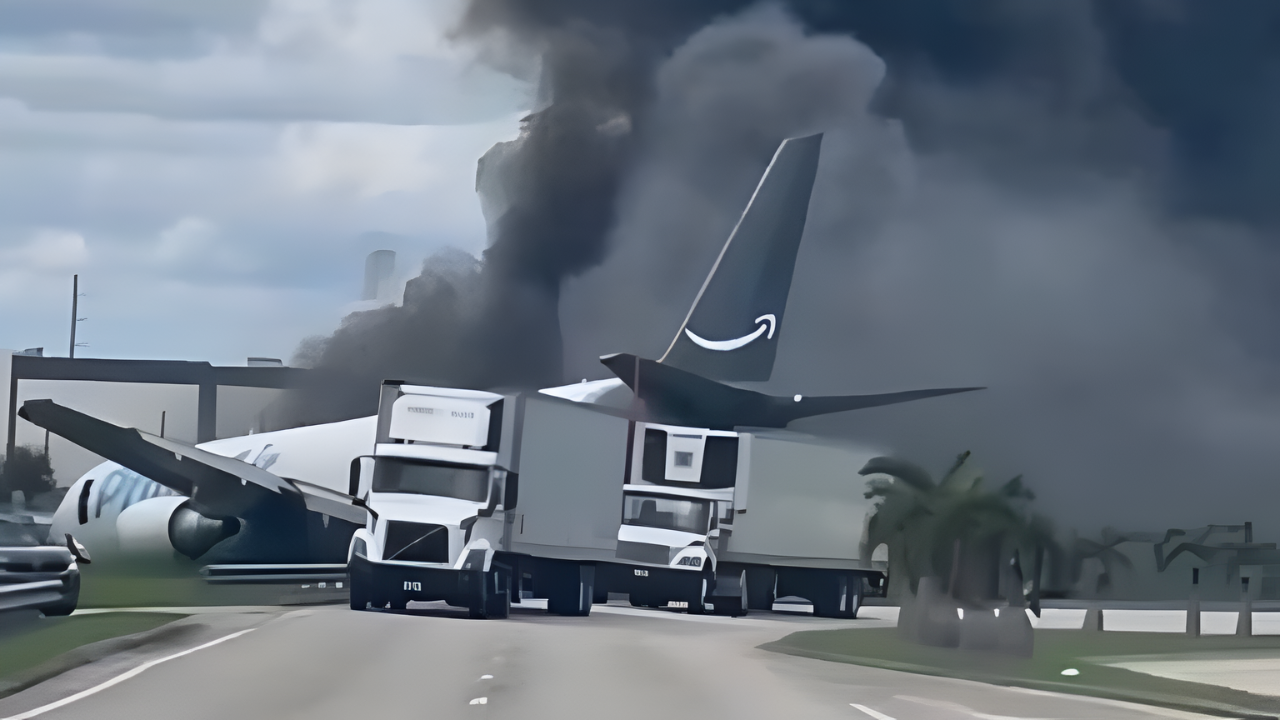
Every single aviation pundit and mainstream outlet spent the week after the Atlas Air Boeing 767 incident hyperventilating about the age of the airframe, the mechanical pedigree of a twenty-two-year-old freighter, and the supposed dangers of converting passenger jets into cargo haulers. They want you to stare at the smoke plumes, panic about metal fatigue, and nod along to the lazy consensus that older planes belong in a boneyard.
It is a comfortable narrative. It requires zero critical thinking. And it is completely wrong. Read more on a related issue: this related article.
I have spent two decades watching logistics behemoths treat commercial aviation like a high-speed assembly line, and I can tell you right now: pointing the finger at the manufacturing date of a Boeing 767 is a smoke screen. The real story is not about metal failure. It is about an operational tempo driven by e-commerce algorithms that demand impossible turnaround times, pushing human operators and dispatch networks past the breaking point.
The Cargo Conversion Myth
Let us dismantle the first widespread fallacy immediately: the notion that converted passenger freighters are inherently compromised. More analysis by MarketWatch delves into similar views on the subject.
A converted freighter is not a flying scrap heap. When an aircraft transitions from carrying tourists to hauling palletized freight, it undergoes a heavy structural overhaul. Engineers reinforce the main deck floor, install a massive side cargo door, and strip out interior amenities to save weight. Structurally, these airframes often fly fewer pressurization cycles per year in cargo service than they did doing short-haul domestic loops for commercial airlines.
The lazy narrative assumes age equals vulnerability. In aviation maintenance, calendar age is a secondary metric to operational stress cycles. A twenty-year-old airframe with a meticulous maintenance log is mechanically safer than a five-year-old plane subjected to deferred maintenance and rushed turnaround schedules.
Yet, the media fixates on the age of the plane because it avoids the uncomfortable friction at the intersection of retail logistics and flight operations.
The Amazon Effect on Dispatch Pressure
When you tie a dedicated air fleet to the logistics demands of the world's most aggressive retailer, the physics of air cargo change. I have seen boardrooms obsess over transit velocity while quietly slashing maintenance windows by fifteen percent to keep pace with delivery promises.
The pressure on contract carriers operating dedicated routes is immense. Atlas Air, ABX, Kalitta—these operators do not set the delivery cadence; they service it. When a network promises two-day, next-day, and same-day delivery across a continent, every link in the supply chain absorbs the downstream shock.
Flight crews face tighter reporting windows. Maintenance controllers feel the squeeze to clear deferred items just to keep a tail number active in the rotation. Ground handlers juggle compressed loading schedules in variable weather conditions across congested hubs.
When an incident occurs on a routine domestic run, the root cause is rarely a single rogue bolt or a sudden structural collapse. It is almost always an accumulation of systemic friction: cumulative fatigue, scheduling pressure, and the relentless creep of operational normalization of deviance.
Why The Wrong Questions Dominate The Headlines
If you search for answers regarding this incident, you will find a predictable loop of superficial questions. People ask how old the plane was, how many hours it had logged, and whether the Federal Aviation Administration should ban older cargo models.
These are the wrong questions entirely. They treat the symptom while ignoring the disease.
Asking about the age of a Boeing 767 is like blaming the asphalt when a race car crashes because the pit crew was forced to change tires in half the allotted time. The airframe is an instrument responding to inputs. If you want to understand why incidents happen in modern logistics-driven air freight, you have to look at dispatch reliability metrics, crew resource management under hyper-compressed schedules, and the economic incentives that reward speed over redundancy.
The uncomfortable truth is that modern supply chains are engineered to operate right on the edge of failure because redundancy costs capital. Every extra hour an aircraft spends in a hangar undergoing preventive checks is an hour it is not generating revenue.
What Actually Needs To Change
Fixing this industry requires abandoning the illusion that we can scale e-commerce delivery speeds infinitely without consequences.
First, regulatory bodies must stop auditing paper compliance and start auditing operational tempo. Inspectors need to look past the sign-offs in the maintenance logs and evaluate whether ground crews and flight deck personnel have the actual time required to execute safety protocols without career-limiting friction.
Second, contract operators need to reclaim pricing and scheduling power from retail giants. When a logistics buyer dictates terms that leave zero margin for weather delays, mechanical anomalies, or crew fatigue management, safety ceases to be a protocol and becomes a luxury.
I have watched companies try to optimize their way out of risk by adding more software dashboards and compliance committees, missing the point entirely. You cannot algorithm your way around the physical reality that steel, fuel, and human fatigue require breathing room.
The next time you see a headline screaming about an aging freighter and a plume of smoke, look past the airframe. Look at the dispatch sheet. Look at the turnaround window. Look at the system that demanded the plane be in the air when it should have been on the jack stands.
Stop blaming the metal. Fix the mindset.