The room where power is defended smells of hot coffee, heavy paper, and stale adrenaline.
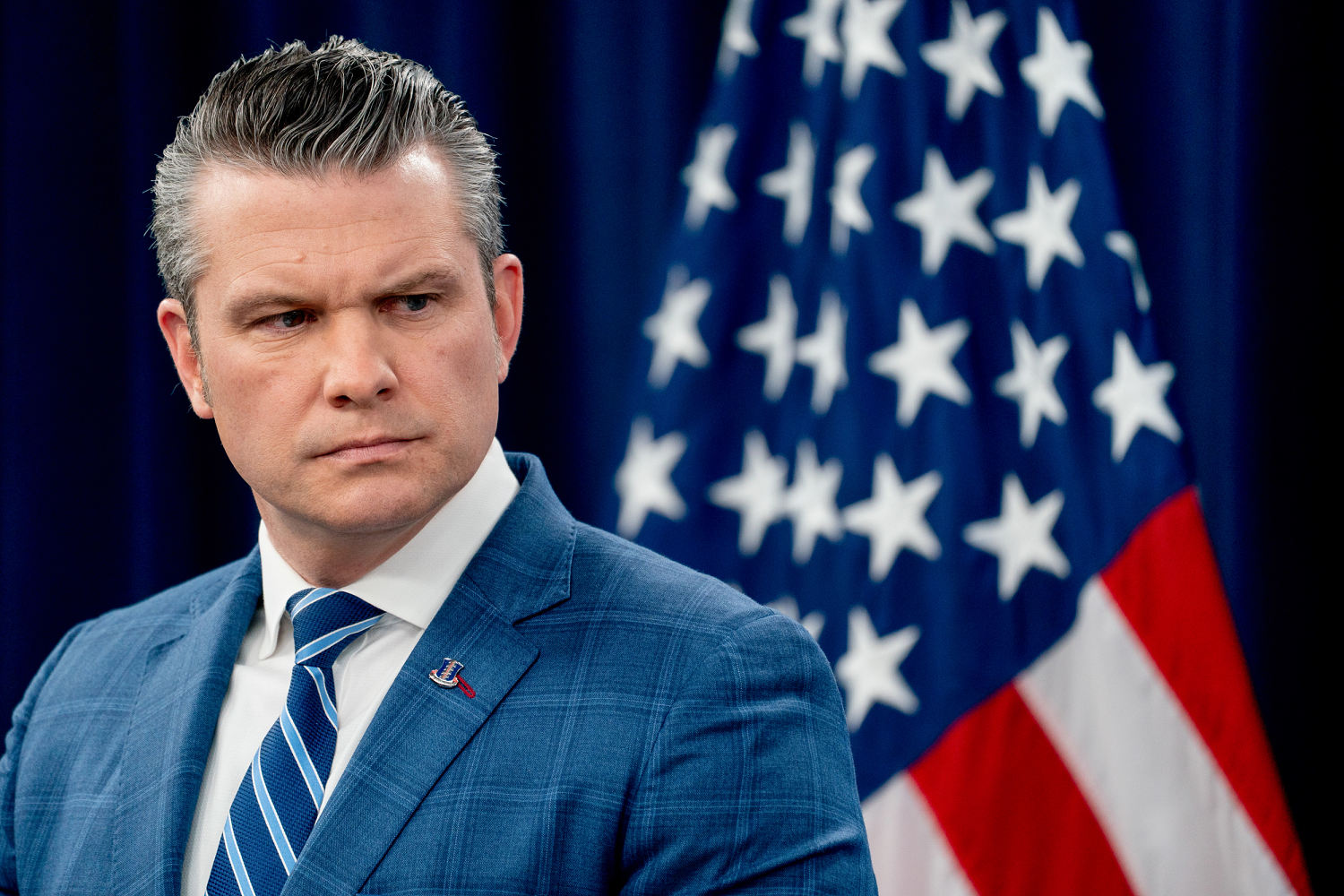
Inside the halls of Capitol Hill, a storm had been gathering for weeks, but when Defense Secretary Pete Hegseth stepped to the microphone, he did not look like a man preparing to weather a siege. He looked like a man fixing to fight one.
Impeachment threats are rarely just legal maneuvers in Washington. They are theater, warfare, and psychological conditioning rolled into a single phrase. For Hegseth, the threat was not an abstract political concept debated in air-conditioned cable news studios. It was a direct salvo aimed at his leadership, his character, and his tenure at the helm of the Pentagon. Yet, as the cameras flashed and microphones leaned in, the defiant cadence of his voice sent a clear signal across the Potomac: he was not backing down.
The Anvil of Public Scrutiny
To understand the pressure of high office, imagine standing on a narrow beam suspended over a canyon while crowds on both sides throw stones and demand you jump. Every memo leaked, every past comment parsed, every strategic decision weaponized.
Hegseth’s journey to the center of the Department of Defense was already marked by intense debate. A former Army National Guard officer with combat tours in Iraq and Afghanistan, followed by a high-profile career in media, his nomination had sparked fierce ideological friction from the start. His supporters saw an unapologetic reformer intent on stripping away entrenched bureaucracy and restoring traditional military lethal focus. His detractors saw a disruptive figure whose policy stances and personal history made him unfit to lead a force of millions.
When news of potential impeachment proceedings began circulating through congressional corridors, the political calculus changed overnight. Impeachment of a Cabinet secretary is a rare, drastic instrument—one historically reserved for fundamental breaches of public trust. But in modern governance, the line between constitutional check and partisan weapon has blurred into nonexistence.
Hegseth understood the game. He knew that survival in the political arena requires more than just legal defense; it requires an unwavering display of resolve.
A Stance Carved from Iron
Defiance is a dangerous posture if it lacks substance. Bluster collapses under the weight of genuine evidence, but Hegseth’s response was carefully calibrated to project strength to his base while challenging his accusers to bring their best arguments.
He did not dodge the cameras. He did not issue a sanitized, three-sentence press statement drafted by a team of risk-averse public relations advisers. Instead, he addressed the allegations directly, framing the attack not merely as an assault on himself, but as an attempt to derail the administration's broader agenda for the military.
"They aren’t coming after me because I failed," the narrative of his defense implied. "They are coming after me because we are succeeding."
This strategy shifts the battleground. By linking his personal survival to the ideological goals of his constituents, Hegseth transformed a defensive crisis into a rallying cry. It is a playbook refined over decades of American political combat: when pushed, push back harder. Make the cost of attacking you higher than the political reward.
Consider the atmosphere inside the Pentagon during such a standoff. Civil servants and uniform officers move through marble corridors, attempting to maintain focus on global threats—rising tensions in the Indo-Pacific, ongoing conflicts in Europe, complex defense supply chain bottlenecks—while their leader is engaged in a public duel for his political life. The human cost of such instability is real. Morale fluctuates. Decisions take longer. Caution creeps into places where decisive action is required.
Yet Hegseth’s defiant stance was designed precisely to project an illusion of absolute stability amidst the chaos.
The Reality Behind the Rhetoric
Stripping away the theatrical bravado reveals a fundamental tension at the heart of modern governance: how does an institution function when trust between lawmakers and executive leaders completely breaks down?
Impeachment threats against Cabinet officials, while historically sparse, have become increasingly common parlance in an era defined by deep hyper-partisanship. The legal threshold requires high crimes and misdemeanors, but the political threshold requires only a organized voting bloc and a willing megaphone.
Hegseth’s critics argue that his public statements, administrative directives, and management style have crossed lines that warrant legislative intervention. They point to specific policy reversals, personnel decisions, and his public commentary as evidence that his stewardship threatens the integrity of the Armed Forces.
Hegseth’s defenders view those same actions as necessary remedies for an institution that had grown bloated, distracted, and beholden to ideological agendas separate from core national defense. To them, the impeachment threat is nothing more than a desperate attempt by an entrenched establishment to protect its power.
Between these two irreconcilable views stands the Secretary himself, operating in the middle of a continuous public inquiry.
The Long Road Ahead
Navigating an impeachment threat is an exercise in endurance. It requires managing two entirely different fronts simultaneously: the policy duties of the Department of Defense and the political warfare of Capitol Hill.
Every speech becomes a potential exhibit. Every meeting becomes a test of authority.
When Hegseth stood his ground, he was making a strategic gamble. He bet that his coalition would hold, that the political appetite for a full impeachment process would wither under public scrutiny, and that his aggressive posture would rally his supporters faster than it would mobilize his opponents.
Politics rarely offers clean resolutions. The threat may recede, or it may crystallize into formal articles on the House floor. But the moment Pete Hegseth chose to double down rather than retreat, the tone of the battle was permanently set.
Late into the evening, after the press briefings end and the television cameras are powered down, the noise of Capitol Hill fades into the cold night air of Washington. The paperwork remains stacked on the desk. The global maps remain illuminated in the command centers. The political storm continues to circle outside the window, but inside, the choice has already been made: stand firm, take the hits, and fight for every inch.