The Air Up There
Ten miles above the earth, the sky is not blue. It is an indifferent, bruised violet, shading rapidly into the absolute blackness of an ocean with no bottom. Up here, the air outside the thin skin of an aluminum tube is sixty degrees below zero and too thin to fill human lungs. You do not survive without machinery. You do not survive without routine.
Passengers sit in rows of three, reading magazines on glowing rectangles, cutting rubberized chicken with plastic knives, listening to the muffled thrum of dual turbofans turning at nine thousand revolutions per minute. They trust the geometry of it. They trust that the man two bulkheads forward, sitting in a cockpit glowing with green liquid-crystal displays, is bored.
Boredom is the ultimate safety feature of modern aviation.
When a pilot is bored, the altimeter holds steady at thirty-eight thousand feet. The autopilot tracks a pink line drawn across a glass screen by a flight management computer in Toulouse or Seattle. The coffee is cooling in a cardboard cup. Nothing is happening. That is the entire point.
Then, sometimes, the geometry snaps.
When the Routine Fails
Consider what happens when the mundane machinery of human psychology intersects with a machine weighing eighty tons moving at Mach 0.82.
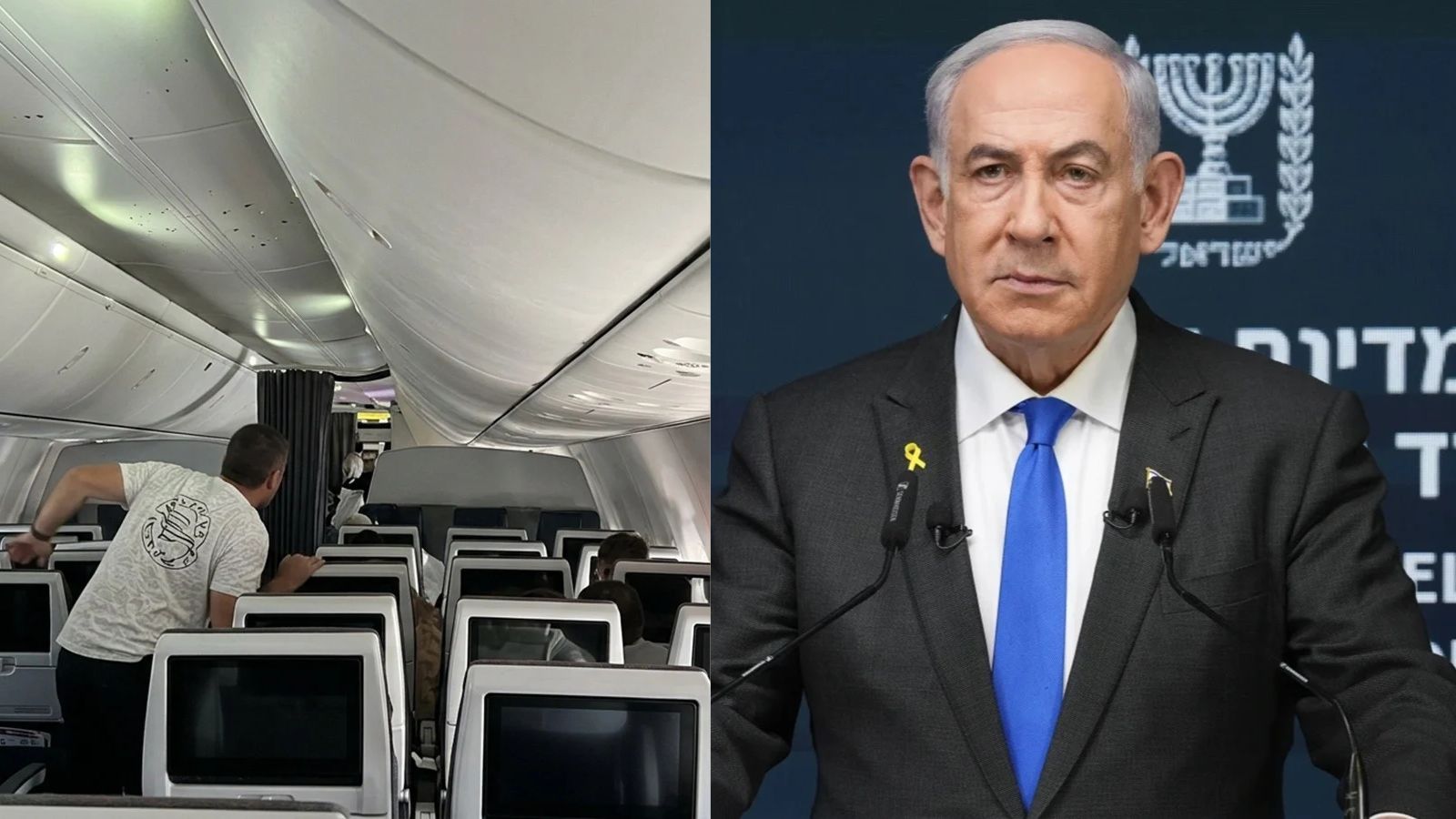
In late 2016, an extraordinary accusation rippled outward from the highest levels of geopolitical security. Israeli Prime Minister Benjamin Netanyahu, speaking before foreign press and security analysts, revealed a chilling fragment of intelligence. He alleged that a pilot flying for Flydubai—the low-cost sister airline of Emirates, operating out of the glittering glass-and-steel hub of Dubai—had deliberately attempted to crash an aircraft following a violent physical altercation with his co-pilot inside the flight deck.
Let us be entirely clear about the boundaries of the known record: this was a high-level political statement, lobbed into the dense, foggy arena of international diplomacy, security briefings, and cross-border tension. Aviation authorities and the airline itself moved swiftly to manage the narrative, navigating the treacherous waters where state intelligence and commercial aviation collide. But the shadow of the claim remained, hanging in the air like high-altitude ice crystals.
Why? Because it touches the deepest, most primal fear of every person who has ever stepped onto a jet bridge.
It is not mechanical failure. Metal fatigues, bolts shear, engines ingest flocks of geese, hydraulic lines rupture. Engineers have spent a century anticipating every physical catastrophe, building redundancy upon redundancy until a twin-engine jet can fly across an entire ocean on a single turbine, guided by three separate inertial navigation systems.
The machine is predictable. The human being sitting in the left seat is not.
The Anatomy of the Flight Deck
Step inside a modern flight deck. It smells faintly of dry cabin air, electronics warming up, and old coffee. It is surprisingly cramped. Two leather seats, adjustable on tracks, flanked by side-sticks or control columns, facing a wall of glass.
For the first hundred hours of flight training, you are taught to look outside. Then you are taught to look at the instruments. Finally, you are taught to look at each other.
Crew Resource Management, or CRM, is the gospel of modern commercial flight. Born out of horrific twentieth-century accidents where junior first officers sat in silence while authoritarian captains flew perfectly good airplanes directly into mountains, CRM democratized the cockpit. It mandated that the first officer has an equal voice, an equal right to touch the controls, and a solemn duty to challenge the captain if the aircraft strays into peril.
It turned the cockpit into a collaborative democracy.
But democracy requires two willing participants. What happens when the social contract of the flight deck is violated from within? What happens when the steel door—reinforced after the security catastrophes of a previous generation to keep the world out—now serves to keep the world in?
That heavy, armored door was designed as a shield. It is locked from the inside by a deadbolt controlled by a toggle switch on the center console. In normal operations, if a pilot needs to use the lavatory, a coded keypad outside allows cabin crew to request entry, monitored by a wide-angle camera peering at the flight deck door. If the pilot inside refuses to flip the toggle—or incapacitatedly blocks the mechanism—the door becomes a vault.
A vault from which there is no escape.
The Weight of the Invisible Sky
We rarely contemplate the invisible architecture holding our modern world together. We see the wings flex through the cabin window; we feel the gentle shudder of touchdown; we thank the flight attendants as we spill out into the fluorescent arrivals hall. We assume that civilization is a physical thing—concrete runways, jet fuel, radar domes.
It isn't. Civilization is an agreement.
It is the silent, staggering agreement between two strangers sitting in a locked room ten miles up that they value their own skin, and the lives of the two hundred souls behind them, more than whatever private demons are howling in their heads.
When that agreement fractures, the human mind struggles to find an analog. We look for technical explanations because they are comforting. We want a sheared cotter pin, a software glitch, a lightning strike. Those things can be fixed with a wrench or a patch code.
You cannot patch human despair with a software update. You cannot torque down a loose thought with a socket set.
The aviation industry spends billions of dollars every year refining predictive maintenance algorithms. They monitor engine vibrations down to the micron. They track exhaust gas temperatures, fuel burn rates, and structural stress loads in real time, beaming gigabytes of telemetry back to maintenance bases while the plane is still cruising over the Syrian desert or the North Atlantic.
Yet the most complex sensor system on the aircraft remains the wetware: the two brains pulsing behind the glare shields, processing sleep deprivation, marital collapse, financial ruin, ideological fanaticism, or sudden, blinding psychosis.
The Long Descent
Imagine the silence that follows a dropped word in a confined space.
The hum of the environmental control system rushing air through the vents at twenty cycles a minute. The faint clicking of a relay behind the instrument panel. The glow of the waypoint indicator counting down the nautical miles to touchdown.
And between the two pilots, a chasm opening up that is wider than the Mediterranean below.
When public figures like Netanyahu invoke such incidents in the theater of international relations, they do so to remind us of the fragility of order. They point to the dark margins where commercial aviation brushes against statecraft and human volatility. But for the traveler, the lesson is both simpler and more haunting.
Every time we board an aircraft, we are casting a vote of profound, radical trust in human nature. We are betting our lives that the person steering us through the night is anchored to this world by love, duty, or simply the desire to see tomorrow's sunrise.
The engines whine. The wingtips leave contrails like white scars across the purple sky. The world below sleeps, unaware of how thin the partition is between the routine and the abyss, and how much depends on the quiet strength of the person holding the yoke.


