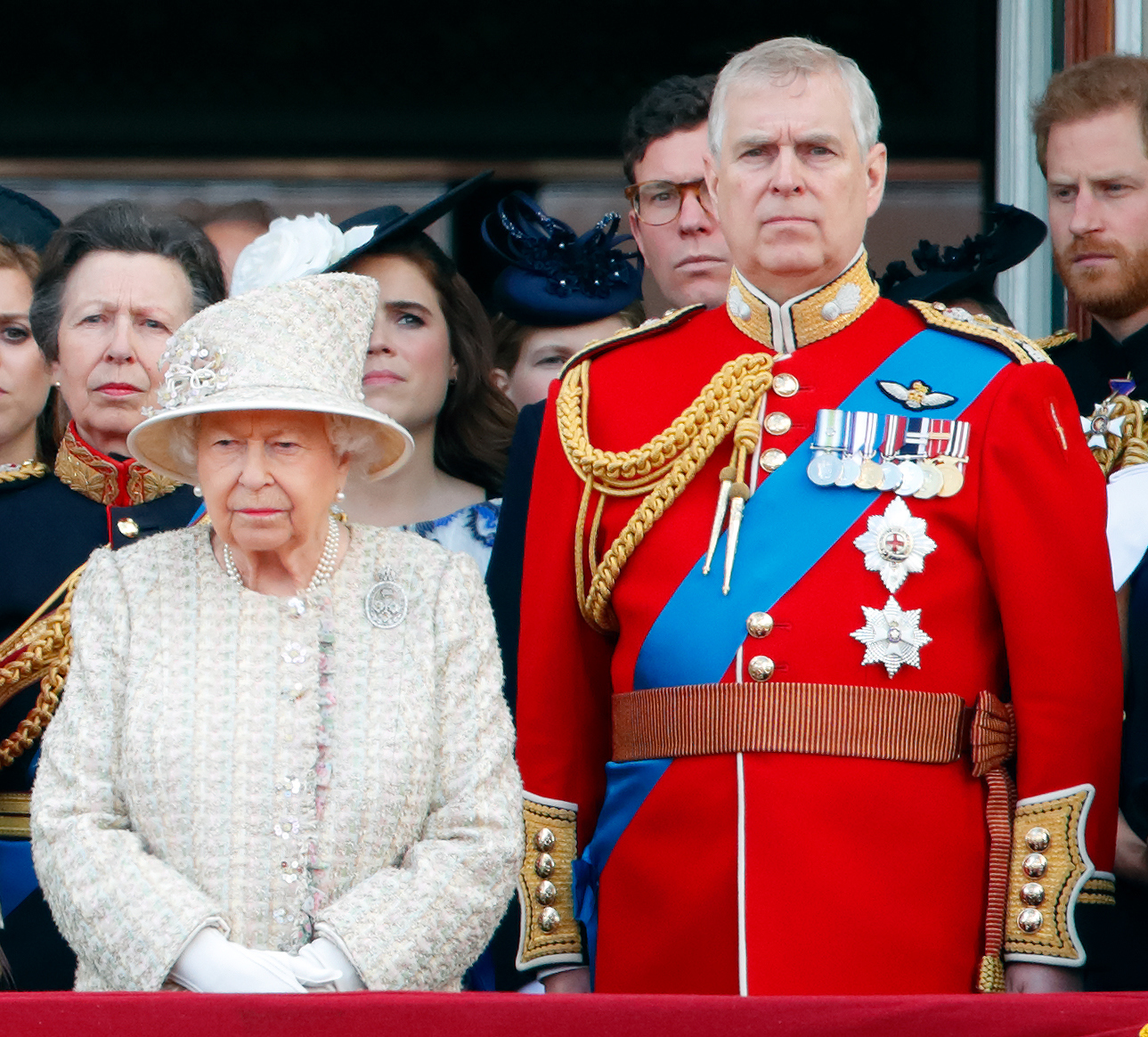
The British government conceded that no formal security vetting or due diligence took place before appointing Andrew Mountbatten-Windsor as the nation's special trade envoy in 2001. Newly declassified Whitehall files reveal this systemic failure occurred because Queen Elizabeth II was "very keen" for her second son to secure the prominent public role. When the sovereign dropped a heavy hint to her ministers, scrutiny vanished. This institutional deference effectively short-circuited the protective machinery of the state, exposing British trade diplomacy to a decade of unchecked, private transactions that are now the subject of a criminal investigation.
The disclosures, forced by a parliamentary "humble address" motion, unravel the decades-long mystery of how a senior royal managed to operate a global networking apparatus without basic bureaucratic oversight. For years, royal commentators attributed the survival of the former Duke of York to a mother’s blind spot. The hard evidence reveals a far more serious constitutional reality. The British civil service abandoned its own protocol because it treated a royal preference as an absolute command.
The Untouchable Applicant
In February 2000, Sir David Wright, then chief executive of British Trade International, dispatched a memo to Foreign Secretary Robin Cook. The Duke of Kent was relinquishing his post on the Overseas Trade Board, and a successor was required. The correspondence contains a directive wrapped in royal protocol.
"The Queen's wish is that the Duke of Kent should be succeeded in this role by the Duke of York," Wright recorded. He added that the monarch was "very keen that the Duke of York should take on a prominent role in the promotion of national interests."
In the ecosystem of Whitehall, such phrasing carries the weight of a royal decree. Civil servants and senior ministers, including Cook, accepted the proposal with zero institutional pushback. Former Cabinet Secretary Lord Turnbull recently acknowledged that vetting a senior prince simply did not happen. To subject a member of the royal family to a "fit and proper" test would mean questioning the institution itself.
The state machinery chose compliance over caution. Trade Minister Chris Bryant confirmed to parliament that no one even considered vetting the prince. The appointment was pushed through as a natural continuation of royal tradition, insulating the new envoy from the basic background checks required of any mid-level civil servant.
A Shield for Private Enterprise
The complete absence of institutional guardrails yielded predictable consequences during the prince's tenure from 2001 to 2011. While the state viewed the position as an unpaid diplomatic asset, the envoy’s office treated it as a highly mobile corporate vehicle.
The newly published documents show that officials never established guidelines to separate public duties from private business ventures. They did not monitor what occurred during the "private days" appended to his official itineraries.
+--------------------------------------------------------------------------+
|                     Whitehall's Vetting Blind Spot                       |
+--------------------------------------------------------------------------+
| Standard Public Appointments           | Royal Envoy Appointment (2001)  |
+--------------------------------------------------------------------------+
| • Rigorous background vetting          | • Zero formal security checks   |
| • Asset & conflict-of-interest audits | • No private business oversight |
| • Independent panel review             | • Unchecked "private days" abroad|
| • Continuous performance monitoring   | • Total deference to Palace wish|
+--------------------------------------------------------------------------+
The fallout from this lack of oversight has turned explosive. Legal disclosures from the U.S. Justice Department's investigation into Jeffrey Epstein suggest that the former trade envoy utilized official diplomatic trips to gather intelligence and cultivate private business contacts. In October 2010, the prince sent Epstein detailed itineraries of upcoming trade missions to Singapore, Vietnam, Hong Kong, and Shenzhen. The following month, he allegedly transmitted official government reports from those very trips to the American financier.
The systemic failure lies in the total absence of accountability mechanisms. While the Foreign Office concerned itself with minor administrative details—such as handling requests from the prince's private secretary to shield his overseas golf outings from public view—it completely ignored the vast potential for massive conflicts of interest. Officials warned global trade staff that the envoy's high profile demanded "strict media management," prioritizing image control over actual operational security.
The Anatomy of Institutional Rot
The consequences of this royal exceptionalism have shattered the traditional barriers of state protection. Last year, the former prince was stripped of his military titles and royal patronages. The crisis intensified significantly following his arrest by Thames Valley Police on suspicion of misconduct in public office. The investigation centers on allegations that he leveraged his taxpayer-funded trade platform to enrich a private circle, transforming a public asset into a personal hustle.
The rot spreads beyond the palace walls. The arrest of former Cabinet minister Peter Mandelson on similar suspicion of misconduct in public office reveals a interconnected network of influence. This development supports assertions made by opposition lawmakers that the trade envoy's operation became a closed loop where powerful figures enabled one another under the guise of state diplomacy.
The state's defence mechanism was entirely disabled by deference. When the Palace signaled its desire to find a meaningful role for a restless prince, the executive branch capitulated. The resulting arrangement provided all the access, prestige, and immunity of the British state without a single shred of the accountability required to protect it.
The current criminal investigations are a direct consequence of a system that chose to manage public relations rather than enforce state security. This dynamic was driven entirely by a sovereign's request that no one in Whitehall had the institutional courage to question.