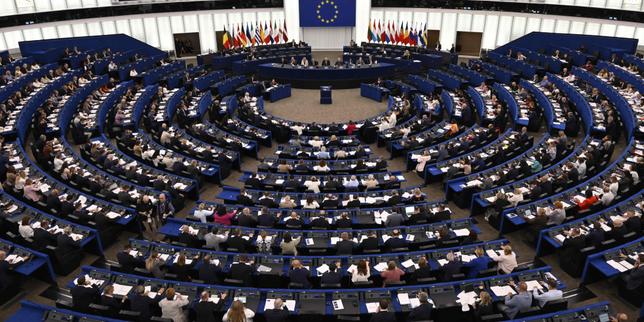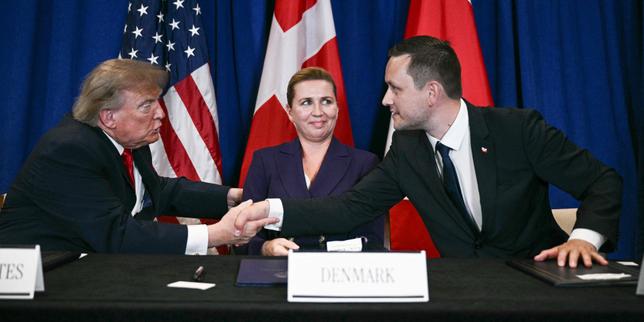
European Union sanctions are not rigid legal walls; they are tradable diplomatic assets governed by unanimity rules that allow a single capital to convert a sanction listing into bilateral leverage. In September 2026, France demonstrated this mechanism by withholding consensus on the renewal of the EU's Russia sanctions package until Alisher Usmanov—spelled Alicher Ousmanov in French coverage—was removed from the bloc's restrictive list. What superficial commentary frames as a simple national exception or a sudden triumph for an oligarch is actually a structural collision between collective geopolitical deterrence, hostage diplomacy, and the contractual mechanics of EU decision-making.
Standard media reporting around this episode typically treats the delisting as a bilateral quirk: Paris wanted detainees freed in Azerbaijan, Usmanov had ties to Uzbekistan and the broader region, and France used its veto to get him off the list. That narrative misses the underlying institutional mechanics. A rigorous analysis requires separating the unanimity bottleneck of EU foreign policy, the barter logic linking individual listings to consular outcomes, and the contagion risk triggered when one member state turns a collective pressure instrument into a bargaining chip.
Deconstructing the Standard Narrative
Conventional coverage of the September 2026 delisting relies on three recurring simplifications that obscure how pressure actually operates inside Brussels.
First, it treats an EU sanctions listing as a permanent moral verdict rather than a recurring administrative renewal. Under EU Council rules, individual listings require periodic unanimous renewal by member states. Because every renewal cycle is a binary veto gate, any capital with an urgent bilateral priority gains disproportionate leverage right before a deadline.
Second, it conflates judicial failure with diplomatic success. Usmanov had already failed in his legal challenges before EU courts in 2024 and 2025 to overturn his designation. His removal in September 2026 did not reflect a sudden judicial collapse of the evidentiary record in Luxembourg; it reflected political horse-trading among member states ahead of a renewal cutoff.
Third, it flattens the diplomatic linkage into a neat cause-and-effect sequence without distinguishing verified chronology from political inference. The factual record establishes that the EU removed Usmanov from its blacklist on September 22, 2026, at France's request, and that French citizen Martin Ryan was pardoned and released by Azerbaijani authorities the following day, September 23, 2026, while another detained Frenchman, Anass Derraz, was not included in the clemency. Lawmakers and observers pointed to the timing as evidence of a connection, yet no official party publicly laid out the exact quid pro quo behind Baku's interest in Usmanov's delisting. Treating a plausible hypothesis as a documented treaty misstates what is actually known.
The Structural Anatomy of Sanctions Arbitrage
To understand why France moved on Usmanov and why other capitals reacted with alarm, it helps to break the episode into four structural components.
1. The Unanimity Bottleneck as a Bargaining Lever
EU Common Foreign and Security Policy decisions on sanctions renewals require consensus across all member states. In game-theoretic terms, unanimity gives every player a hold-up right whenever a collective deadline approaches. When a renewal window narrows to hours, the cost of non-renewal—freezing or disrupting the broader sanctions regime—rises sharply.
A capital willing to absorb short-term reputational friction can hold the entire package hostage to extract a targeted concession. Critics in Brussels and Kyiv rightly noted that this behavior echoes the veto tactics long associated with Hungary under Viktor Orbán, even though Paris pursued a consular objective rather than pro-Kremlin alignment. The mechanism is identical regardless of motive: unanimity converts a collective security tool into a bilateral negotiating coin.
2. Consular Barter and Asymmetric Leverage
States routinely face painful asymmetries when their citizens are detained abroad. When diplomatic channels stall, governments look for non-monetary assets that third parties value. In this case, French officials tied the lifting of EU restrictions on Usmanov—an Uzbek-born Russian billionaire in metals and telecoms—to securing the release of French nationals held in Azerbaijan, a state that shares regional cooperation ties with Central Asia.
What makes this trade structurally distinctive is its cross-theater nature. A sanction imposed over Russia's war against Ukraine was repurposed to unlock leverage in a South Caucasus detention dispute. That creates an immediate incentive distortion:
- Third countries gain a reason to view high-net-worth sanctioned individuals as diplomatic chips rather than purely targeted economic actors.
- Governments under domestic pressure to bring citizens home are tempted to discount collective deterrence in exchange for immediate, visible consular wins.
- Ukrainian leadership—exemplified by President Volodymyr Zelensky's public pushback—sees sanctions relief granted without policy concessions from Moscow as a dilution of pressure on the Kremlin.
3. Coalition Contagion and Side-Payments
Once one member state unbundles a sanctions list for national gain, coalition discipline weakens. Reporting around the September 2026 negotiations highlighted how quickly conditional demands spread: Luxembourg, initially resistant to the French push, was reportedly tied to potential reciprocal consideration for Mikhail Fridman.
This is coalition contagion. Sanctions regimes depend on the perception that listings rest on consistent criteria rather than ad hoc horse-trading. The moment delisting becomes a transactional currency, every capital with domestic lobbying pressure or bilateral friction has an incentive to ask, "What is my price for consensus?" Even when broader renewal agreements are salvaged at the eleventh hour, the credibility of the listing standard erodes.
4. Jurisdictional Boundaries After Delisting
A critical operational point missed in simplistic accounts is that an EU delisting does not automatically erase every legal or financial restriction everywhere. Sanctions regimes are jurisdiction-specific:
- Removal from the EU list lifts EU-level asset freezes and travel bans tied to that designation, though national authorities and banks still conduct their own compliance, anti-money-laundering, and risk reviews.
- Other jurisdictions, such as the United States or the United Kingdom, maintain independent listing authorities and legal standards.
- Furthermore, EU member states can pair targeted removals with multi-year extensions of the overarching sanctions framework so the broader regime remains intact even as specific names exit.
Fact Versus Hypothesis in the Usmanov Delisting
Separating verified facts from analytical inference prevents both overreach and naivety.
Established facts:
- Alisher Usmanov, a Russian-Uzbek billionaire businessman with major interests in metallurgy and telecommunications, had been subject to EU sanctions over his perceived proximity to the Kremlin.
- His prior court challenges against EU sanctions in 2024 and 2025 did not secure his removal.
- On September 22, 2026, the EU removed Usmanov from its sanctions list at France's request while extending the broader sanctions framework.
- On September 23, 2026, Azerbaijani authorities pardoned and released detained French citizen Martin Ryan, while another detained French national, Anass Derraz, remained imprisoned.
- Ukrainian officials publicly criticized lifting sanctions on figures such as Usmanov and Fridman without moves against the war.
Educated hypotheses:
- The tight 24-hour sequence between the EU delisting and Ryan's release strongly points to a coordinated diplomatic understanding involving Paris, Baku, and regional intermediaries, even without full public disclosure of the bargaining mechanics.
- Allowing bilateral consular or domestic political trade-offs to dictate delistings increases the probability of future deadlock at every six-month renewal cycle unless member states tighten procedural norms.
Operational Playbook for Policy and Compliance Teams
For policymakers, sanctions architects, and corporate compliance officers navigating this environment, reacting to headlines is a losing strategy. Execution requires disciplined operational adjustments.
For Sanctions Policymakers and Diplomats
- Separate humanitarian consular tracks from core war-related designations. Build dedicated diplomatic channels for wrongful detentions rather than trading away core sanctions listings that allies view as strategic anchors.
- Enforce evidentiary and behavioral benchmarks for delisting. Require transparent, documented criteria—such as verified divestment or public rupture—rather than bilateral side-deals, reducing accusations of double standards when compared against states that block sanctions for political reasons.
- Start renewal negotiations early to neutralize last-minute hold-up power. Waiting until hours before a statutory deadline maximizes the leverage of any single capital threatening a veto.
- Preserve broader regime architecture alongside targeted adjustments. When political compromises occur on specific names, lock in multi-year extensions or technical enforcement clauses so the core deterrence framework is not hollowed out.
For Corporate Compliance and Legal Teams
- Do not treat a single-jurisdiction delisting as a global green light. Verify status across EU, US, UK, and domestic registries independently, and account for ongoing banking de-risking and financial crime controls.
- Audit ownership, control, and indirect exposure continuously. Even if a named individual is removed from a list, underlying corporate entities, joint ventures, or remaining sanctioned associates may still trigger restrictions or reputational exposure.
- Document the exact legal basis and effective date of every status change. Maintain audit trails showing when a listing lapsed or was lifted, what restrictions ceased, and what residual obligations remained in force locally.
Limitations and Trade-Offs
No policy or compliance framework eliminates friction in this domain. Insisting on rigid sanctions purity can prolong the detention of real human beings abroad, while accommodating bilateral trade-offs weakens alliance cohesion and invites copycat demands from other capitals. Similarly, strict internal compliance after a delisting slows commercial onboarding and frustrates business units, yet lax compliance exposes institutions to severe regulatory and reputational penalties if secondary risks or other jurisdictions' rules still apply.
Strategic Recommendation
European capitals and compliance leaders should treat the September 2026 Usmanov delisting as a structural warning rather than an isolated anomaly: establish an explicit EU protocol that decouples consular hostage releases from Russia sanctions renewals while requiring compliance teams to maintain multi-jurisdictional screening regardless of EU list removals.
This video report examines the timeline and diplomatic questions surrounding the EU's removal of Alisher Usmanov from its sanctions list at France's request and the subsequent pardon of French citizen Martin Ryan in Azerbaijan.