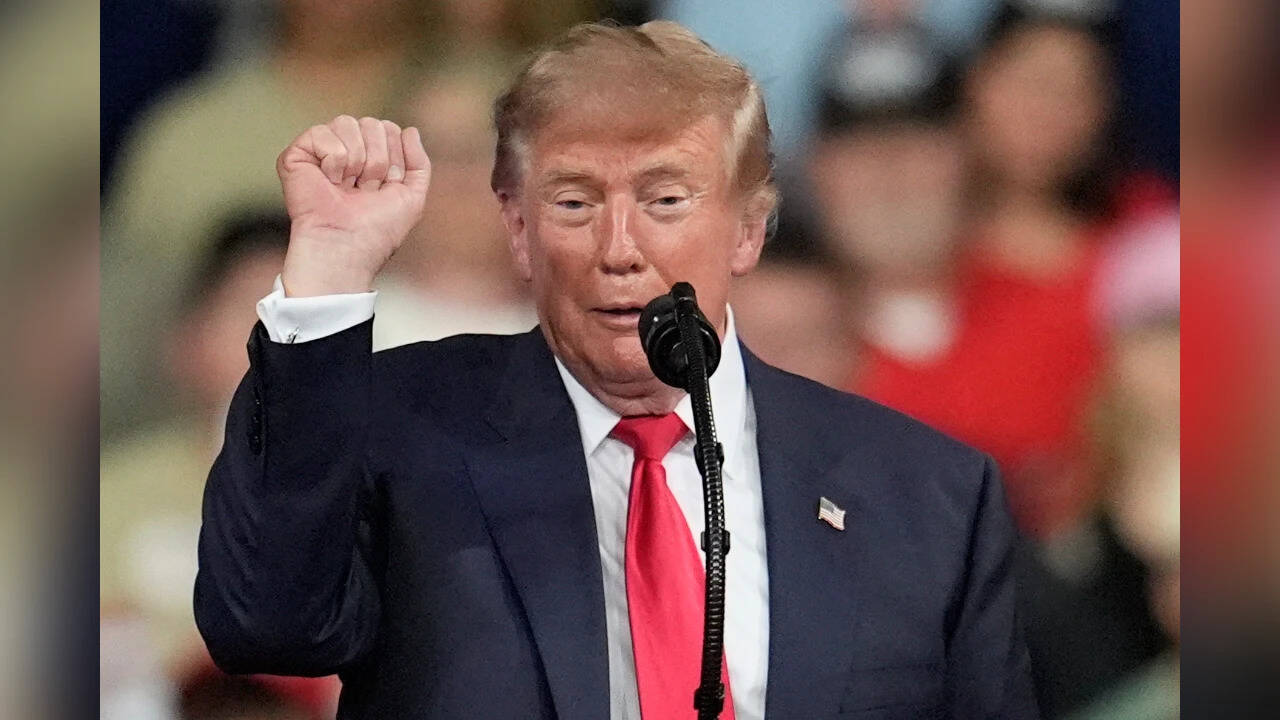
Framing sovereign territory and foreign resource access as a commercial real estate transaction fundamentally misrepresents international law, capital allocation, and geopolitical risk. When political rhetoric characterizes the acquisition of influence or assets in Greenland and Venezuela as the greatest real estate deal in history, it collapses complex multi-decade diplomatic, military, and extractive logistics into a single transactional metaphor. To evaluate the actual mechanics behind such claims, analysts must separate political theater from executable statecraft by examining sovereign title constraints, resource extraction economics, and asymmetric diplomatic leverage.
The Structural Fallacy of Sovereign Real Estate
Commercial real estate operates under a unified legal jurisdiction where fee simple ownership transfers title, mineral rights, and development authority upon capital settlement. Sovereign territory operates under international law, domestic constitutional frameworks, and self-determination doctrines that prohibit unilateral asset liquidation.
In the case of Greenland, the territory is an autonomous constituent country within the Kingdom of Denmark. Under the 2009 Act on Greenland Self-Government, the local population holds the legal right to declare independence through a referendum, and natural resources belong to the people of Greenland. Denmark lacks the unilateral legal authority to sell the island, even if Copenhagen desired to do so. Any American expansion in the region occurs not through property acquisition, but through bilateral defense treaties such as the 1951 Defense of Greenland Agreement, diplomatic consulate openings, and direct foreign aid aimed at infrastructure development.
Venezuela presents an entirely different legal architecture. As a sovereign republic with nationalized hydrocarbon reserves managed primarily through Petróleos de Venezuela, S.A. (PDVSA), the state does not sell territorial title. Foreign entities secure operational access through joint ventures, production-sharing agreements, or sanctions-relief licenses issued by the U.S. Department of the Treasury's Office of Foreign Assets Control (OFAC). Characterizing license negotiations, debt restructuring, or bilateral diplomatic concessions as a real estate acquisition obscures the reality that the underlying asset remains subject to sovereign expropriation risk and regime stability.
Resource Valuation and Extraction Economics
The strategic value of both jurisdictions rests on commodity reserves rather than surface acreage. Evaluating these territories requires applying discounted cash flow models adjusted for geopolitical risk, capital expenditure intensity, and supply chain bottlenecks.
Greenland and the Rare Earth Supply Chain
Greenland holds substantial deposits of rare earth elements (REEs), uranium, zinc, and iron ore, particularly within the Kvanefjeld and Tanbreez deposits in the south. The strategic objective for Washington is reducing reliance on Chinese processing monopolies, which control the vast majority of global rare earth refining.
- Infrastructure Deficit: Greenland lacks an interconnected national road network or high-capacity power grid. Every mining operation must build its own port facilities, power generation, and worker housing from scratch, inflating initial capital expenditures (CapEx) by orders of magnitude compared to continental mining operations.
- Environmental and Regulatory Friction: In 2021, the Greenlandic parliament passed legislation banning uranium mining and halting exploration of deposits containing radioactive byproducts above specific thresholds. This regulatory barrier directly stalled the Kvanefjeld project, demonstrating that local democratic governance acts as a hard constraint on foreign extraction timelines.
- Processing Bottlenecks: Extracting raw ore in the Arctic solves only the upstream phase of the supply chain. Without domestic separation and refining facilities in North America, raw concentrate must still be shipped abroad for processing, negating the strategic security objective.
Venezuela and Heavy Crude Logistics
Venezuela possesses the world's largest proven crude oil reserves, concentrated in the Orinoco Belt. Unlike the light, sweet crude produced in the United States Permian Basin, Orinoco reserves consist predominantly of extra-heavy crude oil.
- Diluent Dependency: Extra-heavy crude has a viscosity too high to flow through pipelines without being blended with lighter hydrocarbons, known as diluents (such as naphtha). Historically, Venezuela imported American naphtha to blend its crude for export. Sanctions disrupted this flow, forcing reliance on Iranian condensates.
- Refining Configuration: Gulf Coast refineries in the United States were specifically engineered with complex coking units to process heavy, sour Venezuelan crude. Re-establishing supply lines provides a direct feedstock match for existing American refining infrastructure, reducing reliance on alternative heavy crude suppliers like Canada or Mexico.
- Capital Decay: Years of underinvestment, maintenance deferrals, and brain drain have degraded PDVSA's upstream production capacity and upgrader facilities. Restoring production from depressed levels back toward historical peaks of three million barrels per day requires tens of billions of dollars in sustained private sector investment, which international oil majors will not commit without binding arbitration protections and political stability.
The Three Pillars of Asymmetric Statecraft
When a superpower seeks to secure strategic assets in foreign jurisdictions without military annexation, it relies on three operational mechanisms rather than a deed of sale.
First is Regulatory and Sanctions Arbitrage. In Venezuela, the primary currency of negotiation is not cash, but the calibrated removal of economic sanctions. By issuing general or specific licenses—such as those granted to Chevron—the executive branch controls the cash flow of a foreign sovereign. This mechanism allows Washington to extract political concessions, debt repayment schedules for American bondholders, or migration cooperation in exchange for allowing oil revenues to flow. The leverage is revocable at any time, functioning as a lease with an immediate termination clause rather than permanent ownership.
Second is Strategic Preemption via Development Finance. In Greenland, the mechanism is capital injection designed to crowd out rival state-backed enterprises, specifically Chinese state-owned firms attempting to finance airports and mining infrastructure. Through agencies like the U.S. International Development Finance Corporation (DFC) and the Export-Import Bank, the United States offers concessional financing, technical geological surveys, and direct grants. The goal is to raise the switching costs for the local government so that aligning with Western security frameworks becomes the path of least financial resistance.
Third is Forward Basing and Domain Awareness. Territory in the Arctic holds value primarily as a sensor and logistics platform. Pituffik Space Base (formerly Thule Air Base) in northwest Greenland provides critical missile warning, space surveillance, and satellite command-and-control capabilities due to its polar geometry. Expanding this footprint requires renegotiating status-of-forces agreements and funding airfield upgrades. The return on investment is measured in radar coverage and transit time reduction across the Greenland-Iceland-United Kingdom (GIUK) gap, not commercial rent.
Operational Limitations of Transactional Diplomacy
Treating sovereign negotiations as bilateral real estate deals introduces systemic vulnerabilities into foreign policy execution.
The primary limitation is Alliance Alienation. Publicly framing a NATO ally's autonomous territory as an acquisition target forces the Danish and Greenlandic governments into defensive nationalist postures. Domestic politicians in Nuuk and Copenhagen cannot appear to be auctioning off sovereignty without facing electoral collapse. Consequently, transactional rhetoric often delays the quiet, bureaucratic approvals required for radar upgrades, mineral exploration licenses, and diplomatic expansion.
A second limitation is Counterparty Moral Hazard. In negotiations with authoritarian or distressed regimes like Caracas, offering sanctions relief in exchange for promises of behavioral change creates an asymmetric timeline. The regime captures the immediate financial benefit of increased oil exports, while the promised political or economic reforms can be delayed, diluted, or reversed once liquidity is restored. Without escrow mechanisms or strict milestone-based tranche releases, the initiating state surrenders its primary source of pressure upfront.
A third limitation is Private Sector Risk Aversion. Governments do not mine rare earths or pump heavy crude; publicly traded corporations do. Even if political leaders announce a sweeping bilateral framework, corporate boards answer to institutional shareholders. If the rule of law, tax stability, and physical security in the host country fail to meet corporate hurdle rates, capital will remain on the sidelines regardless of political declarations in Washington.
Strategic Execution Framework
To convert geopolitical rhetoric into durable supply chain security and territorial influence, policymakers and corporate strategists must abandon acquisition metaphors and execute targeted institutional interventions.
- Decouple Extraction from Sovereign Title: Focus diplomatic capital on securing long-term off-take agreements and bilateral investment treaties with Greenlandic authorities rather than territorial transfers. Fund midstream processing facilities within the continental United States to ensure that any Arctic mineral extraction directly feeds domestic industrial capacity.
- Enforce Escrow-Backed Sanctions Relief: Structure any energy sector engagement in Venezuela around verifiable escrow accounts managed by neutral third-party financial institutions. Mandate that revenue generated from licensed crude exports be allocated directly toward retiring sovereign debt held by Western creditors and funding audited humanitarian or infrastructure upgrades, preventing discretionary diversion by the host regime.
- Deploy Blended Finance Guarantees: Utilize sovereign loan guarantees and political risk insurance to lower the cost of capital for Western mining and energy firms operating in high-friction jurisdictions. By absorbing the tail-end political expropriation risk at the state level, governments can mobilize private engineering expertise without requiring direct state ownership of foreign assets.