The Transboundary Haze Mechanics Blueprint
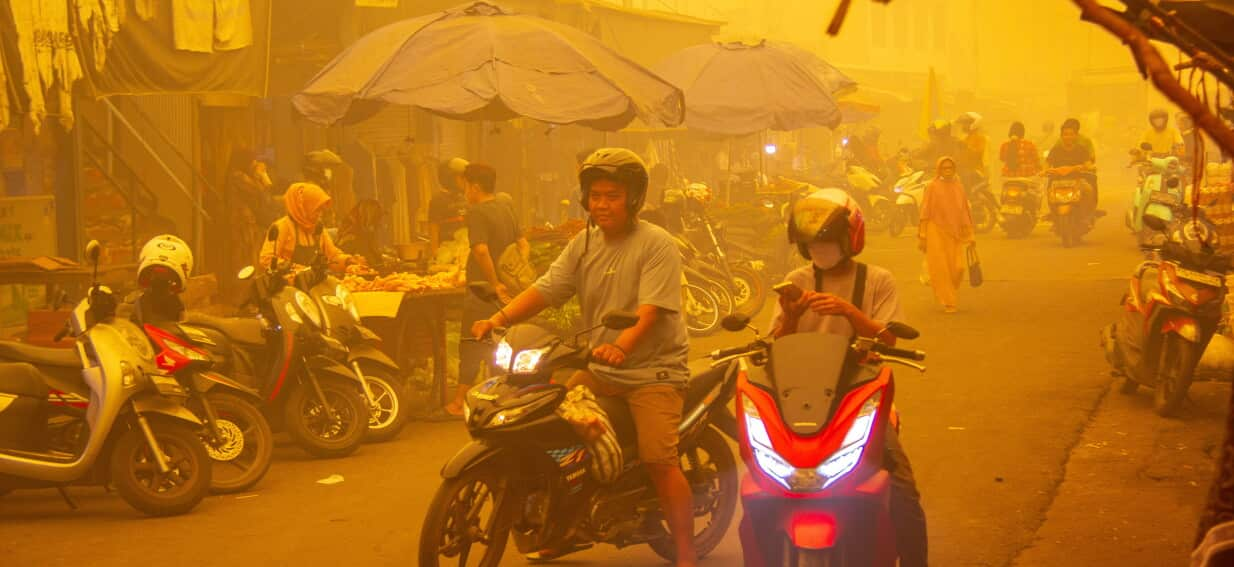
Typical coverage of Southeast Asia's recurring smoke crises treats each bad season as a sudden weather fluke paired with a brief diplomatic flare-up. That framing misses the real engine driving the 2026 episode across Indonesia, Malaysia, Singapore, the Philippines, and neighboring maritime zones. Severe haze emerges when hydrological engineering failure (drained peatlands), climate-driven vapor pressure deficits (El Niño compounded by anthropogenic warming), land-use incentive structures (concession burning and clearing), and regional governance friction (national sovereignty versus cross-border externalities) lock together.
To understand why smoke choked cities and disrupted flights from late July or August through late October 2026 before heavy rains eased conditions in late October and early November, analysts need a structured diagnostic rather than a list of seasonal complaints. Here is the operational roadmap for this analysis:
- Deconstruct the causal chain from drained carbon-rich soil to regional particulate transport.
- Separate verified empirical signals from contested attribution and forward-looking hypotheses.
- Evaluate the institutional bottlenecks inside national enforcement and regional coordination.
- Deliver a concrete strategic play for policymakers, capital allocators, and risk managers operating across the region.
Deconstructing Standard Coverage Versus Structural Reality
Surface-level reporting usually stops at three familiar points: dry weather arrived, fires broke out in Indonesia, and neighboring capitals complained about poor air quality. Each observation points to real events, yet each leaves out the mechanism that turns a seasonal dry spell into a multi-month regional shock.
Why Weather Alone Never Explains Peat Smoke
Rainfall deficits set the stage, but soil hydrology determines fuel load. Indonesia holds roughly 36% of the world's peatlands, waterlogged organic deposits that normally resist ignition because saturation starves combustion of oxygen and keeps temperatures low. Once canals are dug to drain peat for agriculture or timber access, the upper peat layer oxidizes, dries out, and becomes a dense bank of combustible carbon.
During the 2026 dry season, El Niño interacted with human-induced climate change to intensify fire weather across Indonesian forests and peatlands between August and October. Research from World Weather Attribution indicates that climate change and El Niño combined to increase the likelihood of severe fire weather by roughly five times, with vapor pressure deficit (VPD) intensity rising by around 0.6 kPa—meaning air pulled moisture out of vegetation and surface fuels much more aggressively. Dry air lowers fuel moisture content, raises ignition probability, and accelerates fire spread once a spark hits drained organic soil.
Unlike surface grass or canopy fires that burn fast and flare out, smoldering peat combustion occurs at lower temperatures with incomplete oxidation. That chemistry produces outsized quantities of fine particulate matter and carbon emissions per unit of area burned. Data from Copernicus Atmosphere Monitoring Service (CAMS) shows Indonesian wildfire emissions climbed sharply from late July, hit the third-highest September monthly level in the CAMS record, and approached roughly 200 megatonnes of carbon by mid-November—higher than 2019 and slightly below 2006, though well below the extreme 2015 record.
The Four Pillars of Transboundary Haze Severity
Evaluating a haze season rigorously requires tracking four distinct variables rather than lumping everything under "wildfires":
- Fuel Vulnerability (Hydrology): Canal drainage depth, peat dome water table levels, and prior burn scars that leave degraded biomass ready to re-ignite.
- Atmospheric Drying & Transport (Meteorology): Monsoon wind vectors, rainfall onset timing, and VPD anomalies that dry fuels while carrying smoke plumes across borders toward Malaysia, Singapore, and parts of the wider Maritime Continent.
- Ignition & Land-Use Pressure (Incentives): Low-cost land clearing, concession management practices, and enforcement gaps across agricultural and forestry estates.
- Cross-Border Governance & Spillover Accounting (Institutions): Mismatches between where emissions originate, where capital or supply chains connect, and where public health and economic costs land.
A critical cause-and-effect link often missed in quick summaries runs from economic externalities back into political friction. When smoke drifts across national boundaries, downwind states absorb hospital admissions, school and transport disruptions, and commercial losses without direct operational control over fire suppression on the ground. Upwind authorities, meanwhile, face massive domestic suppression costs—including tens of thousands of personnel mobilized, equipment strain, and fatal casualties among firefighters—alongside domestic political pressure. That asymmetry turns an environmental and public health event into a recurring diplomatic test.
Facts, Attribution Limits, and Educated Hypotheses
Rigorous analysis requires drawing a sharp line between verified observations, preliminary hotspot correlations, and causal hypotheses. Conflating those tiers weakens policy design and misprices risk.
What Is Established on the Record
Several core facts from the 2026 cycle are well documented:
- Duration and Easing: Severe fire and haze activity ran across roughly three to four months from late July or August into late October 2026 before heavy rains across Sumatra and Kalimantan reduced fire size and counts, leading Singapore's National Environment Agency to stop issuing haze advisories on November 7, 2026.
- Peat Dominance: Peatlands drove a major share of burn severity and emissions, with reporting indicating protected peatlands accounted for half of Indonesia's burned area between January and September.
- Public Health Burden: Indonesian health authorities recorded at least 400,000 respiratory infections linked to wildfire smoke, including roughly 180,000 children, while neighboring countries elevated health advisories and faced acute air quality degradation.
- Operational Mobilization and Enforcement Actions: Indonesian authorities deployed 71,000 forest firefighters—losing 16 personnel and two helicopters—made hundreds of individual arrests over alleged illegal burning, and opened investigations into 104 companies.
Where Attribution Remains Nuanced
Satellite hotspot detection inside or near a plantation concession is a diagnostic lead, not automatic proof of legal culpability. Mapping and advocacy analyses in November 2026 flagged thousands of haze-source points inside palm oil and pulpwood concessions—including corporate groups with links to Singapore and Malaysia—while explicitly noting that detecting a hotspot inside a boundary does not by itself prove who lit the fire or establish final legal liability. Fires can spread across porous boundaries, originate from smallholders or encroachers, or re-emerge from legacy subsurface peat smoldering.
Likewise, regional economic loss estimates during severe haze episodes—such as multi-billion-dollar regional cost figures cited in reporting on Singapore and neighboring economies—are analytical estimates rather than single audited accounting totals, because isolating smoke losses from concurrent macroeconomic shifts requires counterfactual modeling.
Educated Hypotheses for the Next Cycle
Looking past the immediate relief brought by late-autumn rains, three hypotheses warrant close testing:
- The Predictability-to-Action Gap: Because El Niño patterns and climate-amplified VPD shifts are forecastable months ahead, early hydrological interventions—such as blocking drainage canals before dry months peak—should yield higher return per dollar than emergency firefighting once deep peat ignites. Yet institutional inertia often concentrates funding in reactive suppression rather than pre-season water-table management.
- Financial and Supply-Chain Leverage: Pressuring commercial lenders, buyers, and parent groups linked to high-hotspot concessions may alter behavior faster than diplomatic statements alone, provided traceability and verification standards hold up under legal scrutiny.
- Institutional Architecture Shift: New bilateral task forces, regional center initiatives announced in late 2026, and plans for dedicated prevention agencies could reduce coordination lag—but only if they gain binding operational authority and sustained budget lines rather than becoming redundant committees.
Operational Realities and Strategic Trade-Offs
Anyone who has managed large-scale environmental risk or cross-border operations knows that prevention is cheaper than suppression, yet suppression gets the spotlight. Extinguishing an active peat fire is grueling and hazardous. Water dropped from aircraft frequently evaporates or fails to penetrate dry, hydrophobic upper peat layers, while ground crews face smoke inhalation, unstable burnt ground, and long smoldering fronts that flare back up as afternoon winds rise.
Answering Common Questions Through System Mechanics
Readers searching for quick answers to related questions usually want to know why haze crosses borders so reliably, whether regional agreements stop it, and what actually lowers risk.
- Why does smoke travel so far across the region? Prevailing dry-season winds carry fine particulate matter and smoke plumes from Sumatra, Kalimantan, and surrounding areas across seas and straits toward peninsular Malaysia, Singapore, Java, and other neighboring territories, especially when atmospheric mixing and rainfall are suppressed.
- Why haven't regional frameworks eliminated the problem? ASEAN adopted the Agreement on Transboundary Haze Pollution in 2002 (which Indonesia ratified in 2014), creating a formal regional cooperation structure. However, regional frameworks built around non-interference and voluntary coordination struggle when enforcement depends on domestic capacity, contested land tenure, and competing economic priorities across multiple jurisdictions.
- What reduces future severity most effectively? Raising and maintaining peat water tables through canal blocking and rewetting, protecting remaining forests and peat domes, enforcing fire-free land preparation, and pairing early climate warnings with targeted health protections for children, older adults, and people with respiratory conditions.
The Limits of Every Intervention
No single measure solves a multi-factor system on its own, and every lever carries trade-offs that practitioners must account for upfront:
- Canal Blocking and Peat Rewetting: Blocking canals restores moisture and cuts smoldering risk, but altering drainage can affect local smallholder access, transport routes, or existing crop yields on drained land unless compensation and alternative livelihoods are addressed.
- Criminal Arrests and Corporate Investigations: Prosecuting arsonists and investigating concession holders creates deterrence, yet enforcement can stall over proving intent, jurisdictional boundaries, or complex corporate ownership structures.
- Cloud Seeding and Emergency Relief: Cloud seeding and air-quality advisories help manage immediate conditions or personal exposure in specific windows, but they do not fix drained peat hydrology or stop underlying fire ignition.
- Financial Screening by Banks and Buyers: Restricting credit or procurement from high-risk operators adds market discipline, but weak satellite-to-concession attribution can trigger disputes or push risky land management toward less transparent intermediaries if not paired with verified on-the-ground monitoring.
The Strategic Play for the Next Dry Cycle
Do not wait for next summer's seasonal forecasts to turn red before acting. Treat every post-monsoon window as a mandatory hydrological and governance build phase. Governments, regional institutions, and private-sector operators with exposure to Southeast Asia should execute a three-part play before the next dry season builds:
- Lock in pre-dry-season peat rewetting targets: Pair seasonal climate and VPD outlooks with a strict pre-dry-season schedule to inspect, maintain, and block drainage canals in high-risk and protected peat zones so water tables stay elevated before surface fuels dry out.
- Tie regional cooperation to verifiable triggers and shared data: Use the momentum behind late-2026 bilateral and regional haze initiatives to establish shared hotspot-to-concession verification protocols, joint rapid-response triggers tied to objective air and fire thresholds, and clear division of labor between prevention and emergency response.
- Enforce supply-chain and lending conditions on verified risk: Require concession operators, borrowers, and suppliers across the region to demonstrate active peat water-table management and zero-burn land preparation—backing compliance with independent verification rather than relying on paper pledges alone.


