The mainstream media loves a David vs. Goliath narrative. When Beijing launches a fresh press offensive against Manila over the 2016 South China Sea arbitration, the standard Western punditry rolls out the exact same tired script: international law is absolute, China is a rogue actor, and the Permanent Court of Arbitration (PCA) ruling is a definitive victory for global order.
This consensus is lazy, historically blind, and strategically dangerous. For a more detailed analysis into similar topics, we recommend: this related article.
The 2016 ruling wasn't a triumph of international law. It was an institutional overreach that fundamentally misunderstood how superpower geopolitics actually function. By treating a deeply complex, multi-layered territorial dispute as a simple legal infraction, the arbitration tribunal didn't resolve anything. It did something much worse: it locked both sides into rigid, unyielding positions, effectively vaporizing the only mechanism that has ever successfully resolved a border dispute—quiet, pragmatic, bilateral diplomacy.
Beijing’s recent media blitz isn't just empty posturing. It is a reminder that in the arena of great power competition, hard power and historical narrative will always override a piece of paper signed in The Hague. To get more context on this issue, comprehensive analysis can also be found at Associated Press.
The Illusion of Enforcement
Let us correct a foundational misunderstanding that legal academics love to ignore. The United Nations Convention on the Law of the Sea (UNCLOS) has no army. It has no police force.
When the tribunal ruled that China's "nine-dash line" had no legal basis, the international community cheered. But what actually changed on the water? Nothing. In fact, the ruling accelerated Beijing’s militarization of the features it controls.
Imagine a scenario where a local court evicts a heavily armed squatter from a house, but the police department explicitly states they will never deploy officers to enforce the eviction. The squatter doesn't leave; they just fortify the doors. That is the exact reality of the 2016 arbitral award.
Great powers do not comply with international rulings that threaten what they perceive as core national security interests.
- The United States ignored the International Court of Justice (ICJ) in 1986 when it ruled that the US had violated international law by mining Nicaragua's harbors. Washington simply withdrew its recognition of the court's compulsory jurisdiction.
- The United Kingdom ignored the 2019 ICJ advisory opinion demanding it return the Chagos Islands to Mauritius.
- Russia routinely ignores any international legal body that challenges its territorial ambitions.
To expect China to behave differently isn't just naive; it is a failure of basic geopolitical analysis. By framing the South China Sea issue purely around compliance with the 2016 ruling, Western analysts are asking the wrong question. The question isn't "How do we force China to comply?" The real question is "Why did we think a legal court could solve an existential security dilemma?"
How the Ruling Destroyed Diplomacy
Before 2016, there was diplomatic room to maneuver. Beijing and Manila could engage in joint development talks, discuss fishing rights, and manage tensions through ambiguous, face-saving agreements. Ambiguity is the lifeblood of diplomacy. It allows leaders to compromise without looking weak to their domestic audiences.
The 2016 ruling destroyed that ambiguity.
By drawing a stark line in the sand, the tribunal backed both nations into a corner. No Philippine president can permanently walk away from the ruling without being labeled a traitor. Conversely, no Chinese leader can accept the ruling without looking weak in front of a highly nationalist domestic population.
The result? A permanent stalemate where every minor maritime encounter risks escalating into a shooting war. The ruling turned a manageable resource dispute into an unmanageable clash of national sovereignty.
I have watched diplomatic strategies play out across various geopolitical friction points for two decades. The moments that yielded actual peace—like the normalization of relations between various Middle Eastern states or historical border agreements in Central Asia—never came from a court order. They came from dirty, compromised, backroom deals where both sides gave up things they technically had a "legal right" to keep.
The Flawed Premise of "Rules-Based Order"
The "People Also Ask" sections of the internet are filled with queries like: Why doesn't China respect the rules-based international order?
The brutal truth is that the "rules-based order" is a Western construct designed to maintain a status quo that favors Western interests. China was not at the table when the foundational rules of the modern international system were written. From Beijing's perspective, demanding that it adhere strictly to a Western interpretation of UNCLOS—especially when the United States has not even ratified the treaty—is the height of hypocrisy.
Furthermore, the legal mechanics of the 2016 case were highly contested from the start. China chose not to participate, invoking Article 298 of UNCLOS, which allows member states to exclude disputes concerning maritime delimitation from compulsory arbitration. The tribunal bypassed this by ruling on the status of the maritime features themselves rather than drawing actual boundaries.
This was a clever legal loophole, but a disastrous political move. It alienated Beijing entirely, ensuring that the ruling would be treated not as an impartial judgment, but as a hostile Western political maneuver.
Stop Weaponizing the Ruling
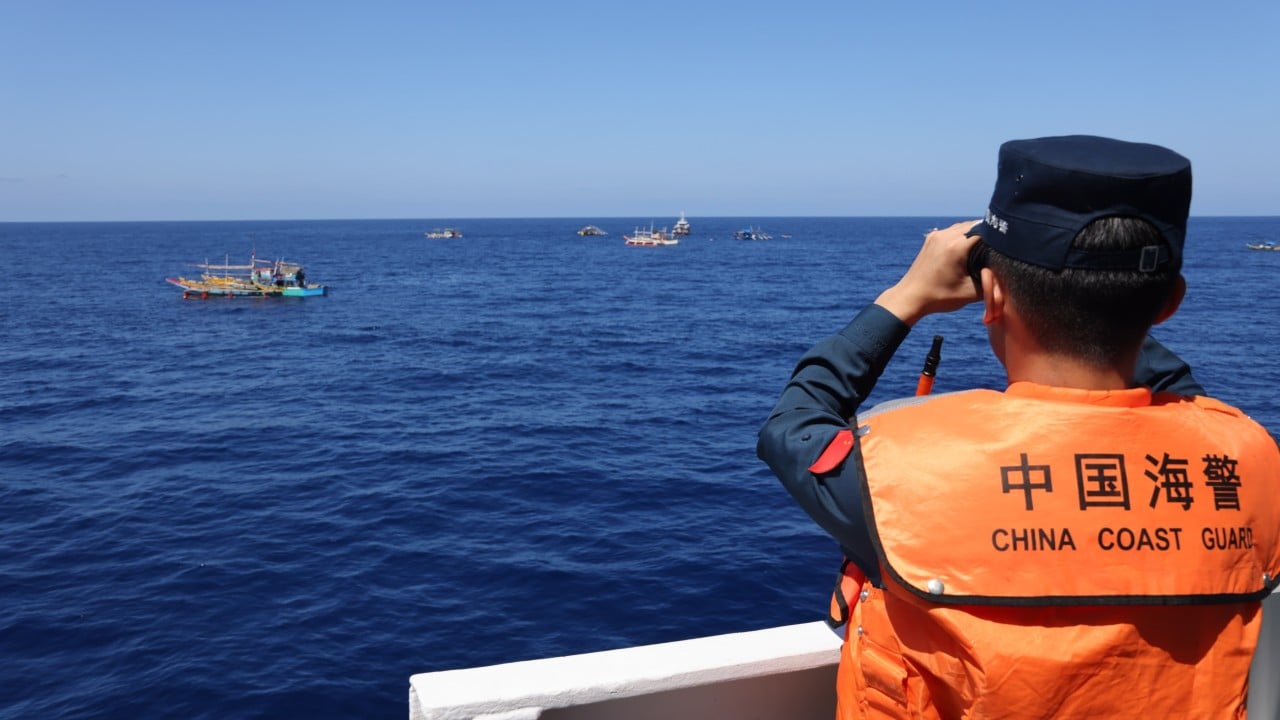
The current strategy of using the 2016 ruling as a cudgel to shame Beijing into submission is actively failing. It has not stopped a single Chinese coast guard vessel from using water cannons. It has not removed a single piece of military hardware from Mischief Reef.
All it does is provide a false sense of moral superiority to Western allies while leaving Philippine mariners to bear the actual physical risk on the water.
If Manila wants to secure its economic future, it must stop treating the 2016 ruling as a holy relic. It is a dead letter. The path forward requires a brutal pivot back to reality.
- De-escalate the Rhetoric: Drop the constant public invocations of a ruling that Beijing will never recognize.
- Bilateral Resource Carve-outs: Pursue functional, non-sovereign agreements on fishing quotas and oil exploration, explicitly separating economic access from territorial ownership.
- Acknowledge the Power Asymmetry: Small nations next to superpowers cannot rely on distant legal courts for defense. Security comes from pragmatic deterrence combined with sophisticated diplomatic engagement, not legal paperwork.
The 2016 South China Sea ruling didn't save the region. It paralyzed it. Continued reliance on this failed legal strategy ensures that the next major maritime crisis won't be settled by judges, but by warships.