The coffee gets cold. That is the first thing you notice when the job is gone.
You sit there at seven in the morning, the house unnervingly quiet while the rest of the world rattles past your window on its way to somewhere important. The ceramic mug warms your palms, but the liquid inside turns dark, flat, and bitter. You do not drink it. You just stare at the steam, or the lack of it, wondering how something that was solid on Friday can turn into smoke by Monday. Recently making news in this space: Why Multi-Generational Real Estate Wealth Is a Myth That Keeps You Poor.
Joblessness in America is rarely a grand, cinematic disaster. It does not arrive with a thunderclap. It arrives in a conference room with frosted glass, or an email bearing a subject line that is entirely too polite. It is a quiet eviction from a routine. And for millions over the last few years, that eviction notice has been arriving with terrifying frequency.
Yet, something has shifted in the air. Further details into this topic are covered by Harvard Business Review.
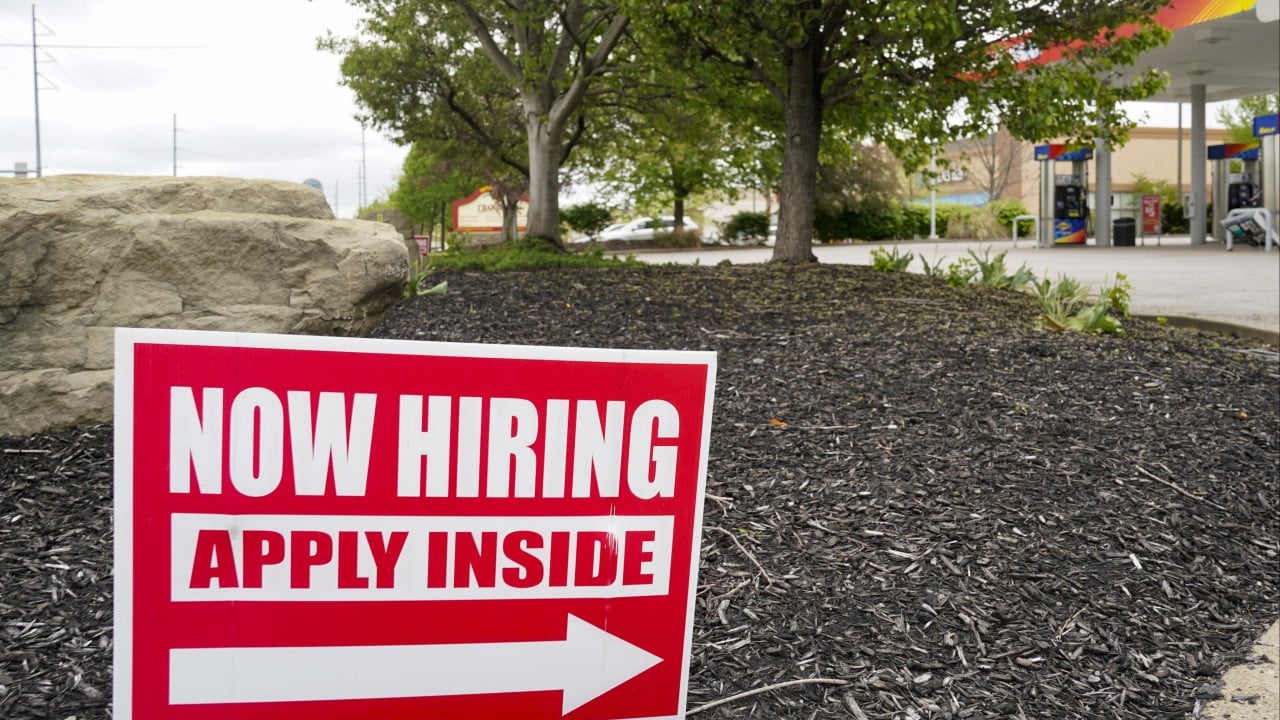
Statistics do not usually weep, but they can whisper. Recently, the Department of Labor released numbers showing that U.S. jobless claims fell to their lowest level since mid-July, dropping down to around 219,000. On a Bloomberg terminal or a cable news ticker, this is just a blip. It is a green arrow. It is an index moving in a favorable direction. Economists nod over their keyboards. Analysts adjust their projections for the next quarter.
To the person staring at the cold coffee, however, a national trend is weather. You cannot pay rent with a macroeconomic trend.
Let us be entirely honest about what these numbers mean, stripped of the Wall Street jargon. When initial claims for unemployment benefits drop, it means fewer employers are handing out pink slips. It means the bleeding has slowed. It means that, for now, the terrifying momentum of layoffs that swept through various sectors has encountered a wall of corporate hesitation. Companies that were jittery months ago are deciding to hold their ground. They are keeping their people.
Consider Marcus, a hypothetical thirty-eight-year-old logistics coordinator in Ohio whose reality mirrors thousands of real ones. Six months ago, Marcus watched three of his colleagues pack their lives into cardboard boxes before lunch. Every morning after that, he logged into his laptop with a knot in his stomach, waiting for the calendar invite from HR titled "Alignment Check." He stopped going out to dinner. He stopped looking at his 401(k) statements because the numbers felt like a personal insult.
When Marcus reads that jobless claims have hit a summer-low baseline, he does not throw a parade. He simply unclenches his jaw. For Marcus, the drop to 219,000 claims is not a data point; it is a temporary reprieve from the guillotine. It means he gets to keep paying for his daughter’s soccer cleats for at least another month.
We must examine why this matters beyond the individual anxiety.
The labor market is a massive, lumbering beast of supply and demand, but its beating heart is psychology. Confidence is currency. When workers feel secure, they spend. They buy cars, they fix leaky roofs, they take risks, they change careers. When fear takes over, the entire economy holds its breath. The recent drop in claims suggests that the great contraction we all braced for has refused to devour the room.
Historically, when inflation climbs and interest rates tighten like a vise, the textbook remedy from central banks is to cool the economy. And cooling the economy, in polite policy terms, usually means putting people out of work. It is the grim arithmetic of finance: to save the machine, some gears must be discarded.
For months, experts predicted that the Federal Reserve's medicine would taste terribly bitter. They warned of a sweeping wave of unemployment, a surge in filings that would test the safety nets of state governments from California to New York. The labor market was supposed to crack under the weight of high borrowing costs.
It did not crack. It bent. And now, it appears to be stiffening its spine.
Why? Because employers learned a brutal lesson during the pandemic-era labor shortages. Finding talent is agonizingly hard. Training talent is expensive. Once you let a skilled worker go, replacing them when the storm passes is a gamble with terrible odds. So, instead of shedding staff at the first sign of economic turbulence, businesses are hoarding their human capital. They are tightening their belts elsewhere—pulling back on marketing budgets, pausing software expansions, trimming travel—while keeping the people who actually do the work glued to their desks.
This is a fundamentally different dynamic than what we saw in past downturns. It points to a maturing, albeit bruised, corporate mindset.
Still, we must not mistake a lower rate of firing for an era of abundance. Jobless claims only measure the exit velocity; they do not tell us about the quality of the terrain outside. They count the people falling off the cliff, but they do not measure how hard it is to climb the mountain once you are down there. The duration of unemployment—how long people stay out of work once they lose their jobs—remains a stubborn puzzle. If you lose your job today, finding a replacement that matches your previous standard of living takes longer than it did two years ago. The hiring process has turned into a gauntlet of automated resume screeners, multiple-round interviews, and take-home assignments that demand days of unpaid labor.
So, while fewer people are entering the unemployment line, the ones who are already standing in it face a long, cold wait.
This is the dichotomy of the current American economy. It is resilient, yet anxious. It is robust in its ability to avoid catastrophe, yet fragile in its everyday human experience.
When you zoom out far enough, the jagged lines on the economic charts smooth out into gentle curves. You can look at the mid-July lows in jobless claims and see a triumph of monetary policy and corporate adaptability. You can write editorials about soft landings and resilient consumers.
But zoom back in.
Look back at the kitchen table. The coffee is still cold. The person sitting there is breathing a little easier today, reading the headline on their phone screen, feeling the strange, weightless sensation of a disaster narrowly avoided. They do not know what next month will bring. No one does. But for today, the door remains closed, the laptop is open, and the work is still there.
Sometimes, in an unpredictable world, a temporary stay of execution is enough to start believing in tomorrow again.