A block away from the United Nations, the autumn air tasted of copper and diesel. It was late September, the kind of New York afternoon where the sky sits low and heavy over the asphalt, trapping the noise of sirens and megaphones between glass towers until the sound has nowhere to go but up.
More than a hundred people found out what happens when that sound hits a barricade.
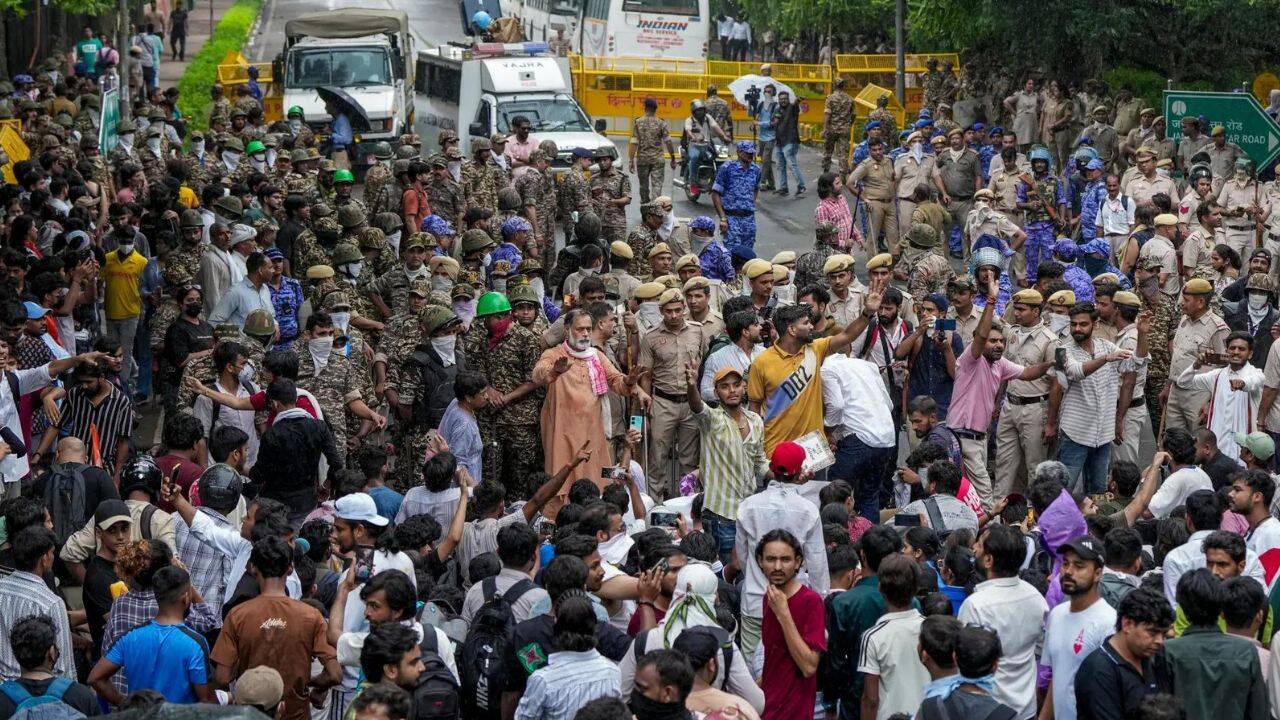
They stood shoulder to shoulder behind heavy metal bike racks, holding handwritten cardboard signs that smeared in the humidity. Their voices rose in a ragged chorus against the arrival of Israeli Prime Minister Benjamin Netanyahu for the General Assembly. For hours, the intersection vibrated with chants, drums, and the sharp, urgent rattle of plastic water bottles filled with pebbles. Then came the plastic cuffs. Then came the arrest vans idling with their exhausts humming, swallowing demonstrators one by one while tourists on the sidewalk raised their phones to capture the spectacle through the gaps in police netting.
History rarely arrives with a trumpet. Sometimes it arrives in a flash of amber police lights and the hollow clack of zip-ties pulled tight around wrists behind backs.
To understand why those bodies hit the pavement, why over a hundred individuals chose handcuffs over staying home, you have to look past the evening news ticker. You have to look at the invisible architecture of grief that stretches four thousand miles across the Atlantic, anchoring itself right here in the grid of Manhattan.
Think of a living room in Brooklyn or Queens. Imagine the faint blue glow of a television screen casting shadows across a Persian rug. On that screen, distant explosions light up a skyline that someone in the room used to call home. A cousin’s last text message sits unread on a smartphone. The distance between the East River and the Mediterranean shrinks to zero the moment a loved one's name appears on a casualty list. When governments fail to bridge that chasm, ordinary people take to the streets with their bodies, offering them up as barricades because they have nothing left to trade.
The protest on Second Avenue was not an isolated flash mob. It was the physical manifestation of a fracture that has been widening for decades.
Consider the mechanics of dissent in a modern global city. When world leaders gather behind glass walls guarded by snipers and diplomatic immunity, the city outside transforms into a pressure cooker. The NYPD deploys strategic response units, transit police, and metal barricades that carve the grid into authorized zones and forbidden territories. Every inch of pavement becomes a contested negotiation between free expression and state security.
On this particular afternoon, the friction became too great. As the motorcade approached, the crowd surged forward, a living wave crashing against the steel divide.
"We are here because silence is complicity," whispered Maya, a twenty-four-year-old organizer whose voice was shredded from hours of calling out through a megaphone. She spoke quickly, her eyes darting toward the line of riot gear opposite us. She wasn't talking to me as a reporter; she was talking to herself, trying to anchor her sanity in the middle of a swirling storm of police whistles and flying paper cups. "Every block we march is a message that cannot be vetoed."
That is the crux of it. The United Nations was built on the premise that words inside a grand hall could replace violence in the streets. Delegates in tailored suits sit around mahogany tables, translating mass displacement and military campaigns into diplomatic resolutions, amendments, and vetoes. But when those resolutions stall, when the death toll climbs past the capacity of human comprehension, the disconnect between the mahogany table and the concrete sidewalk becomes intolerable.
The people arrested outside the UN weren't under any illusion that their chants would instantly alter foreign policy. They knew the motorcade would pass. They knew the delegates would vote. They knew the precinct holding cells would be crowded and cold.
They did it anyway.
There is a profound human need to be witnessed in one's despair. When a government backs a strategy that your conscience rejects, standing in the middle of a Manhattan thoroughfare until an officer pulls your arms behind your back is a way of reclaiming agency. It is a declaration: You may ignore the ballot, but you cannot ignore my blocking your path.
As the sun dipped behind the Chrysler Building, casting long, bruised shadows across the avenue, the street sweepers moved in behind the police vans. They washed away the spilled coffee, the trampled flyers, and the plastic debris. Within an hour, traffic resumed its relentless, honking rhythm. Yellow cabs surged forward where the blockade had been. The tourists walked back toward Grand Central, checking their maps.
Yet the air still smelled faintly of smoke.
In a quiet apartment miles away, the television screen remained on, broadcasting the same faces, the same speeches, the same deadlock. But out on the pavement, something had shifted. A hundred people had traded their afternoon for a jail cell, leaving behind an imprint in the city's stone—a reminder that no amount of diplomacy can permanently insulate the powerful from the human cost of their choices.
The barricades are gone now. The street is clear. But the weight of what happened there lingers in the hum of the city, waiting for the next motorcade to pass.