The ink on a California ballot feels heavy when you realize what it actually buys.
Elena stands in the quiet of a church gymnasium in Fresno, looking down at a list of nearly sixty names. She is not thinking about political parties. She is thinking about the $4.50 she paid for a gallon of gas on the way here. She is thinking about her rent, which devours more than half of her paycheck, and her son’s public school classroom, which feels underfunded and overcrowded. You might also find this related article interesting: The Quiet Arithmetic of the Indian Ocean.
To the rest of the nation, California is an abstraction—a dream factory of tech wealth and coastal sunsets, or a cautionary tale of urban decay and political overreach. But for the 39 million people who actually live here, the state is a daily negotiation with reality. And today, as voters head to the polls to choose who will replace Governor Gavin Newsom, that negotiation has reached a fever pitch.
California’s unique top-two primary system strips away the comfort of tribal politics. There are no separate lanes for Democrats and Republicans today. Everyone shares the same crowded ballot. Only the top two vote-getters, regardless of party, will survive to see November. The mathematics of this system create a high-stakes psychological thriller. A fractured vote could easily lock an entire party out of the general election entirely. As extensively documented in detailed articles by BBC News, the implications are widespread.
The battle lines are not just drawn between left and right. They are drawn between competing visions of what ails the golden state, and who has the right to fix it.
The Weight of the Resume
For decades, the path to power in California was predictable. You climbed the ladder, rung by rung, accumulating institutional knowledge and powerful allies. Xavier Becerra embodies this tradition. He is a man defined by the sheer volume of his public service—former state assemblyman, longtime congressman, California attorney general, and most recently, the federal secretary of Health and Human Services.
Becerra’s campaign is built on the premise that a sprawling, complicated state with the world’s fifth-largest economy cannot be governed by amateurs. He points to his record of filing 122 lawsuits against the first Trump administration as attorney general, framing himself as a battle-tested shield for California’s progressive values.
But institutional longevity is a double-edged sword. In a time of profound voter frustration, a long resume can look less like experience and more like accountability for the status quo.
During the final stretch of the campaign, Becerra found himself answering for the darkest moments of his tenure as health secretary. Rivals weaponized his handling of the 2021 migrant child crisis at the southern border, pointing to the bleak, overcrowded shelters that fell under his department’s care. To his critics, Becerra represents a cautious, bureaucratic approach to problems that require urgent, radical triage.
The Disruptor with the Microphone
On the other side of the ideological divide stands Steve Hilton. His voice carries the distinct accent of his British upbringing, an unusual cadence for a man aiming to lead the American West. A former top advisor to British Prime Minister David Cameron, Hilton reinvented himself in Silicon Valley and on the airwaves of Fox News.
Hilton’s campaign is an unfiltered assault on California’s regulatory state. He speaks directly to the fury of small business owners and suburban families who feel choked by environmental restrictions, high income taxes, and skyrocketing energy costs. His promises are sweeping: suspend regulations, slash taxes, and open up natural spaces to build single-family homes.
Securing the endorsement of Donald Trump provided Hilton with a massive surge of momentum, helping him consolidate a fractured Republican base that had been drifting toward Riverside County Sheriff Chad Bianco. Yet, Hilton faces his own precarious math. In the final hours of the race, his speeches took on an urgent, almost desperate tone. He warned that if conservative voters did not unite entirely behind him, they risked a total lockout—leaving November to a choice between two Democrats.
Wealth against the Workers
Then there is the question of money, and how much of it can buy a piece of California’s future. Tom Steyer, the billionaire climate advocate, poured more than $203 million of his immense personal fortune into broadcast, cable, and radio ads. His campaign flooded digital spaces, utilizing paid social media influencers to bypass traditional media structures entirely.
Steyer frames his wealth as an asset, arguing that his financial independence means he cannot be bought by special interests. He is the only major candidate backing a proposed one-time tax on billionaires to fund state healthcare deficits.
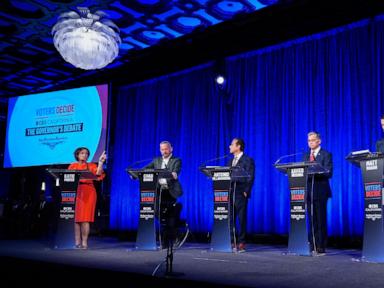
But his omnipresence on television screens has triggered a deep-seated cynicism among voters who are struggling to buy groceries. The tension between Steyer and Becerra burst into the open during the debates, transforming the primary into a philosophical referendum on political legitimacy. Is the governorship something to be earned through decades of public service, or can it be bought through sheer marketing saturation?
Meanwhile, candidates like Katie Porter, the consumer protection advocate known for her sharp-witted whiteboard interrogations in Congress, and Matt Mahan, the tech-savvy mayor of San Jose, offer alternative paths for voters who are weary of both institutional insiders and billionaire saviors.
The Unwritten Future
The tragedy of modern political coverage is that it treats an election like a sporting event, focusing entirely on the horse race, the polling percentages, and the fundraising tallies. We forget that whoever wins this race will inherit a state of profound contradictions.
They will govern a land of unimaginable tech wealth where thousands of people sleep on cardboard under highway overpasses. They will manage an agricultural empire that feeds the nation, even as the valleys that grow that food run dangerously dry. They will lead a people who are fiercely proud of their state's progressive legacy, yet deeply exhausted by the cost of living within it.
Back in the Fresno gymnasium, Elena slides her ballot into the electronic scanner.
The machine swallows the paper with a soft, mechanical click. There is no applause. There are no campaign speeches here. There is only the quiet, collective hope of millions of individuals trying to steer a massive, beautiful, broken state toward dry land.
The politicians have made their final pitches. The television screens will soon fall dark. Now, the quietest voices in California will have the final word.