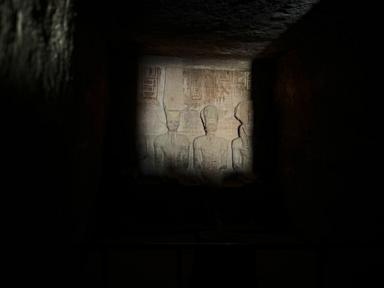
Popular coverage of biannual solar alignments in ancient Egyptian temples treats the event as a mystical clockwork precision that modern engineers admire from afar, yet that framing obscures how axial geometry, seasonal declination, and architectural drift actually interact over three millennia. Understanding these monuments requires separating verified astronomical geometry from speculative cultural intent, tracing the physical path of sunlight through enclosed stone corridors, and accounting for slow celestial shifts since the New Kingdom. This analysis breaks down the structural mechanics of solar alignment in temples such as Abu Simbel, maps the causal chain from celestial motion to interior illumination, and sets out a rigorous method for evaluating alignment claims without falling for viral shorthand.
The Alignment Illusion and What Popular Coverage Gets Wrong
Headlines about a golden beam striking a sanctuary twice a year rely on an intuitive metaphor: the temple acts like a giant camera shutter or sundial built to hit a specific target on two fixed calendar dates. In practice, axial illumination is a continuous seasonal envelope governed by the sun's apparent declination, the azimuth of the temple's central axis, and the aperture geometry of doorways and hypostyle halls. When sunlight enters a long, narrow stone structure, the beam does not simply "turn on" for a single instant on two calendar days; rather, a patch of light sweeps across floors, columns, and cult statues over a window of days or weeks as the sun's path shifts north or south along the horizon. Learn more on a similar topic: this related article.
A second error in standard reporting is treating the modern Gregorian calendar date as if it were locked to the solar cycle in antiquity. Ancient Egyptian civil time used a 365-day year without a leap-day adjustment, causing civil dates to drift relative to the tropical solar year at roughly one day every four years. Even when observers tracked seasonal markers such as the heliacal rising of Sirius or solstices, claiming that a New Kingdom architect calibrated a monument to hit an exact modern calendar date confuses contemporary calendar conventions with ancient sky-watching. Furthermore, viral summaries frequently imply that every major temple contains a dramatic sanctuary beam, overlooking that many Egyptian temples were oriented toward cardinal directions, Nile flow, or local horizon features rather than biannual solar penetration into an inner shrine.
To read solar alignment accurately, we can separate the phenomenon into four analytical layers: Further journalism by National Geographic Travel explores similar views on the subject.
- Celestial Geometry: The sun's declination across the tropical year, horizon elevation, and atmospheric refraction at low angles.
- Architectural Axis and Aperture: The compass bearing (azimuth) of the temple's longitudinal axis, floor slope or steps, and the width-to-length ratio of halls and doorways.
- Secular Celestial Drift: Gradual changes in the obliquity of the ecliptic (axial tilt) and precession over thousands of years, which shift where the sun rises and sets on a given solar longitude.
- Interpretive Attribution: The boundary between measurable light geometry and archaeological or textual evidence of intended ritual function.
The Mechanics of Axial Sunlight in Enclosed Stone Architecture
From Horizon Azimuth to Sanctuary Illumination
For direct sunlight to reach deep into an Egyptian temple—especially a rock-cut speos such as the Great Temple of Ramesses II at Abu Simbel—several geometric conditions must align simultaneously. First, the sun's azimuth at rising (or at a given altitude above the horizon) must fall within the angular field of view defined by the entrance pylon or facade opening and the interior walls. A long corridor acts as a directional filter: the deeper the sanctuary sits behind successive doorways and columned halls, the narrower the range of solar azimuths that can penetrate all the way to the back wall.
Second, horizon topography and solar altitude matter just as much as compass direction. In regions bordered by cliffs, desert plateaus, or river valleys, the apparent horizon is rarely flat at zero degrees elevation. Because the sun moves diagonally upward across the sky after rising, a higher horizon delays when direct rays clear the ridge and shifts the sun's azimuth eastward or southward (in the Northern Hemisphere) by the time light crests the obstacle. Atmospheric refraction near the horizon also bends light slightly upward, making the solar disk appear higher than its geometric position, while dust and humidity scatter shorter wavelengths and give low-angle sunlight its warm amber or gold cast.
Third, interior obstructions govern what actually gets lit. Hypostyle halls filled with thick papyrus or lotus columns cast striped shadows across the floor, meaning a beam passing through the outer entrance may break up or miss a statue entirely if a column or lintel sits in the line of sight. Only when the solar azimuth, altitude, and interior sightlines coincide does a coherent pool of light reach a rear niche or seated figure.
Why "Twice a Year" Happens Geometrically
In the Northern Hemisphere, the sun's declination swings between roughly $+23.4^\circ$ near the June solstice and $-23.4^\circ$ near the December solstice, crossing $0^\circ$ near the equinoxes. Because the sun moves north for half the year and south for the other half, any given declination—and therefore any given rising or setting azimuth on a fixed horizon—occurs twice per tropical solar year: once on the way north in spring and once on the way south in autumn.
That symmetry explains the "twice a year" pattern in principle, yet it introduces a crucial nuance that casual accounts gloss over. The two dates on which light strikes a specific point are not automatically equidistant from a solstice or equinox unless the temple's orientation and sightline geometry satisfy specific symmetry conditions, nor are the two illumination events guaranteed to look identical. Atmospheric clarity, haze, and the rate at which solar declination changes near the equinoxes versus the solstices affect how fast the light patch moves across the stone. Near the solstices, the sun's declination changes slowly day by day, so a sanctuary near a solstitial extreme may experience light sweeping slowly over several days; near the equinoxes, declination changes more rapidly each day, shifting the beam's resting position more noticeably from one morning to the next.
The Cost Function of Alignment Precision
Designing a monument around seasonal light is not a cost-free aesthetic choice; it imposes constraints on site selection, layout, and durability. The first constraint is site trade-off. A builder who prioritizes a specific solar sightline must orient the temple axis accordingly, which can conflict with ideal access to the Nile, prevailing wind patterns, flood protection, or flat bedrock suitable for quarrying.
The second constraint is architectural trade-off. Narrowing openings and extending corridors sharpens directional selectivity—making the light event rarer and more dramatic—but reduces everyday interior daylight and complicates processional movement. Conversely, wide doorways and high clerestory openings let in generous light across many months, diluting the rarity of any single seasonal alignment.
The third constraint is maintenance and visibility. Silt, windblown sand, structural settling, and later modifications alter floor levels and sightlines over centuries. Even today, modern tourism infrastructure, lighting, or conservation work near entrances can change how visitors perceive natural illumination compared to how it appeared when the stone was freshly dressed and painted.
Facts Versus Educated Hypotheses in Temple Archaeoastronomy
Credible analysis requires drawing a hard line between what instruments can measure today and what archaeologists or historians can infer about ancient intentions.
Established Facts and Measurable Parameters
- Surveyed Orientation and Sightlines: Surveyors and archaeoastronomers can measure a temple's longitudinal axis, doorway dimensions, floor gradients, and surrounding horizon profile with high precision.
- Celestial Mechanics: Modern ephemerides model the sun's position, declination, and apparent horizon crossing over historical epochs with well-understood physics.
- Presence of Axial Sanctuaries: Many New Kingdom temples feature a clear longitudinal progression from pylon court to hypostyle hall and bark shrine or cult sanctuary, creating long sightlines along the central axis.
Educated Hypotheses and Open Questions
- Intentional Date Targeting: When sunlight hits a cult statue or wall relief on two dates a year, researchers often hypothesize intentional alignment to a seasonal festival, agricultural milestone, or royal anniversary. However, unless supported by corroborating inscriptions, ritual texts, or clear structural cues, an alignment can sometimes be a byproduct of general axial planning or broad seasonal orientation rather than precision calendar engineering.
- Exact Ancient Appearance: Reconstructing how an illumination event looked three millennia ago involves educated modeling rather than direct observation. Original polychrome pigments, burnished stone surfaces, temple doors, and surrounding structures have changed, and subtle shifts in earth movement or stone wear can alter exact light boundaries by centimeters.
- Symbolic Meaning of Specific Targets: Identifying why a beam lands near one figure rather than another—such as solar deities versus creator or underworld figures—relies on Egyptological interpretation of temple theology and iconography, which remains open to scholarly debate when explicit texts are absent.
A Practical Framework for Evaluating Solar Alignment Claims
Whether you are planning a trip to Upper Egypt, reviewing an archaeoastronomy study, or editing coverage of a seasonal light event, you can test alignment claims systematically using four steps.
- Audit the Geometry Before the Story: Check the temple's axis orientation, whether the sanctuary sits on a straight line from the entrance, and how high the eastern or western horizon is. If a corridor dog-legs or a high ridge blocks low-angle sun for part of the year, a dramatic straight-shot beam is physically constrained.
- Separate Solar Window from Single-Day Myth: Ask how many days the light actually enters the space and how wide the illuminated patch is. A beam that moves across a wall over a week or two behaves differently from a pinpoint marker, even when headlines highlight two peak dates.
- Check for Secular Drift: When comparing modern dates or angles to ancient construction, account for thousands of years of slow astronomical change. A sightline that matches a seasonal marker today is not automatically identical to the exact day-angle relationship at the time of construction.
- Look for Corroborating Evidence: Weigh geometric coincidence against textual, architectural, and contextual evidence. Strong conclusions connect measured light paths with documented temple functions, spatial layout, and scholarly consensus rather than relying on dramatic photography alone.
Strategic Action for Coverage, Travel, and Research
Do not publish or book around solar alignment claims based on headline dates alone; verify the sightline geometry, horizon profile, and illumination window first. For editors and content strategists, the highest-value move is to replace recycled "mystical beam" summaries with clear visual explanations of azimuth, horizon elevation, and seasonal declination—turning a fleeting viral moment into evergreen authority. For travelers and researchers, schedule visits with buffer days around the reported window and pair physical observation with Egyptological and astronomical sources so expectations match what the stone and sky actually deliver.