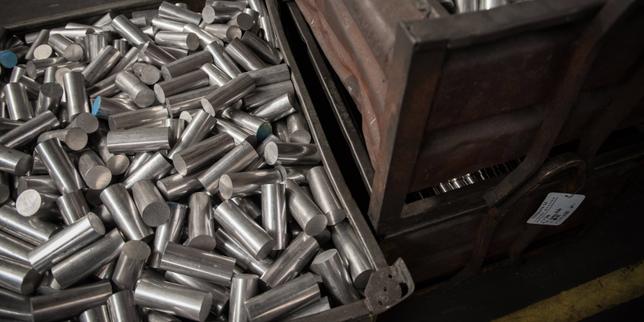
Airbus has a massive problem, and it is brewing right in its own backyard. The European aerospace giant boasts a backlog of thousands of aircraft, yet the small companies building those planes are running out of cash. The culprit is the skyrocketing cost of raw materials, specifically aluminum.
French aerospace subcontractors are caught in a brutal squeeze. On one side, they face intense pressure from aircraft manufacturers to accelerate production rates. On the other side, the raw metal required to build these components has become prohibitively expensive. It is a quiet crisis threatening the entire European aviation supply chain.
If you think a booming aviation industry guarantees success for suppliers, you misunderstand how modern aerospace manufacturing works. The reality on the ground in regions like Occitanie is far more grim.
The Aluminum Trap Facing French Suppliers
Aluminum makes up the vast majority of an aircraft's structural weight. When the price of this crucial metal spikes, the margins of small machine shops and component makers evaporate instantly. Over the last few years, global economic shocks, energy crises, and shifting trade policies pushed aluminum prices to historic highs.
For a Tier 2 or Tier 3 subcontractor in France, this price surge is not a minor inconvenience. It is an existential threat. These smaller companies operate on razor-thin margins. They do not buy metal in the same massive volumes as Airbus or Safran. They lack the market power to negotiate bulk discounts, meaning they bear the full brunt of market volatility.
The biggest issue lies in how contracts are structured. Most subcontracts were signed years ago, long before inflation ran rampant. These agreements frequently lock in fixed prices for components over multi-year periods. When the cost of aluminum doubled, the price paid by the buyer stayed exactly the same. Subcontractors are essentially paying out of their own pockets to deliver parts to their clients.
Why Metal Prices Staid So High
You might wonder why aluminum remains so expensive when global supply chains supposedly normalized. The answer comes down to energy and geopolitics.
Smelting aluminum requires an immense amount of electricity. In fact, energy represents roughly one-third of the total cost of producing primary aluminum. When European energy markets went haywire following geopolitical conflicts, several major European smelters cut production or closed entirely. This forced the industry to rely more heavily on imports, driving up transport costs and import duties.
Sanctions and trade restrictions complicated things further. Buyers had to scramble to restructure their sourcing networks. When you change where you buy your aerospace-grade aluminum, you do not just swap suppliers overnight. The certification process for aerospace materials takes months, sometimes years. You cannot just buy metal from an unverified source because it is cheaper. Every single sheet of aluminum must have a flawless paper trail.
The Production Ramp Up Paradox
Airbus wants to push production of its single-aisle A320neo family toward 75 aircraft per month. This aggressive ramp-up should be great news for the French industrial base. Instead, it is exposing deep systemic vulnerabilities.
To increase production, a subcontractor needs working capital. They must buy raw aluminum upfront, pay their machinists, run their facilities, and wait months to get paid by the aircraft manufacturers. When raw material prices are inflated, the upfront capital required to fulfill an expanded order multiplies.
Bankers are becoming increasingly hesitant to lend to these small manufacturing firms. Credit lines are tightening. Many French subcontractors simply do not have the cash flow to buy the aluminum needed to meet the new production schedules. If a single supplier of a minor fuselage bracket goes under, the entire assembly line in Toulouse grinding to a halt becomes a real possibility.
Structural Blind Spots in the Supply Chain
The French aerospace association, GIFAS, has sounded the alarm repeatedly. They point out that the current model shifts almost all the financial risk onto the weakest links in the chain. Major aerospace manufacturers protected themselves with long-term hedging strategies and raw material bulk-buying programs. The small family-owned machine shops employing fifty people did not have those options.
Many industry executives believed that inflation indexation clauses in contracts would protect suppliers. They were wrong. Most of these clauses rely on lagging economic indexes that fail to reflect the sudden, sharp spikes in the spot price of specialized aerospace-grade alloys. By the time the index adjusts, the subcontractor has already absorbed months of unsustainable losses.
We are seeing a clear divergence. The top-tier aerospace companies report record revenues, while their vital suppliers face restructuring or bankruptcy. This imbalance is unsustainable.
Survival Steps for the Industrial Base
Fixing this structural failure requires immediate, practical shifts in how the aerospace industry manages its supply networks.
First, the practice of fixed-price component contracts without real-time material cost pass-throughs must end. Manufacturers need to implement dynamic pricing models for raw materials. If the market price of aluminum climbs above a certain threshold, the buyer should automatically absorb a portion of that increase.
Second, larger aerospace firms must expand their raw material procurement programs to cover their smaller suppliers. By purchasing aluminum centrally and distributing it down the supply chain, the primary manufacturers can use their massive scale to insulate small shops from price shocks. This protects the supply chain from unexpected disruptions.
Finally, subcontractors must aggressively adopt advanced manufacturing techniques to minimize material waste. In traditional aerospace machining, it is common to buy a heavy block of aluminum and grind away up to eighty percent of it to create the final part. Improving nesting software and utilizing near-net-shape manufacturing reduces the initial weight of the metal required, lowering the upfront cash burden.
The French aerospace sector cannot afford to lose its specialized subcontractors. Once these industrial capabilities and skilled workers vanish, bringing them back is incredibly difficult. Resolving the aluminum cost crisis is not just about protecting small business profits. It is about ensuring the planes of tomorrow can actually get built.