The rain in Tokyo smells like old iron and wet asphalt.
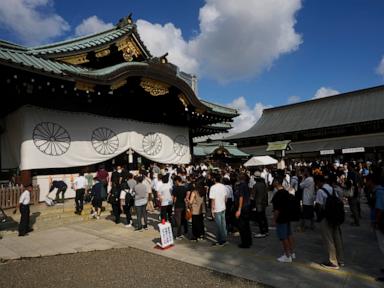
Step away from the neon pulse of the Yamanote Line, slip past the towering bronze torii gate of Chiyoda ward, and the roar of traffic vanishes. In its place rises a silence so dense it feels physical. This is Yasukuni Shrine. To walk its gravel paths is to step inside a living wound that has refused to heal for nearly eight decades.
Granite statues stare blankly ahead. Incense smoke curls upward toward a slate-gray sky. Every year, diplomats wring their hands, prime ministers send ritual offerings of sakaki branches, and neighboring capitals erupt in furious protest. Why? Because carved into the sacred registry inside this sprawling complex are the names of over two million souls.
Among them are privates who died starving in the jungles of New Guinea, kamikaze pilots who kissed their mothers goodbye with ceramic poetry in their pockets, and—most controversially—fourteen Class-A war criminals convicted by the Allied tribunal after the Second World War.
To understand Yasukuni is to understand a profound fracture in the Japanese psyche. It is a place where deep maternal grief collides with geopolitical lightning.
Consider a hypothetical afternoon in the life of Kenji, an eighty-two-year-old retired carpenter living in a quiet suburb of Saitama. Every August 15th, the anniversary of Japan’s surrender, Kenji polishes his father’s old infantry medals. His father never came home from the Philippines. His body lies somewhere beneath a canopy of dense roots and tropical mud, nameless and unrecovered.
For Kenji, Yasukuni is not a monument to imperialism. It is the only grave his father ever had.
In Shinto tradition, death does not end identity. It transforms the departed into kami—divine spirits or protectors. Long before the militaristic frenzy of the 1930s and 1940s twisted its purpose, the shrine was founded in 1869 by Emperor Meiji as Shokonsha, a place to pacify and honor those who died fighting to unify a modernizing nation. The core concept was radical for its time: in death, all ranks dissolved. A humble farmer from Kyushu and a high-ranking samurai stood as equals before the divine altar.
That egalitarian theology became a dangerous weapon.
During the dark ascendance of imperial expansion, the state hijacked that sacred architecture. Yasukuni was weaponized. Soldiers were told not to fear dying for the Emperor, because their spirits would reunite at the shrine, immortalized as guardian deities of the realm. Dying for the state was transformed into the ultimate religious duty. The shrine ceased to be a private space for mourning and became the spiritual engine of a war machine that tore Asia apart.
Then came August 1945. The empire collapsed in atomic fire.
Under the Allied occupation, Yasukuni was stripped of its state funding, decoupled from the government, and recast as a private religious corporation to guarantee the freedom of religion outlined in the postwar constitution. On paper, the military shrine was defanged.
Yet the ghosts remained.
The most bitter irony of Yasukuni lies in a quiet administrative decision made in secret during the autumn of 1978. That was the year the chief priest enshrined the fourteen Class-A war criminals—men like Hideki Tojo, the wartime prime minister—alongside millions of ordinary conscripts who had no say in the government's catastrophic decisions.
When the news leaked out years later, it detonated a diplomatic crisis. To China and South Korea, nations that suffered atrocities under imperial occupation, honoring convicted war criminals at a national sanctuary felt like a deliberate rewriting of history. It signaled that Tokyo had never truly repented.
To this day, every time a sitting Japanese prime minister visits the shrine on festival days, the diplomatic fallout is immediate. Cables are summoned. Statements of condemnation are issued.
Imagine standing in the courtyard while this geopolitical storm rages overseas. The air smells sweet with incense. An elderly woman in a neat navy blue kimono bows deeply, her hands trembling slightly as she rings the offering bell. She is not thinking about international trade treaties or United Nations resolutions. She is thinking about an uncle who vanished in Manchuria.
This is the central tragedy of Yasukuni. It holds two entirely incompatible truths in a permanent, agonizing embrace.
On one hand, it is a sanctuary for private, inconsolable grief. Families who lost sons, brothers, and fathers in a war they did not start need a place to whisper their names. They view attempts to ban prime ministerial visits as an assault on their personal right to mourn their dead.
On the other hand, it is an unpurged symbol of historical evasion. As long as the shrine refuses to decouple the spirits of aggressive militarists from the innocent conscripts swept up in their wake, it remains a flashing warning light for the rest of the world. It suggests an unwillingness to look unblinkingly into the darkest mirror of the national past.
History is never just a collection of dates in a textbook. It is blood soaked into the floorboards. It is the weight of an old photograph carried in a wallet for fifty years.
The rain continues to fall over Chiyoda. The bronze gates stand resolute. Inside the inner sanctum, the lists of the dead continue to rest in cedar boxes, silent and immutable, waiting for a reconciliation that neither politics nor time has yet managed to write.