The air in Johannesburg always smells like crushed stone and burnt petrol before the storm breaks. It is a heavy, metallic taste on the tongue, the kind of air that tells anyone who has lived through the city's cycles of fire to check the bolts on their doors.
We do not talk about the thresholds. We pretend the borders we draw on maps are permanent walls, granite and steel, completely immune to the tides of human desperation that push people across rivers and checkpoints. But borders are permeable. They bleed. And when the economy stutters, when the gold in the reef feels a little thinner and the maize on the shelf a little dearer, the blood turns sour.
Consider a man named Chukwuemeka. This is not his real name, but it is the name of a thousand men who wake up before dawn in a rented room in Yeoville, boiling cheap tea over a single-plate electric stove. Let us call him a hypothetical anchor for a reality that is brutally documented. He left Lagos six years ago with a diploma in mechanical engineering that the bureaucratic machinery of South Africa refused to translate into a work permit. So he learned to fix washing machines with his bare hands, working out of a concrete courtyard where the oil stains never wash away. He sends money home to a mother whose arthritis flares up whenever the harmattan winds blow. He pays rent to a landlord who raises the price every December. He speaks Zulu well enough to joke with the butcher, yet he knows, with a quiet, persistent dread, that his life can be unmade in an afternoon.
An afternoon is all it takes.
The news arrived in Lagos as a dry dispatch over state radio: two Nigerian nationals found dead in the dust of Gauteng, their bodies bearing the signature trauma of anti-migrant violence. No dramatic music. Just numbers and names, swallowed quickly by the next commercial break about telecommunication tariffs. But behind those two names lies a sprawling, jagged architecture of fear that stretches from the Gulf of Guinea down to the Cape.
Tensions do not flare spontaneously like dry bush in January. They are cultivated in the quiet spaces between paychecks. When unemployment hovers stubbornly above thirty percent, the human mind searches desperately for a villain it can see, touch, and corner in an alleyway. It is easier to blame the man fixing appliances in the courtyard than the systemic rot of municipal corruption, currency devaluation, and historical inequality that leaves millions behind. Politicians know this. They speak in coded warnings about demographic floods, tossing matches into dry grass while wearing tailored suits, marveling at how easily the smoke obscures their own failures.
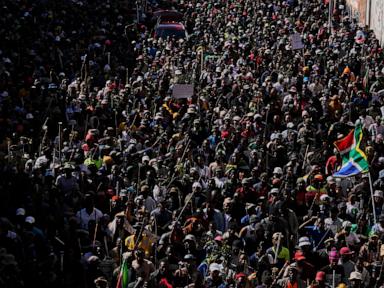
I remember standing on a corner in Jeppestown a few years back, watching a crowd gather around a burning tire. The rubber hissed, sending greasy black plumes into the highveld sky. The anger in the air was palpable, heavy enough to push against your chest. Yet, amid the shouting, I looked into the eyes of the young men throwing stones. They were not monsters. They were tired. They were twenty-four years old, holding high school certificates that meant nothing, living in corrugated iron shacks without running water, watching neighbors from three countries north carve out small livings through sheer, relentless grit.
Envy is a corrosive fuel. When you have nothing, the sight of someone else building a life out of scraps—even if those scraps are smaller than your own—feels like an existential threat.
The diplomats are currently holding meetings in air-conditioned rooms in Pretoria and Abuja. They use words like "condemn," "bilateral," and "investigation." They issue communiques that smell of printer toner and diplomatic caution. But diplomacy cannot resurrect two men whose lungs filled with smoke and dust on a street corner thousands of miles from their mothers' kitchens.
Borders are not just lines on a globe. They are fault lines. And right now, the earth is shaking beneath our feet, while we sit inside listening to the rumble, wondering which house will slide down the hill first.
The smoke still hangs over the ridge. The tea grows cold on the stove. And somewhere out there in the dark, another phone is ringing, bringing news that no one wants to hear, from a city that refuses to look at itself in the mirror.