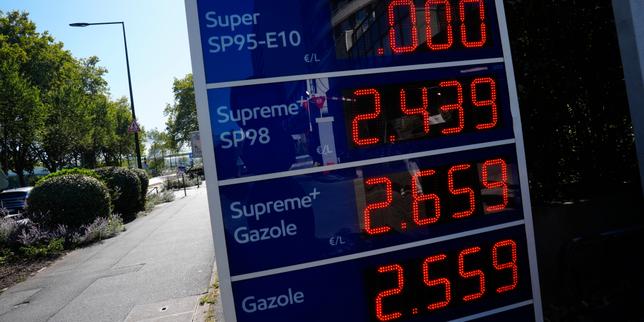
The coffee at the corner bistro in Belleville used to cost one euro and twenty cents. For years, that coin sat comfortably in the palm, a heavy, familiar token of a predictable morning. Today, that same espresso demands one euro and eighty cents. Nobody screams. There is no riot in the cobblestone street. There is only the quiet, heavy sigh of the shopkeeper as he changes the chalkboard menu once again, and the hesitant blink of the regular customer who checks his pocket twice before laying down the coins.
This is not a dramatic catastrophe. It is a slow bleed.
Across the eurozone, inflation has climbed to heights unseen in three years, settling like a cold fog over twenty countries sharing a single currency. Economists stare at their Bloomberg terminals, parsing data points released by Eurostat, speaking in sterile percentages and baseline projections. They talk about supply chain bottlenecks, energy shocks, and monetary policy transmission lags. They use sanitized language to describe a very raw, very human experience.
Numbers lie by omission. They fail to capture the tightening throat of a mother in Lisbon calculating whether she can afford both fresh vegetables and the electricity bill this month. They miss the quiet anxiety of a retired machinist in Stuttgart watching his fixed pension shrink in purchasing power week by week, buying fewer groceries for the exact same nominal sum.
Consider what happens when the cost of living outpaces wages. The mathematics are unforgiving.
When inflation hits a three-year peak, it acts as a regressive tax. It targets those with the least margin for error. If you spend eighty percent of your income on necessities like food, rent, and heating, an overall inflation rate of four or five percent does not mean a minor belt-tightening. It means a complete restructuring of survival. The surplus disappears. The savings account, meant for a rainy day or a child's education, becomes a checking account used to bridge the gap between Tuesday and payday.
We forgot what this felt like. For a decade, the European Central Bank fought a different ghost: the specter of deflation. Back then, central bankers worried that prices were too sluggish, that debt burdens would crush economies if money remained too valuable. They flooded the financial system with liquidity, buying bonds, pushing interest rates into negative territory. They pumped oxygen into a sluggish engine.
And then the world broke.
Pandemic lockdowns snapped global trade routes. Ships sat stranded outside ports from Rotterdam to Shanghai. Just as those knots began to untie, tanks rolled across the Ukrainian border, and the continent's primary source of cheap natural gas went up in smoke. Energy prices surged. Electricity bills doubled and tripled. Fertilizers became expensive, driving up the cost of grain, milk, and bread.
The central bank responded with the only weapon in its arsenal: a blunt instrument.
Interest rates went up. The era of free money died in a series of swift, aggressive hikes by the Frankfurt institution. The theory is simple, almost mechanical. Make borrowing expensive. Cool down consumer demand. Force businesses to stop raising prices because nobody has the cash to pay them. Drive down the temperature of the economy until the fever breaks.
But theory does not feel pain.
Higher interest rates mean mortgages reset. For a young family in Dublin or Madrid with a variable-rate home loan, monthly housing costs suddenly spiked by hundreds of euros. That is money that would have been spent at the local bakery, the neighborhood bookstore, or the weekend market. The cure for inflation is a slowdown, and a slowdown looks suspiciously like a struggle for millions of ordinary households.
Let us walk through a hypothetical Tuesday with Elena, a freelance graphic designer living outside of Milan.
Elena does not trade bonds. She does not sit on the governing council of the central bank. She sits at a wooden desk with a laptop, watching her monthly subscription costs creep upward while her clients tighten their own marketing budgets. Her landlord sent a registered letter last month indexing her rent to the harmonized index of consumer prices. Her local bakery increased the price of her favorite loaf of sourdough by twenty cents. Her utility provider sent an estimate predicting a heavier winter heating burden.
None of these individual increases feels fatal on its own. Twenty cents here, fifteen euros there. But stacked together, they form an invisible wall.
Elena looks at her monthly ledger. Her income remains stagnant, anchored by long-standing client contracts that take months to renegotiate. Her expenses have inflated across every vector. She cuts out the gym membership. She postpones the dentist appointment. She stops buying organic produce and shifts to generic brands.
Multiply Elena by three hundred and fifty million people.
That micro-contraction of daily choices is what macroeconomists call cooling demand. It sounds clean. It sounds clinical. On the ground, it is an atmosphere of perpetual low-grade anxiety. It is the widespread feeling of running twice as fast just to stay in the exact same spot.
The danger of sustained high inflation is not just that things cost more. It is that it corrodes trust.
When money loses its reliability as a store of value, the social contract frays. People look for someone to blame. Is it the greedy corporation padding profit margins under the cover of supply shocks? Is it the government spending too much on public support programs? Is it the central bankers who were slow to react, insisting for months that the price spikes were merely "transitory"?
The truth is messier than a single villain. It is a systemic shock hitting a deeply interconnected, highly financialized global economy that prioritized efficiency over resilience for thirty years. We built supply chains tuned to the millisecond, carrying goods across oceans with zero inventory buffers. When the shock came, there was no shock absorber.
And now, the European Central Bank walks a razor-edge.
Raise rates too high, too fast, and you tip fragile economies like Italy or France into a deep recession, shuttering viable businesses and throwing workers onto the unemployment lines. Keep rates too low for too long, and inflation becomes entrenched, warping expectations so that workers demand ever-higher wages, and businesses raise prices in anticipation of future costs, locking the continent into a corrosive wage-price spiral.
There is no easy exit. There is only the long, grinding work of absorption.
The latest data from Eurostat shows headline inflation steadying in some sectors, but core inflation—stripping out the volatile elements of food and energy—proves stubborn. Services remain expensive. Wages are finally beginning to catch up in some unionized sectors, but for the unorganized service workers, the gig economy contractors, and the pensioners, catch-up is a distant dream.
Back in Belleville, the shopkeeper pours another espresso. He looks out at the street, wiping the zinc counter with a worn gray rag. He knows his regulars are hurting. He knows if he raises his prices any higher, they will simply stop coming. He absorbs the cost of his milk and his beans into his own shrinking margins, hoping against hope that the storm will pass before his savings run dry.
Outside, the rain begins to fall over Paris, slicking the asphalt and driving pedestrians under awnings. In the towers of Frankfurt, the computers hum, processing millions of data points, searching for the next decimal place that will signal whether the medicine is finally working, or if the patient is simply growing weaker.