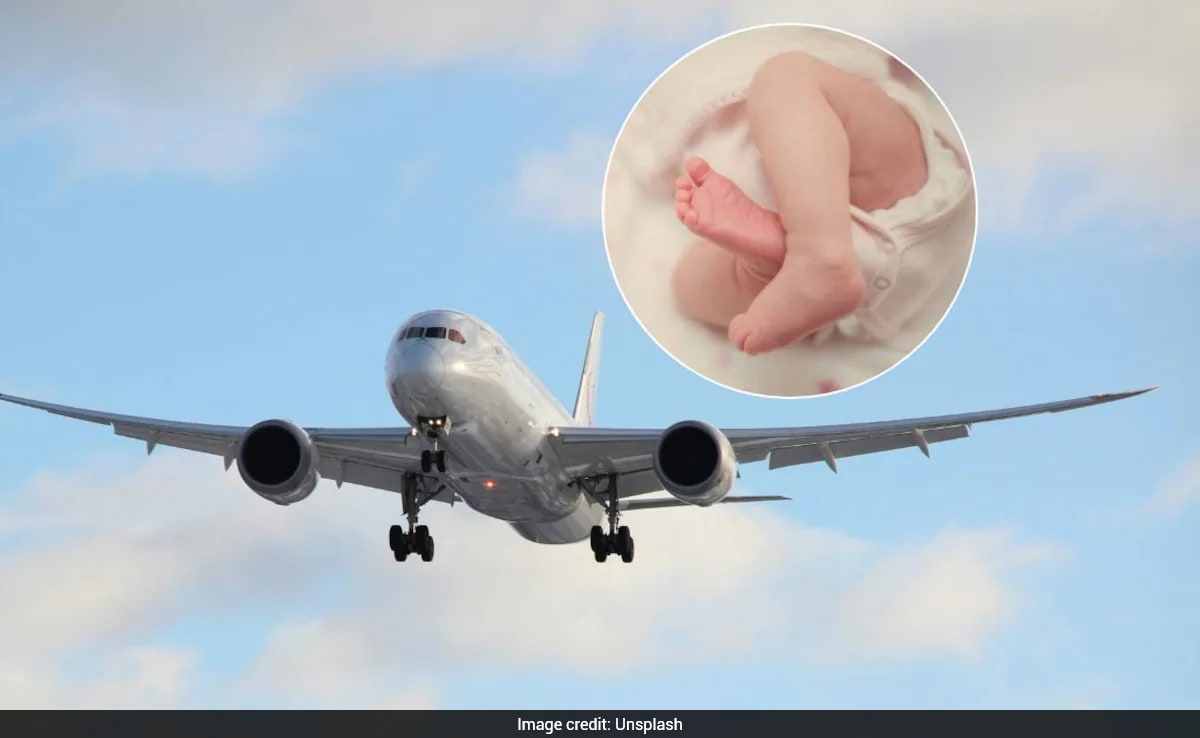
Giving birth at 35,000 feet isn't just a scene from a movie. It's a logistical nightmare that triggers a massive legal headache regarding citizenship. While the media loves the "miracle in the clouds" angle, the reality involves frantic flight attendants, redirected jet fuel, and a baby who might technically be a citizen of a country they've never stepped foot in. A recent incident where a baby was born during a long-haul flight has reignited the debate over "sky-born" babies. Even the air traffic controllers got involved, suggesting the baby be named "Sky" as a nod to the unusual arrival. It’s a sweet sentiment, but it doesn't solve the complex paperwork waiting on the ground.
Where Does a Baby Born in the Air Belong
You’d think the answer would be simple. It’s not. Most people assume you just get the citizenship of the airline’s home country. That’s rarely how it works. The legal system relies on two competing doctrines: Jus Soli (Right of the Soil) and Jus Sanguinis (Right of the Blood).
If you’re flying over a country that recognizes jus soli, like the United States or Canada, the baby usually gets that citizenship. Even if the parents are just passing through the airspace at 500 miles per hour. But if the plane is over a country that only recognizes jus sanguinis, the baby simply inherits the parents' nationality. Things get even weirder if you’re over international waters. In that case, the Convention on the Reduction of Statelessness often kicks in. This rule basically says the baby takes the nationality of the country where the aircraft is registered.
Imagine being born over the middle of the Atlantic. You might end up with a passport from a country your parents have never visited, simply because the Boeing 777 was registered in Dublin or Dubai. It’s a legal quirk that makes for a great trivia fact but a miserable time at the embassy.
The Air Traffic Control Perspective
During these rare mid-air deliveries, the cockpit becomes a high-stress command center. Pilots have to decide whether to divert the plane or push through to the destination. Diversion costs tens of thousands of dollars. We're talking about dumped fuel, landing fees, and rebooking hundreds of passengers.
In this specific case, the air traffic controllers (ATC) were the unsung heroes. They cleared the path and coordinated the emergency landing with ground medical teams. One controller, caught up in the excitement, suggested the name "Sky." It’s a cute touch for a story that usually feels like a medical emergency. However, pilots will tell you that a birth on board is one of the most stressful things that can happen. Planes aren't sterile. They’re cramped. There’s no doctor unless you happen to get lucky with a passenger in seat 14B.
Why Airlines Try to Stop This From Happening
Airlines don't want you giving birth on their planes. Period. Most carriers, like United, Delta, or Emirates, have strict rules about how late into a pregnancy you can fly. Usually, the cutoff is 36 weeks for a single pregnancy and 32 weeks if you're carrying twins. Some even require a doctor's note after the 28th week.
They aren't being mean. They’re being practical. An airplane cabin is pressurized to roughly 8,000 feet of altitude. That environment is tough on a body, let alone one in labor. If things go wrong—and birth is unpredictable—the medical kit on a plane is basically a glorified first-aid box. It’s got some basic tools, but it’s not an OB-GYN suite. When a baby is born on a plane, the airline usually gives them a "gift," like free flights for life. Don't count on that. Most airlines actually stopped doing that years ago because it encouraged people to take risks they shouldn't.
The Practical Problems You Never Consider
The citizenship debate gets all the headlines, but the paperwork is the real monster. When you're born on land, the hospital handles the birth certificate. When you're born in the air, who signs the paper? Usually, it’s the captain. But that "birth certificate" isn't a legal document in the eyes of most governments.
You’ll likely need to:
- Get a signed statement from the attending physician or the flight crew.
- Contact the nearest consulate of your home country immediately upon landing.
- Fight with the airline for the flight manifest to prove exactly where the plane was when the birth happened.
- Deal with the "place of birth" section on future forms. Do you write "Flight 202" or the coordinates of the mid-Atlantic?
The "Sky" suggestion from the air traffic controller is a fun footnote, but that kid is going to spend their life explaining their birth story every time they go through airport security.
What to Do if You Must Fly While Pregnant
If you have to travel late in your pregnancy, don't just wing it. Get a letter from your doctor that explicitly states your due date and that you're fit to fly. This isn't just for the airline; it’s for your own safety if you end up in a foreign hospital.
Check the citizenship laws of your destination and any country you’re transiting through. Some countries have very specific rules about who they let in if they're close to their due date. They don't want "birth tourism," and they might be suspicious if you look like you’re about to pop at the boarding gate. Pack a copy of your medical records in your carry-on. If you do go into labor, the person helping you—whether it’s a flight attendant or a brave passenger—needs to know your blood type and any complications.
Most importantly, remember that the "free flights for life" thing is mostly a myth. You're more likely to get a commemorative onesie and a very large bill for a diverted flight if the airline decides you weren't honest about your due date. Keep your feet on the ground as much as possible during the third trimester. It’s cheaper, safer, and involves much less paperwork.