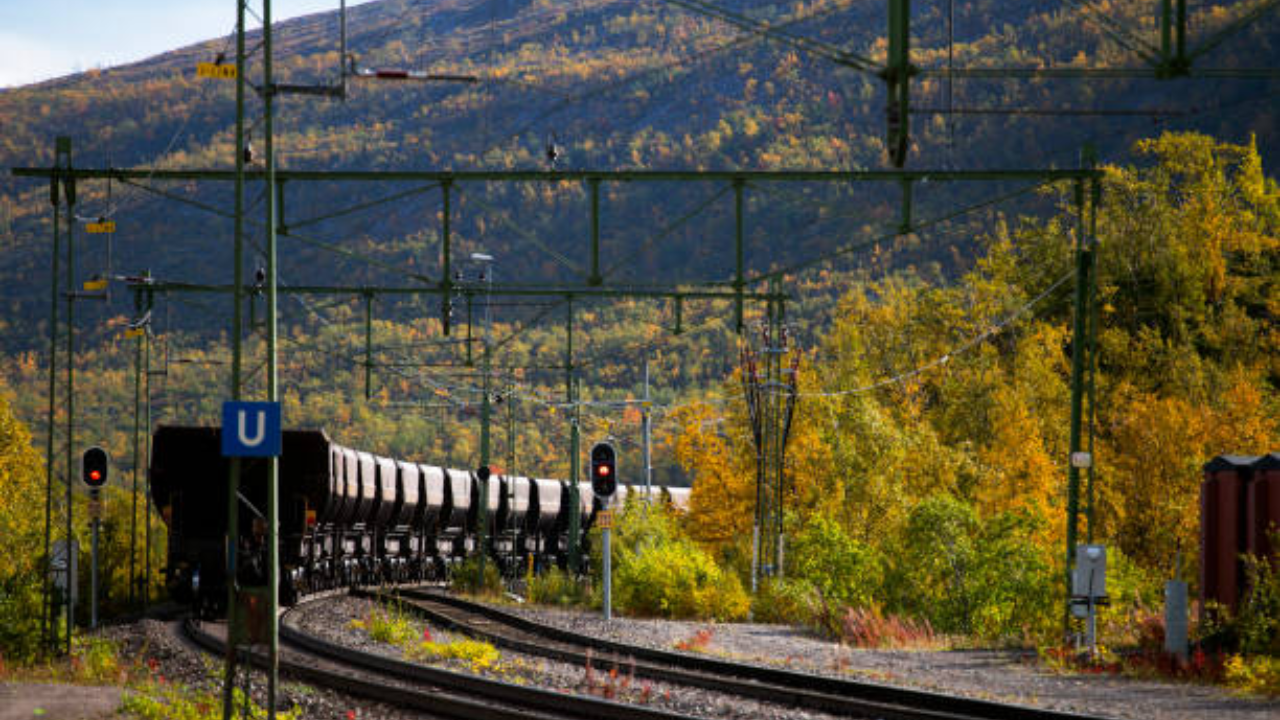
Picture a stationmaster in rural England during the autumn of 1848, standing on a timber platform smelling of wet wool, coal smoke, and damp iron. Let us call him Arthur, a composite of the hundreds of meticulous men who ran the Midland Railway when the steam engine was still a terrifying miracle. Arthur lives by the pocket watch. In the mid-nineteenth century, the railway had just murdered local solar time, forcing towns across Britain to surrender their village clocks to the ruthless, standardized tick of Greenwich. A minute was no longer a vague slice of an afternoon. A minute was a contract.
On a crisp October night, Arthur is waiting for the express train. According to the brass telegraph instrument clicking quietly in his office, the train left the previous junction right on schedule. Yet the tracks remain silent. Ten minutes pass. Twelve. Fifteen. Arthur steps out onto the gravel, squinting down the dark corridor of iron rails, listening for the rhythmic chuff of pistons or the shriek of a whistle. Nothing. When the locomotive finally hisses to a halt beside him, the driver leans out of the cab, soot-streaked and baffled, swearing on his mother’s life that he never eased off the throttle. They are sixteen minutes late, and nobody knows why. For a closer look into similar topics, we suggest: this related article.
For more than a century and a half, historians and space weather researchers argued over a footnote almost identical to this scene. They knew an aurora had danced over Britain, and they knew a train had been inexplicably delayed by sixteen minutes because of phantom interference on the telegraph lines. The problem was the date. Standard scientific lore insisted the incident happened in 1841, a tidy historical curiosity tucked away in academic papers about early geomagnetic storms.
They had the wrong year. And fixing that seven-year clerical error changes how we understand the fragility of the modern world. For further context on the matter, comprehensive analysis is available at NBC News.
The Tyranny of the Copper Thread
To feel why sixteen missing minutes mattered in 1848, you have to forget everything you know about wireless communication. Today, when a solar flare erupts ninety-three million miles away, we worry about GPS satellites drifting off course, high-frequency airline radios going static over the poles, or high-voltage transformers humming themselves to death in Quebec. We think of space weather as a distinctly twenty-first-century headache, an occupational hazard of living inside a digital cocoon.
Victorian engineers were already trapped in the web. They had just strung thousands of miles of uninsulated copper and iron wire across the British countryside, stapled to wooden poles and grounded directly into the damp earth. To send a message from Derby to Rugby, an operator pressed a brass key, closing a circuit that sent a pulse of battery current racing down the line to twitch a magnetized needle at the other end. It was brilliance reduced to its barest bones.
It was also a giant, accidental antenna.
When I first started digging into early telegraph logs years ago, expecting dry ledgers of freight tonnage and ticket receipts, I was struck by how often the operators sounded less like technicians and more like ghost hunters. They wrote about needles swinging violently when no battery was connected. They complained of sparks jumping across brass terminals during clear, dry nights when not a single storm cloud hung in the sky. One operator in the 1840s described his equipment acting as though an invisible hand had seized the key and begun hammering out gibberish in a language no human spoke.
Imagine trying to run a single-track railway under those conditions. Before automated block signaling, the electric telegraph was the only thing keeping two locomotives from telescoping into each other at forty miles an hour in a blind cutting. If the needle went haywire, you stopped the trains. You held them at the platform until the ghosts left the wires.
For decades, a single story circulated through the annals of solar-terrestrial physics as the earliest known case of a solar storm disrupting railway operations. According to the accepted timeline, an intense geomagnetic storm in September 1841 had hijacked the Midland Railway telegraph, delaying a train by sixteen minutes. Researchers cited it repeatedly. It sat comfortably in the canon, eleven years before the famous Carrington Event of 1859 melted telegraph paper and set offices ablaze.
There was just one glaring flaw in the 1841 story. In 1841, the Midland Railway did not exist.
How a 155-Year-Old Mistake Survived
History rarely breaks with a loud bang; usually, it slips quietly through a smudge of ink or a misremembered date in a memoir. This particular ghost in the archive began with William Henry Preece, a prominent Victorian electrical engineer who later became the chief engineer of the British Post Office. Looking back over a long career spent wrestling with submarine cables and early wireless experiments, Preece recounted the tale of the sixteen-minute train delay, placing it in 1841.
Nobody checked the railway timetables. Why would they? Preece was an authority, a giant of Victorian telecommunications. Once a respected figure puts a date on paper, subsequent generations of writers treat that numeral like granite. One paper cites Preece; a textbook cites the paper; a database absorbs the textbook. Before long, 1841 became an unassailable fact.
Yet if you look closely at the infrastructure of Britain in 1841, the story falls apart like wet cardboard. The Midland Railway was not formed until 1844, through the merger of three smaller regional lines. More importantly, electric telegraphy along the Midland routes was not even operational until the late 1840s. You cannot hijack a telegraph wire that has not yet been strung from a pole.
Detective work in science rarely happens in a sterile laboratory under fluorescent lights. Usually, it happens in dusty reading rooms, cross-referencing yellowing newspapers, magnetic observatory ledgers, and parliamentary railway returns. When a team of researchers finally decided to audit the historical record of nineteenth-century space weather, they pulled at that loose thread from Preece’s memoir. They checked the solar cycles. They examined the magnetometer readings from the Greenwich Observatory, where clerks in the 1840s dutifully recorded the tiny, rhythmic swings of suspended compass needles every two hours by candlelight.
In September 1841, there had indeed been a notable magnetic disturbance, which explained why Preece’s memory had snagged on that year. When the researchers aligned the solar observations, the auroral sightings across Britain, and the actual construction records of the Midland Railway, the true culprit stepped out of the fog.
It was October 1848.
What Happens When the Sun Exhales
To understand what hit those Midland Railway wires in October 1848, it helps to picture the Earth not as a solid rock, but as a bar magnet wrapped in a fragile shell of gas, floating downstream from a nuclear furnace.
Most days, the sun blows a steady, predictable breeze of charged particles past us. Our magnetic field deflects it effortlessly, like the bow of a ship parting calm water. Every so often, however, tangled magnetic loops on the sun’s surface snap and reconnect, hurling billions of tons of magnetized plasma into space at millions of miles an hour. Scientists call this a coronal mass ejection.
When that cloud slams into Earth’s magnetosphere, the collision compresses our magnetic shield and shakes it violently. Think of striking a massive brass bell with a hammer. As the magnetic field lines vibrate and shift, they obey one of the fundamental laws of electromagnetism discovered by Michael Faraday just seventeen years before that October night in 1848: a changing magnetic field induces an electric current in any nearby conductor.
Faraday demonstrated this in his laboratory using a small coil of wire and a hand-held magnet. During a geomagnetic storm, the entire planet becomes Faraday’s laboratory. The shifting magnetic field pumps direct current straight through the Earth’s crust and into any long metallic structure grounded at both ends.
In 1848, the longest grounded metallic structures on Earth were the brand-new railway telegraphs.
On the night of October 24, 1848, observers across Britain watched the northern sky bleed crimson and emerald. At Greenwich, the suspended magnets swung wildly off their scales. Down in the Midlands, invisible currents surged out of the soil, climbed the iron grounding rods of the railway stations, and flooded the copper telegraph lines. Inside the signal boxes, magnetized needles pinned themselves hard against their brass stops, refusing to budge when operators pressed their keys.
No wires burned. No boilers exploded. No passengers screamed. The only visible symptom of a cosmic explosion ninety-three million miles away was a pocket watch ticking sixteen minutes past the hour while a steam train waited in the dark for permission to move.
The Illusion of Insulation
You might wonder why correcting a date from 1841 to 1848 deserves more than a shrug. Seven years is a blink in human history, a rounding error in the life of a star. What difference does it make whether a Victorian train sat idle during the reign of a young Queen Victoria or a slightly older one?
It matters because of how we measure risk.
When engineers and insurers calculate the probability of catastrophic space weather, they rely on historical frequency. They build statistical models based on how often the sun throws a punch hard enough to disrupt human infrastructure. For years, the 1841 error distorted the curve. It suggested an extreme event during a declining solar cycle where none had occurred on the rails, while obscuring the true intensity of the October 1848 storm during the peak of Solar Cycle 9.
More than that, the 1848 incident exposes a psychological blind spot that has only grown wider as our machines have grown smarter.
I still remember the first time I watched a regional power grid operator explain geomagnetically induced currents during a seminar. He put up a map of high-voltage transmission lines crisscrossing North America, looking almost identical to a nineteenth-century railway map, only ten times denser. He explained that the transformers stepping voltage up and down across the continent are grounded directly into the earth, just like those Victorian telegraph circuits. When a severe solar storm hits, quasi-direct current flows up through the neutral ground connections, saturating the massive copper-and-steel cores of transformers until they overheat, vibrate violently, and trip offline to save themselves from melting.
We like to believe that progress makes us immune to nature. When we traded iron rails and bare copper wires for fiber-optic cables and orbiting satellites, we assumed we had outrun the ghosts of 1848.
We did not outrun them. We simply built larger antennas.
Fiber-optic cables themselves use pulses of glass-bound light and are immune to magnetic induction, yet the copper power lines running alongside them to feed undersea repeaters are not. Satellites orbiting high above the atmosphere take the brunt of solar radiation directly, suffering bit-flips in their memory banks and drag-induced orbital decay as the upper atmosphere heats and swells like rising bread. Even our trains—modern, sleek, computer-controlled machines running on welded steel rails—still rely on track circuits that detect a train’s presence by passing a low-voltage electrical current through the rails themselves. A strong enough geomagnetic storm can trick a modern signaling system into thinking a clear track is occupied, turning green lights red across an entire rail network.
The sixteen-minute delay on the Midland Railway was not an archaic quirk of primitive technology. It was the opening shot of a vulnerability that defines industrial civilization.
Reading the Archive of the Sky
There is something deeply humbling about watching modern astrophysicists scour Victorian railway ledgers to protect twenty-first-century power grids. We have multi-billion-dollar solar observatories parked a million miles sunward at the L1 Lagrange point, staring unblinking at the sun in extreme ultraviolet wavelengths, measuring solar wind speed and magnetic orientation in real time. We can see a coronal mass ejection lift off the solar limb minutes after it happens.
Yet even with all our sensors and supercomputers, we still cannot predict the exact magnetic orientation of an incoming plasma cloud until it is roughly thirty to sixty minutes away from hitting Earth. Our warning window for a severe geomagnetic storm today is barely longer than the delay suffered by that Victorian express train.
To know how bad things can get, we have to look backward. The sun operates on timescales that dwarf human lifespans. Instrumental magnetic records only stretch back to the 1830s and 1840s, right when telegraphy and rail travel were taking their first tentative steps across Britain. Every single data point from that era is precious. Every misdated memoir, every unexamined station log, every faded newspaper clipping describing "northern lights" over Birmingham or Manchester is a vital clue to the sun’s temper.
When researchers corrected the record from 1841 to 1848, they did more than tidy up a footnote. They restored the exact timing of a storm that struck just as humanity was wiring itself together for the very first time. They proved that the moment we stretched copper across the landscape, the sky reached down and touched it.
Think back to Arthur on his wooden platform in October 1848, pocket watch open in his palm, thumb rubbing the smooth brass case while he stares down an empty track. He has no word for plasma. He has never heard of a coronal mass ejection or a magnetosphere. To him, the machine inside his office simply went mad for a quarter of an hour, possessed by an invisible force from nowhere, before letting the world resume its scheduled march.
He snapped his watch shut, waved his green lantern as the locomotive hissed into the station, and logged the sixteen minutes in ink. Nearly two centuries later, our screens glow brighter and our clocks count in nanoseconds, yet we are still standing on that same wooden platform, listening to the hum in the wires, waiting to see what the sun decides to do next.