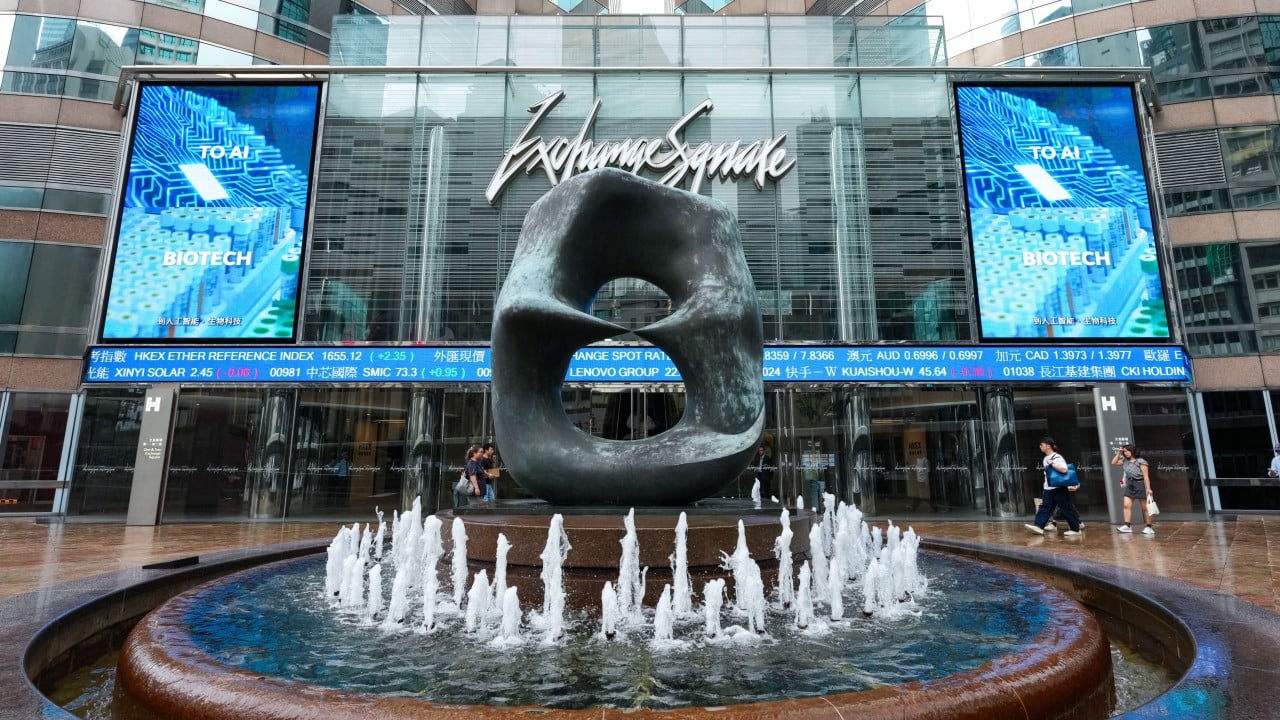
The coffee in the Central District always tastes like adrenaline and late nights, but lately, it tastes like waiting.
If you walk past the glass towers of Exchange Square at 2:00 AM, the lights are still burning. They always are. But the energy inside those rooms has shifted. It is no longer the frantic, euphoric buzz of deals crossing the finish line. It is the heavy, suffocating weight of a ticking clock. For a closer look into similar topics, we suggest: this related article.
Every year, hundreds of companies head to the Stock Exchange of Hong Kong (HKEX) with a singular dream: to go public. They arrive with mountains of paperwork, armies of lawyers, and a hunger to tap into global capital. But there is a brutal rule written into the architecture of the Hong Kong financial market that outsiders rarely notice. Once a company files its initial public offering (IPO) prospectus, a digital timer starts.
Six months. That is all they get. For further information on this issue, detailed analysis can also be found on Financial Times.
If the company cannot clear the regulatory hurdles, answer the grilling questions from the listing committee, and find enough investors to buy their shares within 180 days, the application expires. It lapses. The pipeline clogs. And right now, dozens of hopeful companies are watching their clocks run down to zero.
The Anatomy of a Lapsed Dream
To understand why this matters, look past the balance sheets and consider a hypothetical founder we will call Zhang.
Zhang spent the last eight years building a logistics tech startup in Shenzhen. He survived the pandemic, outmaneuvered state-backed competitors, and finally reached the scale where a Hong Kong IPO was the logical next step. For Zhang, this listing is not just a payday. It is the ultimate validation. It is proof to his early investors, his employees, and his family that the sacrifices meant something.
Six months ago, his investment bankers filed the A-1 form. The market was quiet, but the bankers promised a window would open.
Now, imagine Zhang sitting in a sleek boardroom overlooking Victoria Harbour. It is day 172. The application is about to expire. The regulatory feedback loop has been agonizingly slow. Beijing’s tightening grip on data security cross-border data flows means mainland regulators are taking months just to give the green light for overseas listings. Concurrently, the HKEX is asking tougher questions about valuation and long-term sustainability.
The window never opened.
When a listing lapses, it is not a quiet bureaucratic footnote. It is a financial car crash. Millions of dollars spent on forensic accountants, legal counsel, and underwriting fees vanish into thin air. The company must either spend a fortune to audit their books all over again and refile, or they must pack their bags and go home.
Silence. That is what follows a lapse. The bankers stop calling three times a day. The employees start updating their LinkedIn profiles. The dream stalls.
The Macro Bottleneck
Zhang’s story is being repeated across the entire financial ecosystem. The pipeline is fundamentally jammed, and the implications stretch far beyond the borders of Hong Kong.
Historically, Hong Kong served as the indispensable bridge. It was the place where global capital met Chinese entrepreneurial ambition. If an American pension fund wanted exposure to Chinese tech growth without dealing with onshore currency controls, they bought into a Hong Kong IPO. If a Chinese company wanted global prestige, they listed in Hong Kong.
But the bridge is experiencing a traffic jam of historic proportions. Look at the numbers driving this phenomenon:
| Stage of the IPO Journey | The Reality on the Ground |
|---|---|
| The Filing | Dozens of mainland companies submit prospectuses, flooding the HKEX registry. |
| The Regulatory Wait | Double scrutiny from mainland regulators (CAC, CSRC) and Hong Kong authorities lengthens the review process. |
| The 180-Day Wall | The strict six-month expiration date arrives before market conditions stabilize. |
| The Result | A record number of applications "lapse," requiring costly refilings or outright abandonment. |
The root of the problem lies in a mismatched expectation. Companies are still filing applications at a steady clip, desperate for liquidity. However, the regulatory landscape has become an intricate maze. A company cannot simply show a growing user base anymore. They must prove absolute compliance with national security laws, data privacy mandates, and stringent financial disclosures.
Navigating this maze takes time. More time than the six-month rule comfortably allows.
The Investor's Dilemma
But regulators are only half the battle. The other half is the buyers.
Step into the shoes of an institutional fund manager based in London or Singapore. A few years ago, investing in a Hong Kong IPO was almost a default decision. Growth was guaranteed, and valuations were sky-high. Today, that same fund manager is looking at a world of high interest rates and geopolitical friction. They are hesitant. They are demanding steeper discounts.
When a company realizes that investors are only willing to buy their shares at a fraction of the desired valuation, the IPO halts. The founders refuse to sell themselves short. The bankers try to delay. They wait for a macroeconomic miracle—a interest rate cut from the Federal Reserve, a massive stimulus package from Beijing, anything to change the mood.
But the miracle rarely arrives before day 180.
What happens to a financial hub when its main engine starts sputtering? The local economy feels it instantly. The luxury restaurants in Central that used to host raucous IPO celebration dinners are quieter. The top-tier law firms are quietly shifting personnel toward restructuring and bankruptcy practices rather than equity capital markets.
It is a slow, grinding deceleration.
The Refiling Gambit
When the clock hits zero, all is not permanently lost, but the path forward is grueling.
Companies have the option to refile. They can update their financial statements, pay another round of massive fees, and resubmit their prospectus to restart the six-month timer. Many do. They point to the refiling as a sign of resilience, a message to the market that they are still committed to the venue.
But refiling is a gamble against time and exhaustion.
Every month a company spends locked in the IPO waiting room is a month its executives are focused on compliance rather than running the core business. Innovation slows. Morale dips. Investors begin to wonder if the repeated delays hint at deeper, systemic flaws within the company that the public cannot see. The psychological toll on management is immense.
The market watches these refilings with a cynical eye. A company listing on its first attempt carries an aura of momentum and success. A company listing on its third attempt, after two lapses, feels like a distressed asset trying to find an exit.
The Invisible Stakes
We often treat financial news as a series of abstract tickers and institutional announcements. We read about "market pipelines" and "application lifecycles" as if they are entirely mechanical processes, devoid of human agency.
They are not.
Behind every lapsed application is a team of junior investment analysts who haven't slept a full night in three months, meticulously formatting spreadsheets that are now legally useless. Behind every lapse is a founder who has to look their early employees in the eye and explain why the shares they were promised are still just numbers on a piece of paper. Behind every lapse is a systemic erosion of confidence in a market that once prided itself on velocity and certainty.
The clogged pipeline in Hong Kong is not a temporary logistical hiccup. It is a mirror reflecting a changing global order, where regulatory caution and investor hesitation have combined to slow the wheels of capitalism to a crawl.
Tonight, the lights will stay on in the towers of Central. Printers will churn out revised financial statements, and lawyers will debate the phrasing of compliance clauses. The timers will keep counting down, indifferent to the exhaustion of the people chasing them.
The clock is ticking, and in the world of high finance, time is the one asset you cannot buy back.