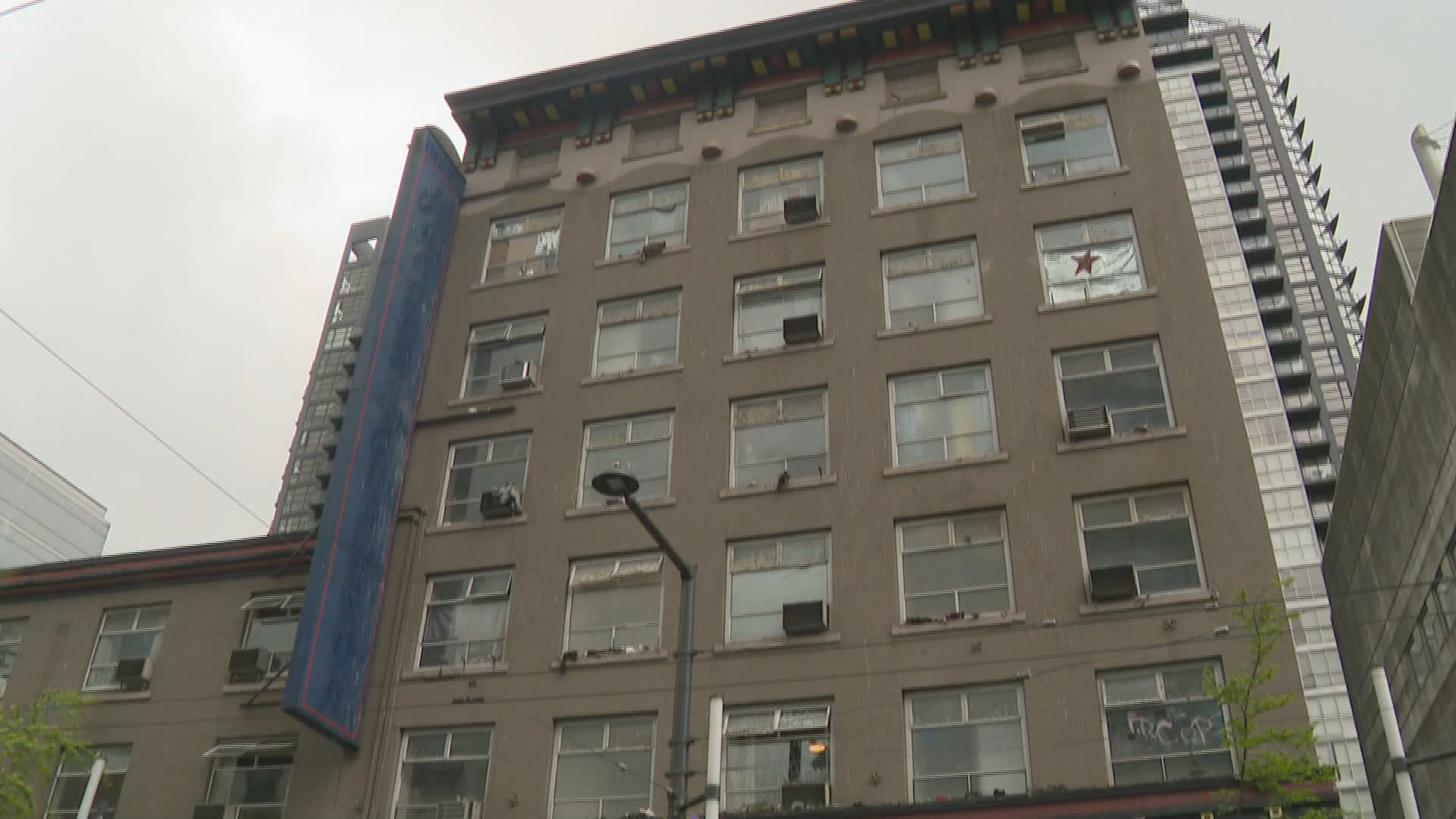
The closure of Single Room Occupancy (SRO) hotels in Vancouver like the Granville Street properties highlights a systemic failure in urban housing policy. When these aging structures shut down for renovations or safety compliance, vulnerable tenants frequently face immediate displacement into homelessness. This happens because the municipal safety net relies heavily on a dwindling stock of privately owned, low-income housing without viable transition strategies. Decades of deferred maintenance colliding with skyrocketing urban land values have turned the last resort for low-income residents into a battleground between tenant survival and property redevelopment.
The Broken Mechanics of the Last Resort
Single Room Occupancy hotels were never designed to be permanent housing solutions. Built over a century ago to house seasonal laborers, resource workers, and transit crews, these buildings feature tiny individual rooms with shared bathrooms and kitchens down the hall. Over the decades, as the federal government pulled back from funding dedicated social housing in the 1990s, these private properties became the de facto bottom tier of the housing market.
They are the final stop before the street.
When a private owner decides to sell, renovate, or close an SRO due to structural degradation, the entire ecosystem fractures. Municipal tenant relocation policies exist on paper, but they operate under the assumption that equivalent, affordable units are readily available nearby. They are not. The vacancy rate for low-income housing in the Downtown Eastside and surrounding areas hovers near zero percent.
The math is brutal and unyielding. A tenant paying the shelter component of provincial income assistance—frozen for years at levels completely divorced from rental market realities—cannot compete when an SRO closes. If a building shuts down, those residents do not simply move down the block. They enter an emergency shelter system that is already operating at maximum capacity, or they pitch a tent in a public park.
The Financial Incentives Driving Displacement
To understand why these closures are accelerating, one must look at the balance sheets of urban property owners. Maintaining a century-old building with ancient plumbing, compromised wiring, and structural rot is immensely expensive. Under current rent control regulations, landlords cannot easily raise rents on existing tenants to cover the capital expenditures required for these massive overhauls.
This creates a perverse incentive structure.
+------------------------------------------------------------+
|            The SRO Disinvestment Cycle                     |
+------------------------------------------------------------+
|  Deferred Maintenance -> Structural Failure -> Closure     |
|                                                            |
|  Result: Sudden eviction of low-income tenants             |
|  Outcome: Property value shifts to land redevelopment      |
+------------------------------------------------------------+
Landlords frequently allow properties to deteriorate until municipal inspectors have no choice but to issue closure orders based on public safety. Once a building is declared unsafe and emptied, the owner is freed from the constraints of existing tenancies. The property can then be retrofitted for student housing, boutique micro-apartments, or sold to a developer at a premium because the land beneath the structure is worth vastly more than the building itself.
The city attempts to mitigate this through historical preservation bylaws and SRO replacement strategies, but enforcement is a game of whack-a-mole. The municipality cannot force a private owner to operate a business at a loss indefinitely, nor can it instantly summon the capital needed to buy out every failing hotel on the market.
The Myth of the Seamless Relocation Policy
City officials often point to Tenant Relocation Protections as proof that displacement is managed responsibly. These frameworks mandate that landlords provide multiple months of rent compensation and assist tenants in finding alternative accommodations at similar rent levels.
In practice, this process relies on a fiction.
The alternative accommodations do not exist. When a building housing eighty people closes its doors, there are not eighty vacant, habitable SRO rooms available in the city at the provincial shelter rate. The relocation officers tasked with moving these individuals often find themselves cold-calling nonprofit housing providers who already have waitlists stretching out for years.
- The Compensation Gap: A lump-sum payout equivalent to several months of rent disappears rapidly in a market where market-rate bachelor apartments exceed two thousand dollars a month.
- The Support Fracturing: Moving a vulnerable individual away from their established community, medical clinics, and social services often triggers a rapid decline in mental and physical health.
- The Bureaucratic Void: Many tenants lack the paperwork, identification, or cognitive health required to navigate complex social housing application pipelines during a sudden eviction crisis.
Nonprofit operators who step in to manage some of these buildings face the exact same financial headwinds as private landlords. Government subsidies rarely cover the true cost of providing both structural maintenance and the intensive wrap-around support services that many residents require. Consequently, even publicly funded or non-profit run SROs suffer from rapid deterioration, leading to eventual closures that catch families and individuals off guard.
The Escalating Cost of Inaction
Every time an SRO closes without a direct, one-to-one replacement of social housing, the financial burden shifts from the housing sector to the healthcare and emergency services sectors. It is far more expensive to manage the consequences of homelessness through emergency room visits, police intervention, and temporary shelter operations than it is to subsidize stable housing.
The current strategy of relying on private landlords to warehouse the poorest segment of the population has reached its logical conclusion. The buildings are physically failing, the land values are too high to ignore, and the human cost is visible on every downtown street corner. Municipalities cannot build their way out of this crisis using market-rate incentives alone; direct, massive public investment in land acquisition and purpose-built social housing remains the only mechanism that breaks the cycle of displacement.
Without a fundamental shift away from temporary fixes and toward permanent, publicly owned housing infrastructure, the closure of these historic properties will continue to funnel citizens directly onto the streets, rendering the concept of tenant protection completely meaningless.