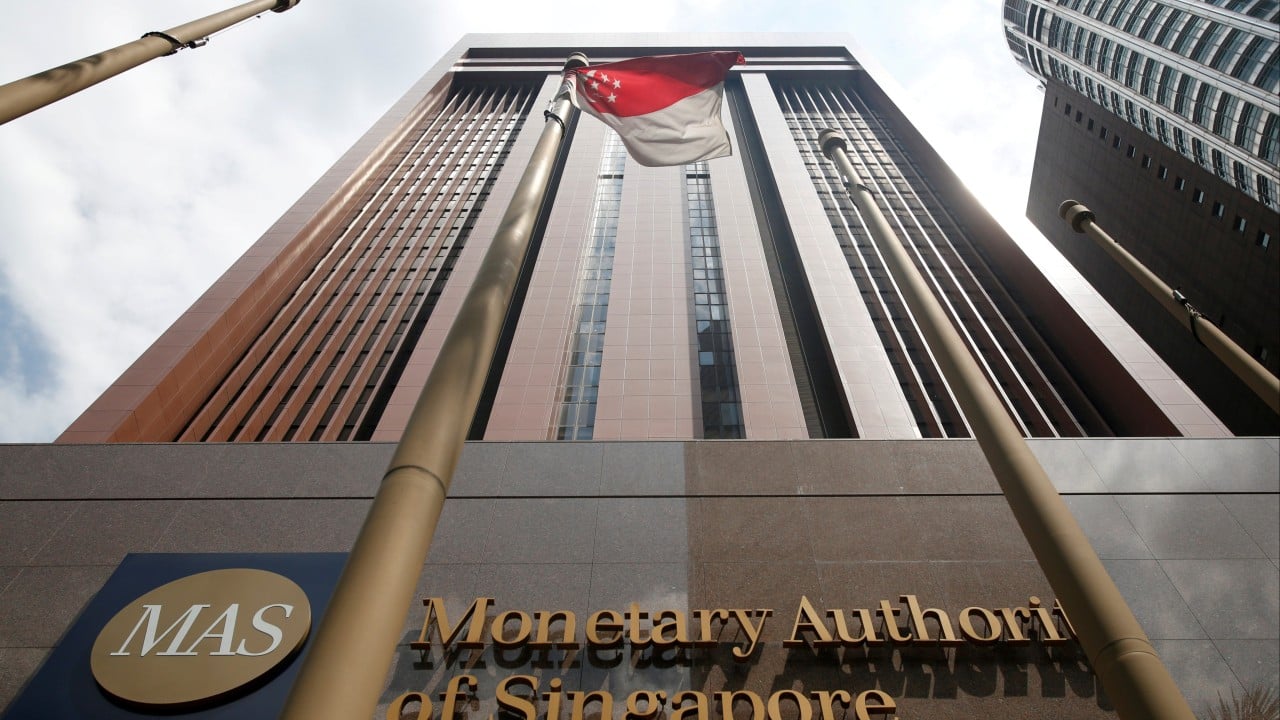
Financial hubs live and die by liquidity. For decades, the perennial heavyweight bout between Singapore and Hong Kong has dominated Asian finance headlines. Right now, Singapore is throwing a heavy punch. By appointing five more global asset managers to channel billions into its local equities, the city-state isn't just trying to patch up a quiet trading floor—it's actively rewriting the rules of the Southeast Asian capital markets game.
If you’ve been watching the Straits Times Index climb, you know this isn't happening by accident. The Monetary Authority of Singapore pumped fresh capital into the ring, targeting heavy-hitting international managers to breathe life into homegrown stocks. But why does this specific maneuver matter so much right now, and what does it mean for the broader Asian financial crown? Let's break it down.
The Strategy Behind the S$6.5 Billion Push
Singapore's equity market has long faced a persistent headache: great companies, solid dividend yields, but frustratingly low daily trading volumes compared to regional giants. Retail and institutional capital often gravitated toward flashier tech listings in the US or massive mainland Chinese listings in Hong Kong.
To fix this, authorities rolled out a massive scheme—totaling S$6.5 billion—designed to get professional fund managers actively hunting for value in Singapore-listed equities. By bringing on board five more major foreign asset managers for a fresh S$1.45 billion tranche, the strategy shifts from passive hope to aggressive intervention.
The goal? Expand trading activity well beyond the usual blue-chip banking and property stalwarts. When institutional heavyweights are incentivized to deploy billions locally, mid-cap stocks finally get the oxygen they need to grow.
Why the Hong Kong Rivalry Still Drives Everything
You can't talk about Singapore's financial sector without mentioning Hong Kong. For years, critics wrote off Singapore's equity ambitions, pointing to Hong Kong's sheer proximity to mainland Chinese liquidity and its status as the premier IPO gateway for Chinese enterprises.
Yet, shifting geopolitical currents and regulatory realignments have opened a window. While Hong Kong handles massive cross-border capital flows, it faces distinct macro headwinds. Singapore, meanwhile, is positioning itself as the stable, neutral harbor for global wealth diversification.
When Singapore's leadership talks about this race, they don't sugarcoat it. Officials have openly noted that this is a dynamic, never-ending contest. If Hong Kong zigs with massive secondary listings, Singapore zags by backing structural fund allocations designed to floor-support its domestic market valuations.
What Most Investors Miss About the EQDP
Most casual observers look at these sovereign fund allocations and assume they're a magic bullet that will instantly transform the SGX into a high-octane growth exchange overnight. That's not how institutional capital works.
The Equity Development Programme (EQDP) is a slow-burn structural play. It forces institutional asset managers to build deep research coverage on Singaporean enterprises that retail investors usually ignore. When an international fund manager receives millions to invest locally, they don't just dump it blindly into three stocks. They scrutinize supply chains, governance, and regional expansion plans across manufacturing, transport, and specialized REITs.
This creates a ripple effect. Better research leads to fairer valuations. Fairer valuations attract secondary listings and secondary placements. It's an ecosystem play, not a quick public relations stunt.
Where the Market Goes From Here
If you're managing capital or watching Asian equities closely, the takeaway is simple. Singapore's aggressive liquidity injections are changing the baseline risk-reward profile for local counters. You can no longer treat the market as a sleepy, predictable dividend graveyard.
Keep an eye on how these appointed asset managers distribute their tranches over the coming quarters. The real test won't be whether the headline index bumps up a few percentage points on
Why Singapore is Spending Big to Fix Its Stock Market
business
Singapore has watched its stock exchange look sleepy for years. While tech giants and massive initial public offerings chased New York or stayed closer to home in regional hubs, the local bourse struggled with flatlining liquidity and a steady drumbeat of delistings. Hong Kong held the regional crown, even amid its own headwinds, leaving the Little Red Dot looking like a backwater for public equities.
That era is ending.
The government isn't waiting around for organic market forces to save the day anymore. By throwing weight behind targeted structural fixes and injecting institutional backing into select firms, Singapore wants to rewrite the narrative. But can a state-guided push actually revive a stagnant market, or is this just an expensive band-aid on a broken system?
The Quiet Crisis on the Exchange
Let's look at the numbers. Or rather, lack of them.
For a long time, the Singapore Exchange operated on a steady, predictable rhythm. It attracted real estate investment trusts and mature regional businesses. It was safe. It paid decent dividends. It was entirely unexciting.
Unexciting doesn't cut it anymore in global finance.
When young, hyper-growth companies look for capital, they want deep pools of liquidity and analysts who understand high multiples. They don't want a market dominated by conservative retail investors trading old-economy stocks. The pipeline of new listings dried up. Trading volumes dwindled. Brokers downsized their research desks.
You can't blame founders for looking elsewhere. If your valuation depends on liquidity, you go where the money is deepest. Singapore realized that if it didn't intervene aggressively, its public market would slowly become irrelevant.
Rewriting the Playbook Through Targeted Support
Instead of throwing generic tax breaks at everyone and hoping for the best, policymakers got specific. Recent strategic moves involve backing high-potential domestic firms and injecting liquidity directly where it counts. By hand-picking key players to anchor the revival, the strategy aims to create a halo effect.
When major local firms get institutional backing, confidence ripples outward. It signals to international institutional investors that the home team believes in the ecosystem.
This isn't about traditional corporate welfare. It's an emergency rescue operation disguised as a growth strategy. The government is acting like a venture capitalist with deep pockets, trying to force a turnaround through sheer willpower and state-backed capital deployment.
The Hong Kong Factor
You cannot talk about Singapore's financial ambitions without mentioning its perennial rival. Hong Kong has spent decades as the undisputed gateway to mainland China. That positioning brought incredible wealth, massive mega-listings, and unmatched global prestige.
Yet, Hong Kong's fortunes have shifted. Geopolitical friction, regulatory tightening, and structural changes in mainland capital flows hit the Hang Seng hard. Valuations compressed. International capital got nervous.
Singapore saw an opening.
While Hong Kong deals with complex cross-border headwinds, Singapore has positioned itself as the stable, neutral harbor for capital fleeing uncertainty elsewhere in Asia. Family offices poured into the city-state by the hundreds. Private wealth management boomed.
The missing piece was always the public market. You can't claim to be Asia's premier financial capital if your local stock exchange is a ghost town. Fixing the equity market is the final frontier in stealing the crown from Hong Kong.
Why State Intervention Usually Fails and Why This Might Be Different
Economists hate government interference in capital markets for good reason. Markets are supposed to be self-correcting. When governments pick winners, they usually pick losers instead.
Think about past attempts by various governments to artificially juice stock prices. They almost always end in tears, left-holding bags of overpriced shares while private investors head for the exits.
So why could this time be different?
Because Singapore isn't just propping up failing dinosaurs. The strategy targets the structural plumbing of the market. It addresses the lack of institutional research, the thin trading books, and the lack of secondary market depth. By injecting liquidity and creating anchor assets, they are trying to solve the chicken-and-egg problem of stock exchanges: investors won't show up without liquidity, and liquidity won't show up without investors.
Someone has to break the loop. The state has the balance sheet to do it.
What Smart Investors Are Doing Right Now
If you think this is just boardroom theater, you're missing the trade.
When a government decides to fix a broken market, capital gets mispriced in the short term and re-rated in the medium term. Valuations on the Singapore Exchange are currently cheap compared to global peers. Dividend yields are high.
If these intervention measures work—even partially—the upside for local blue-chips and targeted beneficiaries could be substantial.
Stop ignoring Southeast Asia's quietest market. The liquidity is coming, whether the pessimists believe it or not. Position yourself before the retail crowd catches on.