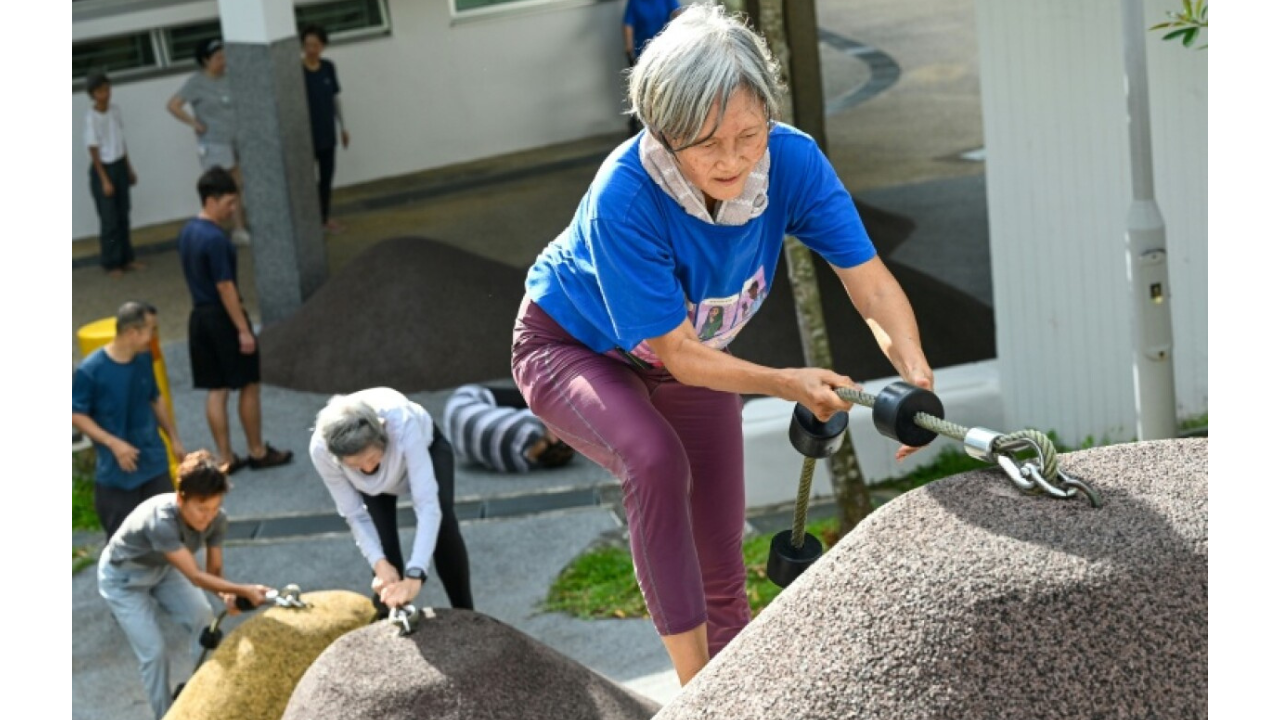
Singapore is graying fast. You see it in the supermarkets, the hawker centers, and the parks. For decades, the standard prescription for an ageing population has been gentle walks or maybe some Tai Chi in the void deck. But a growing group of seniors in the Lion City is ditching the slow-motion movements for something that looks a lot more like an action movie. They’re doing parkour. It sounds like a recipe for a broken hip, but the reality is exactly the opposite. Parkour is helping Singapore’s elderly reclaim their mobility and confidence in ways traditional gym sessions never could.
If you think parkour is only for teenagers in hoodies jumping off rooftops, you’ve got the wrong idea. For a 70-year-old in Bishan, parkour isn't about backflips. It’s about balance. It’s about knowing how to fall without shattering a bone. It’s about navigating the urban environment with intent. This shift is happening because the old ways of "staying active" just aren't cutting it anymore for a generation that wants to stay truly independent. Don't miss our recent post on this related article.
The Science of Functional Movement
Traditional exercise often isolates muscles. You sit on a machine, you push a lever, and you strengthen your quads. That's fine, but life doesn't happen on a fixed axis. When you trip over a curb at a bus stop, your quad strength matters less than your proprioception—your body’s ability to sense its position in space.
Parkour focuses on functional movement. Every step is an assessment of the environment. In Singapore, groups like Move Academy have been leading this charge. They don't start with jumps. They start with the "landing." Teaching a senior how to absorb impact through their joints rather than their spine is a literal life-saver. Falling is the leading cause of injury-related deaths for seniors in Singapore. Most programs try to prevent falls by making people move less or use walkers. Parkour prevents falls by making people better at moving. If you want more about the background of this, Cosmopolitan provides an in-depth summary.
The "Parkour for Seniors" movement isn't just a local trend; it's backed by the concept of "adaptive movement." When you're 75, your bone density isn't what it used to be. Impact training—done correctly—actually helps maintain what’s left. It signals the body to keep the bones dense. If you treat your body like it's made of glass, it eventually becomes as brittle as glass.
Why the Void Deck is the Perfect Gym
Singapore is a concrete jungle, and usually, that's seen as a negative for the elderly. We worry about stairs, slippery tiles after a monsoon rain, and high curbs. But parkour practitioners see the HDB estate differently. The environment is the equipment.
Low walls become balance beams. Railings become support for vaults. Yellow tactile paving for the visually impaired becomes a grid for precision stepping. By training in the same places they live, seniors lose the fear of their surroundings. I've seen aunties who used to take the elevator for a single floor start taking the stairs because they now have the "quad power" and the grip technique to feel safe.
It's about mindset. When you see a wall and think "I can't get over that," you've already lost. Parkour teaches you to look at that wall and find the three different ways to negotiate it. That mental flexibility is just as important as physical agility. It keeps the brain sharp. You're constantly solving physical puzzles. "How do I get from point A to point B using only these three stones?" That’s cognitive training disguised as play.
Breaking the Fragility Myth
We've spent years telling older people to "be careful." We've infantilized them. This "careful" culture creates a cycle of deconditioning. You move less because you're afraid. Because you move less, you get weaker. Because you're weaker, your risk of falling actually goes up.
Parkour breaks this cycle. It treats seniors like athletes. Of course, the progressions are different. You aren't going to see a grandmother clearing a two-meter gap on her first day. But you will see her doing a "cat crawl" on all fours, which builds incredible core strength and shoulder stability. This isn't about being "young again." It's about being the most capable version of yourself at any age.
The social aspect is huge too. In Singapore, social isolation is a massive problem for the elderly. Parkour is inherently communal. You spot each other. You cheer when someone finally masters a balance walk. It's a far cry from the lonely experience of walking on a treadmill in a sterile gym. There's a certain grit to it. Getting a little dirt on your hands in a local park builds a sense of toughness that helps combat the "frail senior" identity.
Managing the Risks
Let's be real. There are risks. If you have advanced osteoporosis or severe vertigo, launching yourself off a wall is a bad move. But the coaches running these programs in Singapore are highly specialized. They use the "Level 1" approach: everything stays low to the ground.
- Surface Tension: They train on grass or rubberized playground floors first.
- The 1% Rule: You only increase the difficulty by a tiny bit each week.
- Joint Prep: Extensive warm-ups focus on ankles and wrists—the spots seniors usually neglect.
Most injuries in the elderly happen during mundane tasks—reaching for a high shelf or getting out of a bathtub. Parkour mimics these exact movements. It's pre-habilitation. By practicing "risky" movements in a controlled environment, the real-world risks become much more manageable.
The Economic Argument for Jumping
From a policy perspective, this is a no-brainer. Singapore spends billions on healthcare for the elderly. A huge chunk of that goes to treating fall-related injuries and the subsequent decline in health. If a $20 parkour class in a public park can prevent a $20,000 hip replacement, the math is simple.
We need to stop building "elderly corners" with those strange, static exercise machines that nobody knows how to use correctly. We should be encouraging the use of the entire urban landscape. Parkour is the most cost-effective health intervention we have because it requires zero infrastructure. The city is already built. We just need to change how we interact with it.
Getting Started Without the Fear
If you're looking to start, or if you're trying to convince a parent to try it, don't call it parkour at first. Call it "functional movement" or "mobility play."
- Find a Qualified Coach: Look for those certified by organizations like Parkour Generations or local reputable gyms like Move Academy. Don't just follow a YouTube video.
- Start Low: Your "wall" should be a curb. Your "vault" should be a bench with two hands firmly planted.
- Focus on the Landing: Learn the "landing" and the "roll" before you learn anything else. It's your safety net.
- Check Your Shoes: Throw away the thin slippers. You need shoes with good grip and cushioning.
Stop thinking about what you might lose if you try something new. Think about what you've already lost by staying still. The concrete isn't your enemy. It’s your playground. Go find a low wall and see what your body can still do. You’ll probably surprise yourself.