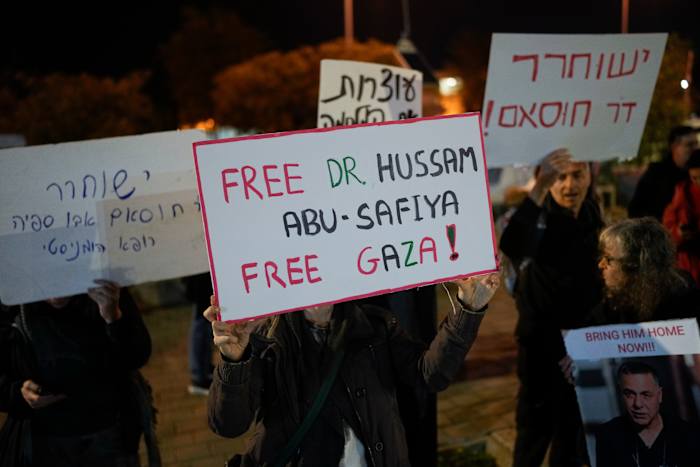
The detained Palestinian doctor Hussam Abu Safiya is in critical condition following his arrest, according to legal representatives trying to track his whereabouts. Abu Safiya, the director of the Kamal Adwan Hospital in northern Gaza, represents the latest flashpoint in a systematic dismantling of the enclave’s healthcare infrastructure. While early reports focused merely on the immediate medical status of the detained physician, the broader reality points to a calculated campaign targeting the remaining senior medical personnel in the territory. The crisis goes beyond the fate of a single doctor; it threatens the total collapse of what little medical authority remains in war-torn Gaza.
The Strategy Behind Targeting Medical Directors
Targeting hospital directors is not a random byproduct of urban warfare. It is a specific tactical choice that disrupts the command structure of emergency medical responses. When a military force detains the head of a major medical facility, the administrative, logistical, and ethical decision-making framework of that institution fractures instantly.
Abu Safiya chose to remain at Kamal Adwan Hospital despite repeated evacuation orders and immense personal loss, including the death of his son during the bombardment of the facility. His detention leaves northern Gaza virtually devoid of senior medical leadership capable of coordinating mass casualty responses. Without a centralized authority figure to manage scarce resources like fuel, oxygen, and clean water, individual clinics become isolated islands, unable to process the influx of wounded civilians.
Legal advocates working on behalf of detained medical staff report a wall of bureaucratic silence. Information regarding the location of these doctors, the charges against them, or their physical condition remains heavily restricted. This lack of transparency serves a dual purpose. It prevents international legal bodies from intervening effectively, and it creates a chilling effect among the remaining medical staff who must decide every morning whether to report to work or flee.
The Physical Toll of Medical Detention
Reports regarding Abu Safiya’s deteriorating health highlight the severe conditions faced by Palestinian medical personnel held in detention facilities. Independent human rights monitors have documented systemic issues within these holding centers, ranging from severe overcrowding to a total lack of specialized medical care for the detainees themselves.
For a physician who has spent months working under extreme stress, suffering from malnutrition, and enduring sleep deprivation while managing a frontline hospital, the physical transition to a detention center is often catastrophic. The irony is stark. The very people trained to keep others alive are succumbing to treatable conditions behind closed doors.
Musculoskeletal damage, severe weight loss, and untreated infections are common among released medical workers. The psychological burden is equally heavy. Doctors are forced to abandon their patients mid-treatment, leaving them with the agonizing knowledge that those left behind in the wards likely faced death without supervision.
International Law and the Fiction of Protection
The Geneva Conventions explicitly protect medical personnel during armed conflict. Article 24 of the First Geneva Convention states that medical personnel engaged exclusively in the search for, collection, transport, or treatment of the wounded must be respected and protected in all circumstances. Reality has rendered these texts obsolete.
The justification often used for these detentions centers on allegations that medical facilities shield combatants or host military infrastructure. Even when these claims are levied, international law requires a strict adherence to proportionality and advance warning that allows for the safe evacuation of patients and staff. The immediate detention and reported mistreatment of hospital directors suggests that the presumption of civilian protection has been discarded entirely.
International medical bodies like the World Health Organization and Médecins Sans Frontières have issued numerous statements condemning the detentions. Yet, these organizations lack enforcement mechanisms. Their press releases do little to alter the conditions inside detention cells or secure the release of vital specialists. The failure of international diplomatic pressure to safeguard figures like Abu Safiya exposes a profound systemic weakness in global humanitarian governance.
The Long Term Collapse of Gazan Healthcare
The removal of veteran doctors accelerates a permanent brain drain that will plague the region for decades. Medicine relies heavily on mentorship and institutional memory. When senior consultants and hospital directors are detained or killed, the younger generation of residents and medical students loses the guidance necessary to master complex surgical techniques and hospital management.
Rebuilding a hospital building is a matter of funding and concrete. Rebuilding a medical faculty takes a generation. Gaza is losing its teachers, its department heads, and its strategists. The current crisis ensures that even if hostilities cease tomorrow, the mortality rate will remain artificially high for years due to the absence of specialized care for chronic illnesses, complex trauma, and pediatric emergencies.
The immediate demand from legal networks and international observers remains unchanged. There must be an immediate verification of Hussam Abu Safiya’s medical status by independent bodies like the International Committee of the Red Cross, alongside the established legal requirement to either charge detainees transparently or release them without delay.