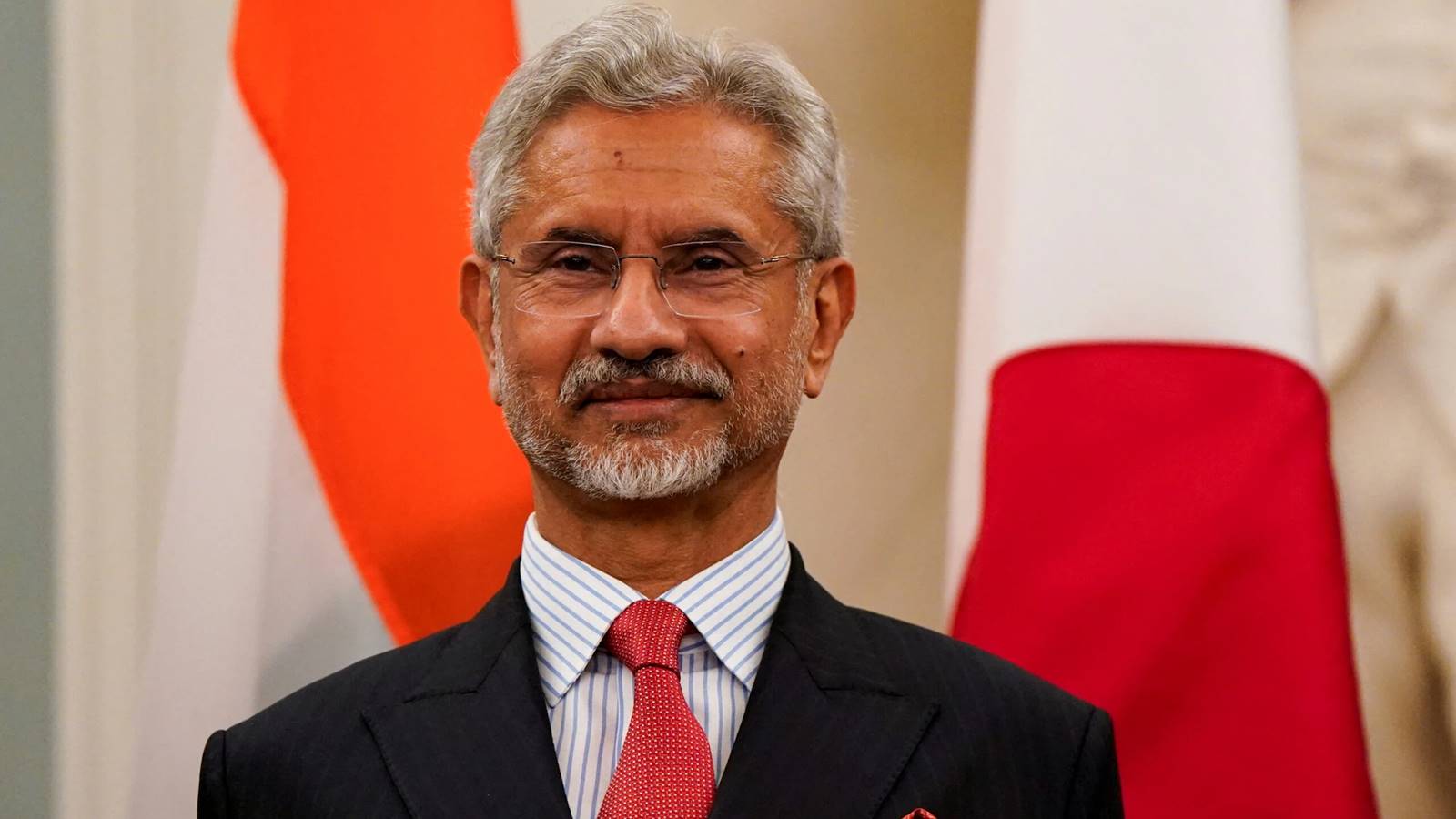
Indian External Affairs Minister S. Jaishankar’s meeting with Qatari Prime Minister Sheikh Mohammed bin Abdulrahman Al Thani signals a profound shift in Delhi’s Middle Eastern strategy. While standard diplomatic dispatches framed the talks as a routine review of bilateral cooperation and regional developments, the encounter marks the quiet resolution of deep-seated geopolitical friction. This is not just about securing liquefied natural gas or safeguarding remittances. India is actively rewriting its security and economic footprint in the Gulf, shifting from a passive economic beneficiary to an assertive geopolitical actor capable of navigating the complex rivalries of the region.
For decades, the relationship between New Delhi and Doha operated on a predictable, somewhat lazy autopilot. India bought energy; Qatar hosted over 800,000 Indian expatriates who sent home billions of dollars annually. It was a transactional arrangement that required little political heavy lifting. Recent events broke that complacency, forcing both nations to confront the limits of purely economic ties.
The Shattered Illusion of Purely Economic Ties
Diplomacy thrives on public smiles, but the undercurrents tell a different story. The sudden detention and subsequent release of eight former Indian Navy personnel by Qatari authorities last year exposed a dangerous vulnerability in New Delhi's regional strategy. The crisis forced the Indian government to realize that economic interdependence does not automatically guarantee political goodwill or security.
Qatar occupies a unique position in the Middle East. It maintains open lines of communication with Hamas, hosts the political office of the Taliban, and shares the massive North Dome gas field with Iran. At the same time, it hosts the largest American military base in the region. Doha excels at playing all sides, a strategy that turns the tiny peninsula into an indispensable diplomatic hub but also makes it an unpredictable partner for a rising power like India.
New Delhi’s traditional approach to the Gulf involved balancing relations between competing power centers. India maintained strong ties with the United Arab Emirates and Saudi Arabia while trying not to alienate Qatar or Iran. The strategy worked when India was a smaller economic entity, but as its global footprint expands, neutrality becomes harder to maintain. The recent high-level dialogue in Doha indicates that India is moving away from passive balancing toward active, strategic engagement.
Energy Security in an Age of Fragmented Supply Chains
Energy remains the bedrock of the relationship, but the terms of engagement are shifting. India relies on Qatar for a massive chunk of its liquefied natural gas imports. This reliance was cemented further through a recent multi-billion-dollar deal extending LNG supplies until 2048.
$$\text{Energy Reliance} = \frac{\text{Qatari LNG Imports}}{\text{Total Indian LNG Consumption}}$$
This long-term agreement provides India with a predictable energy supply as it attempts to transition toward a gas-based economy, aiming to increase the share of natural gas in its primary energy mix significantly. Yet, relying heavily on a single source in a volatile maritime corridor carries inherent risks. The choke points of the Middle East, particularly the Strait of Hormuz, remain vulnerable to geopolitical flare-ups.
[Persian Gulf] ---> [Strait of Hormuz] ---> [Arabian Sea] ---> [Indian Coastline]
India’s energy strategy cannot rely solely on commercial contracts. It requires a robust maritime security presence to ensure that these supply lines remain open. The discussions between Jaishankar and the Qatari leadership necessarily touched upon maritime security, even if the official communiqués chose softer language. India is increasingly positioning itself as a net security provider in the Indian Ocean region, a role that requires tacit acceptance, if not active cooperation, from Gulf states like Qatar.
The Trade Imbalance Beyond Hydrocarbons
India wants to diversify the bilateral trade portfolio, which currently tilts heavily in Qatar's favor due to energy exports. Indian officials are pushing for greater penetration in Qatar's infrastructure, agricultural, and technology sectors.
- Pharmaceuticals: India seeks to leverage its position as the world's pharmacy to gain a larger share of the Qatari healthcare market.
- Information Technology: Indian tech firms are angling for contracts tied to Qatar's digital transformation initiatives.
- Food Security: Qatar imports the vast majority of its food, making Indian agricultural exports a critical point of leverage.
The Migrant Worker Dilemma and the Remittance Engine
The Indian community in Qatar forms the backbone of the country’s private sector and infrastructure workforce. The remittances they send back support millions of families in states like Kerala, Tamil Nadu, and Uttar Pradesh. However, this massive diaspora also represents a significant diplomatic vulnerability.
During the global pandemic and subsequent regional economic corrections, the vulnerabilities of the blue-collar workforce became glaringly obvious. Labor reforms in Qatar, driven by international scrutiny before the 2022 World Cup, dismantled parts of the restrictive kafala sponsorship system. Despite these legal changes, challenges regarding wage protection, living conditions, and legal redress persist.
Jaishankar's discussions invariably addressed the welfare of the Indian community, but the conversation is changing. India is no longer just asking for fair treatment; it is offering a highly skilled workforce capable of driving Qatar’s post-gas economic diversification plans. The focus is shifting from low-skilled construction workers to engineers, healthcare professionals, and financial experts, altering the socio-economic dynamics of the Indian presence in Doha.
Navigating the Contradictions of Middle Eastern Geopolitics
The most complex aspect of India’s engagement with Qatar is the regional backdrop. The Middle East is undergoing a chaotic realignment. The normalization of relations between Israel and several Arab nations via the Abraham Accords created a new security architecture, one that India eagerly joined through the I2U2 group alongside Israel, the UAE, and the United States. Qatar, however, remained firmly outside this grouping, maintaining its distinct foreign policy path.
       [India]
       /     \
      /       \
[UAE / KSA]   [Qatar]
   \         /
    \       /
   [Regional Stability]
India cannot afford to be sucked into the rivalries between Qatar and its neighbors, such as the UAE and Saudi Arabia, which triggered the years-long diplomatic blockade of Doha that ended in 2021. While relations among the Gulf Cooperation Council states have stabilized superficially, underlying ideological and strategic differences remain.
New Delhi’s challenge is to build a deep, strategic partnership with Qatar without signaling a dilution of its burgeoning security alliances with Abu Dhabi and Riyadh. This requires a sophisticated diplomatic calculus, treating each relationship on its own merits rather than viewing the Gulf through a single, monolithic lens.
The Role of Counter-Terrorism and Intelligence Sharing
A persistent point of friction in India-Qatar relations has been Doha's historical willingness to provide a platform for divergent political and religious voices, some of which New Delhi views with deep suspicion. The presence of controversial figures and the editorial line of state-backed media networks have occasionally strained ties.
Addressing these issues requires quiet, institutionalized intelligence sharing rather than public grandstanding. The discussions between the two leaderships indicate a mutual understanding that ideological differences must not interfere with core security interests. Both nations face threats from regional instability and violent extremism, creating a pragmatic basis for security cooperation that moves past public rhetoric.
The India-Middle East-Europe Economic Corridor Factor
The announcement of the India-Middle East-Europe Economic Corridor (IMEC) at the G20 summit in New Delhi introduced a new variable into Gulf dynamics. The proposed multi-modal transport network aims to connect India to Europe via the UAE, Saudi Arabia, Jordan, and Israel.
Notably, Qatar is not part of the initial transit map. This exclusion creates a potential diplomatic challenge for New Delhi. Qatar enjoys immense financial power through its sovereign wealth fund, the Qatar Investment Authority, and possesses world-class port infrastructure. Leaving Doha entirely outside the broader regional connectivity plans could push it closer to rival economic blocs, such as China’s Belt and Road Initiative.
Jaishankar’s visit must be viewed through this lens. India needs to reassure Qatar that its exclusion from specific transit routes does not mean economic isolation. There are ample opportunities to integrate Qatari capital into the auxiliary infrastructure projects feeding into the broader corridor, ensuring that Doha remains invested in a stability framework that benefits New Delhi.
Redefining the Power Dynamic
The meeting between Jaishankar and Sheikh Mohammed bin Abdulrahman Al Thani shows that the relationship between India and Qatar has outgrown the simplistic labels of the past. It is no longer just about a buyer and a seller, nor is it merely about a host country and a migrant workforce.
India’s growing economic weight gives it leverage it previously lacked, allowing it to negotiate from a position of relative strength. Qatar’s immense wealth and strategic positioning mean it remains an essential, if complicated, partner in the Gulf. The success of this relationship will depend on both sides' ability to manage their deep structural differences while capitalizing on their shared economic and security imperatives in an increasingly unstable world.