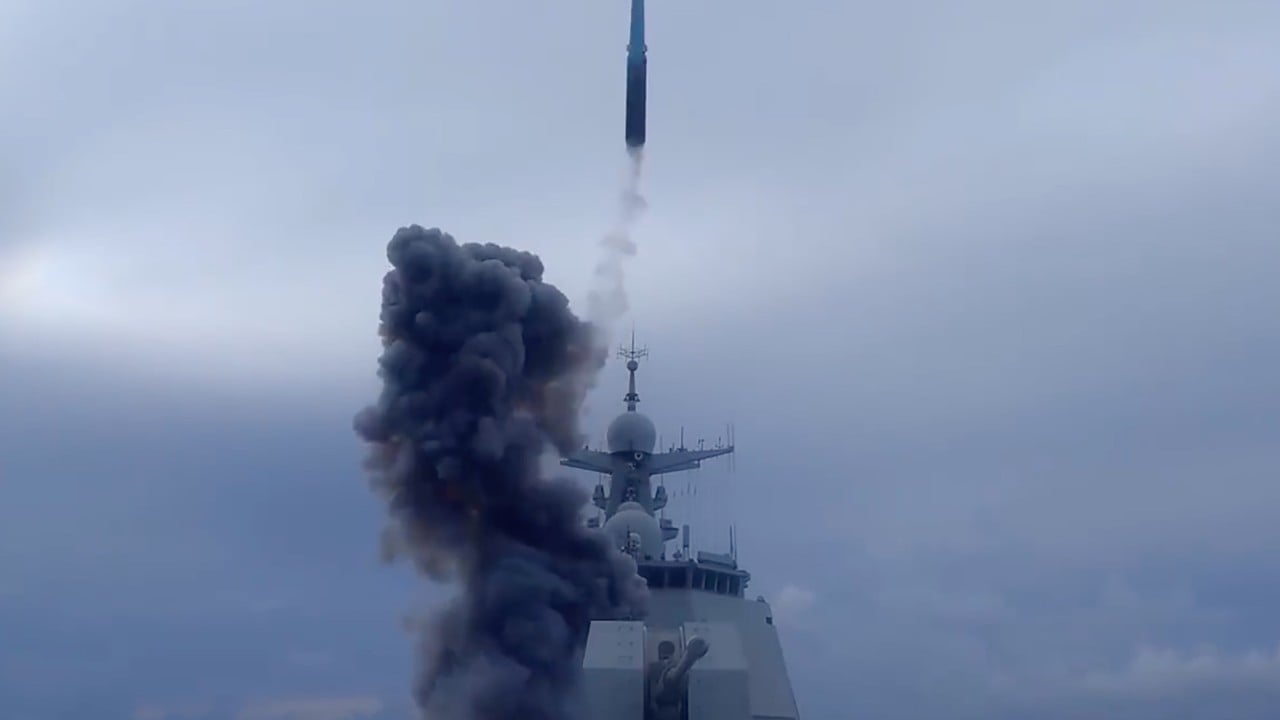
The sea at dawn looks like a sheet of hammered tin. Down in the combat information center, miles away beneath layers of steel and concrete, the air smells of ozone, hot copper, and stale coffee. Screens flicker with green luminescence, tracking the slow, predictable breath of surface traffic moving through the Taiwan Strait. To the watchstander whose eyes are burning from a sixteen-hour shift, everything appears routine. The horizon is empty. The radar sweep is clean.
Quiet. Learn more on a connected topic: this related article.
Then the math changes.
High above the curvature of the earth, traveling at multiples of the speed of sound, an object descends from the edge of space. It carries no transponder. It screams through the upper atmosphere wrapped in a cloak of superheated plasma, a man-made meteor weighing several tons. It does not arc lazily like a traditional ballistic missile; it skips, weaves, and maneuvers at velocities that turn modern interception physics into an exercise in pure wishful thinking. By the time the acoustic shockwave rattles the coffee cups on the console, the target has already ceased to exist. More journalism by Al Jazeera highlights similar views on this issue.
This is the shadow that hangs over the Western Pacific.
We talk about military modernization in terms of tonnage, budgets, and hardware tallies, missing the human reality beneath the statistics. The conversation surrounding Beijing's development of hypersonic glide vehicles—often dubbed carrier killers—frequently fixates on the raw engineering marvel. Speeds exceeding Mach 5. Unpredictable glide trajectories. The terrifying compression of decision-making windows from hours down to seconds.
Yet the true danger of these weapons is not merely physical. It is psychological. It is tactical misdirection on a continental scale.
Consider what happens inside a naval task force when a carrier group steams into contested waters. A supercarrier is not a solitary ship; it is a floating city of five thousand souls, a mobile airfield carrying eighty aircraft, surrounded by a tight ring of guided-missile cruisers and destroyers. For decades, the implicit contract of American naval supremacy was simple. If you venture too close, we possess the layers of defense—Aegis combat systems, SM-6 interceptors, electronic jamming—to slap down incoming threats long before they pierce the inner shield.
Hypersonic weapons rewrite that contract with a burning stylus.
Imagine a hypothetical scenario set five years from now, during a sudden diplomatic crisis over the island democracy ninety miles off the mainland. Satellite imagery confirms unusual telemetry shifts inland. Intelligence analysts whisper about mobile launchers tilting toward the overcast sky.
In that instant, the calculus of command fractures.
The admiral standing in the flagship's flag bridge is no longer just managing a patrol. Every fiber of his training tells him that a conventional defense might be mathematically impossible against a salvo of MaRV-equipped or waverider-class glide vehicles dropping out of the mesosphere at two miles per second. The warning time is measured in heartbeats.
To protect the crown jewel of the fleet—the carrier itself—doctrine dictates pushing the outer defense ring farther back, scattering supporting surface combatants, and hiding electronic signatures. But that dispersion comes with a devastating penalty. It creates openings. It fractures the unified air defense umbrella.
That is the distraction.
The carrier killer does not necessarily need to sink a multi-billion-dollar warship on its maiden strike to achieve its strategic objective. By simply existing as a credible, unstoppable threat, it forces American planners into a defensive crouch. It compels them to divert finite resources, reallocate critical assets, and hesitate at the exact moments when decisive action is required.
Military history is littered with the wrecks of armies and navies that prepared brilliantly for the last war while ignoring how the psychological weight of new technology warped their minds. In the interwar period, battleship admirals looked at the fragile, noisy biplanes buzzing over their dreadnoughts with condescension. They built thicker armor decks. They calculated shell trajectories. They refused to accept that the geometry of combat had fundamentally shifted until carrier-based torpedo bombers materialized over Pearl Harbor.
Today, we risk making the mirror-image error. We marvel at the speed of the hypersonic missile, treating it purely as an anti-ship projectile, while overlooking its role as a masterclass in strategic theater.
The mainland strategists understand a fundamental truth of modern deterrence. If you can create an environment where an adversary feels perpetually blind, deaf, and vulnerable within their own command architecture, you paralyze their decision cycle. You make the cost of intervention so astronomically high that inaction becomes the path of least resistance.
Down in that darkened combat information center, the watchstander wipes condensation from a CRT monitor. The radar sweep continues its hypnotic rotation. The coffee is cold now. But the silence on the screen is no longer peaceful. It is the weighted, breathless silence of a room waiting for the sky to fall.

/cdn.vox-cdn.com/uploads/chorus_asset/file/22155007/doc_ock.jpg)