The night did not end with a bang for everyone. For some, it ended with a vibration in a pocket, a frantic scroll through a Telegram channel, or the sudden, unnatural stillness of a street that should have been humming with the low thrum of a city that never quite sleeps. But for Ali Larijani, the man who spent decades navigating the labyrinth of Persian power, the night ended in the searing, white-hot flash of a precision strike.
Israel’s Defense Minister didn't use flowery language when he confirmed the overnight operation. He didn't need to. The facts were as cold as the steel of the drones that carried out the mission: Ali Larijani, a titan of the Iranian security establishment and a perennial pillar of the Islamic Republic’s political elite, is dead.
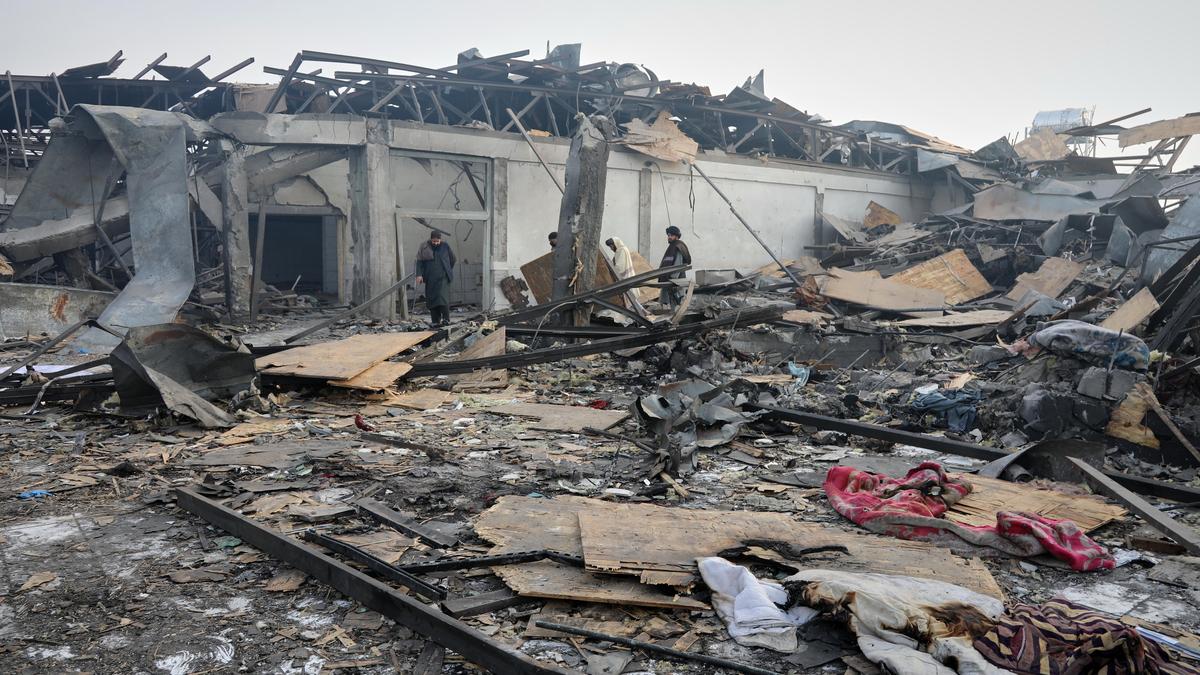
To understand the weight of this moment, you have to look past the headlines and into the dust of the rubble. This wasn't just the removal of a bureaucrat. This was the severing of a nervous system.
The Architect of the Long Game
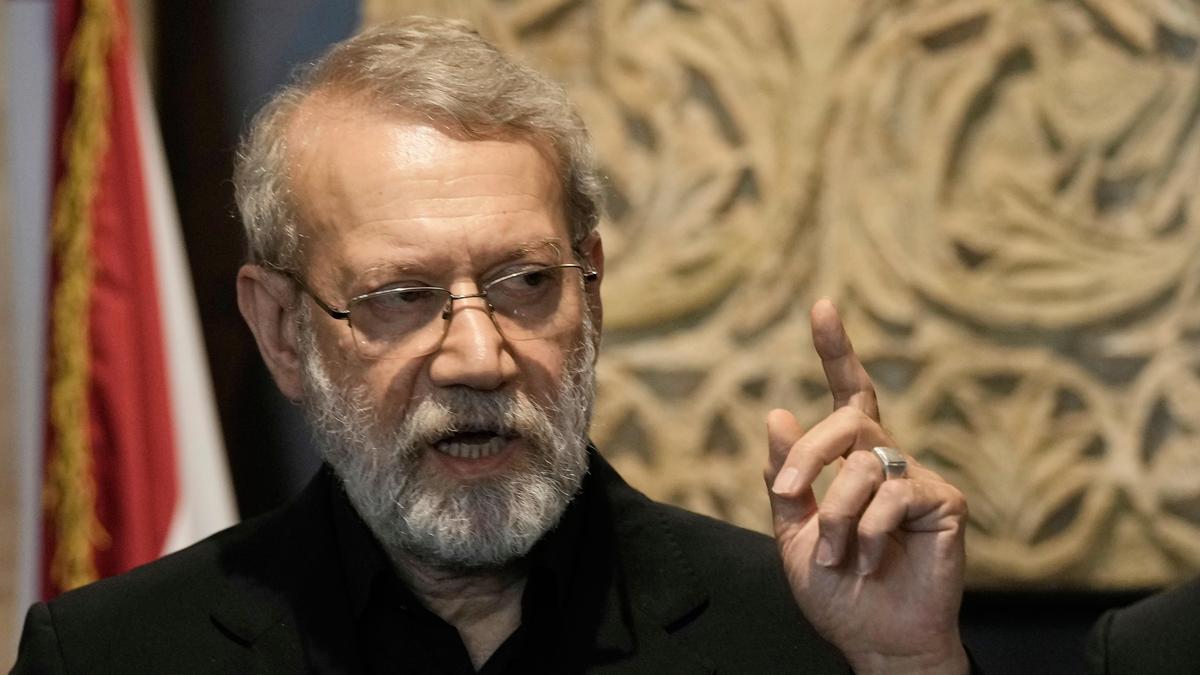
Ali Larijani was never the loud, table-thumping revolutionary that the West grew accustomed to seeing on news cycles. He was the whisperer. As a former Speaker of the Parliament and a long-time advisor to the Supreme Leader, his influence was less like a hammer and more like a pervasive mist. He was the man who knew where the bodies were buried because, in many ways, he helped pick the plots.
Consider a hypothetical watchmaker. This craftsman doesn't just make the gears; he understands the tension of every spring and the friction of every jewel. If you remove that watchmaker, the clock might keep ticking for a while, but the moment a gear slips, there is no one left who knows how to calibrate the rhythm. Larijani was that watchmaker for Iran’s regional strategy. He bridged the gap between the hardline ideological fervor of the Revolutionary Guard and the pragmatic, often brutal, realities of international diplomacy.
His death creates a vacuum that isn't easily filled by a resume or a promotion. It creates a psychological fracture. In the high-stakes corridors of Tehran, the question isn't just "who is next?" but rather, "who is safe?"
The Anatomy of the Strike
The operation itself was a masterclass in modern, terrifying efficiency. According to reports confirmed by the Israeli Ministry of Defense, the strike occurred under the cover of darkness, targeting a location where Larijani was purportedly coordinating security protocols. There were no broad carpet bombings. No massive collateral waves. Just the surgical application of force.
This is the new reality of Middle Eastern conflict. It is a war of shadows where the distance between a high-level meeting and a funeral is measured in the flight time of a loitering munition. For the people on the ground in Tehran, the physical impact might have been localized, but the tremor was felt across the entire political landscape.
Imagine the dinner tables in North Tehran tonight. The conversations are hushed. The television sets are tuned to state media, which struggles to frame a narrative of strength while the reality of vulnerability sits in the room like an uninvited guest. There is a specific kind of fear that takes hold when the "untouchables" are touched. It is a cold, creeping realization that the walls are thinner than anyone dared to admit.
The Invisible Stakes
Why does this matter to someone sitting thousands of miles away? Because the Middle East is not a collection of isolated incidents; it is a web. When you pull a thread in Tehran, the tension changes in Beirut, in Gaza, in Tel Aviv, and in Washington.
Larijani was a key interlocutor in Iran’s "Pivot to the East" and a central figure in managing the complex relationship with the West regarding nuclear ambitions. He was a man of the establishment who understood the language of compromise, even if he rarely chose to speak it. With him gone, the internal balance of power shifts toward the more reactionary elements of the regime. The "hawks" no longer have a "gray eminence" to check their impulses.
History tells us that when a bridge is blown up, people don't stop crossing the river; they just start swimming. And swimming is much more dangerous.
A Legacy of Shadows
Larijani’s career was a mirror of the Islamic Republic’s own evolution. He saw the transition from the raw energy of the 1979 revolution to the calculated, multi-front "Axis of Resistance" that defines Iran’s current foreign policy. He was a philosopher by training, a man who could quote Western metaphysics while overseeing a security apparatus that brooked no dissent.
This duality made him indispensable. He could sit across from European diplomats and project an image of sophisticated reason, then walk into a room with military commanders and sign off on the logistics of proxy warfare. He was the human face of a system that often seems faceless to the outside world.
Now, that face is gone.
The Israeli Defense Minister’s announcement was more than a status update on a military operation. It was a declaration that the rules of engagement have fundamentally shifted. The "red lines" that once governed the assassination of high-ranking political figures have been erased, replaced by a doctrine of total exposure.
The Weight of the Silence
In the coming days, there will be the expected rituals of mourning. There will be fiery speeches in the Majlis. There will be promises of "crushing revenge" blared from loudspeakers. We have seen this script before. But behind the theater of state grief, there is a more profound process at play.
The Iranian leadership is currently looking at their inner circle and seeing targets. Every phone call is a risk. Every meeting is a gamble. Every shadow on the wall looks a little more like the silhouette of a drone.
The real story isn't the explosion that killed Ali Larijani. The real story is the silence that followed it—the stunned, breathless silence of a regional power realizing that its most seasoned navigator has been taken off the bridge while the storm is still rising.
The sun will rise over the Alborz mountains tomorrow, and the tea houses will open, and the traffic will once again choke the streets of Tehran. But the city is different now. It is a place where the air feels a little heavier, where the horizon looks a little narrower, and where everyone is waiting for the next vibration in their pocket to tell them that the world has changed once again.
The watchmaker is gone, and the clock is starting to drift.