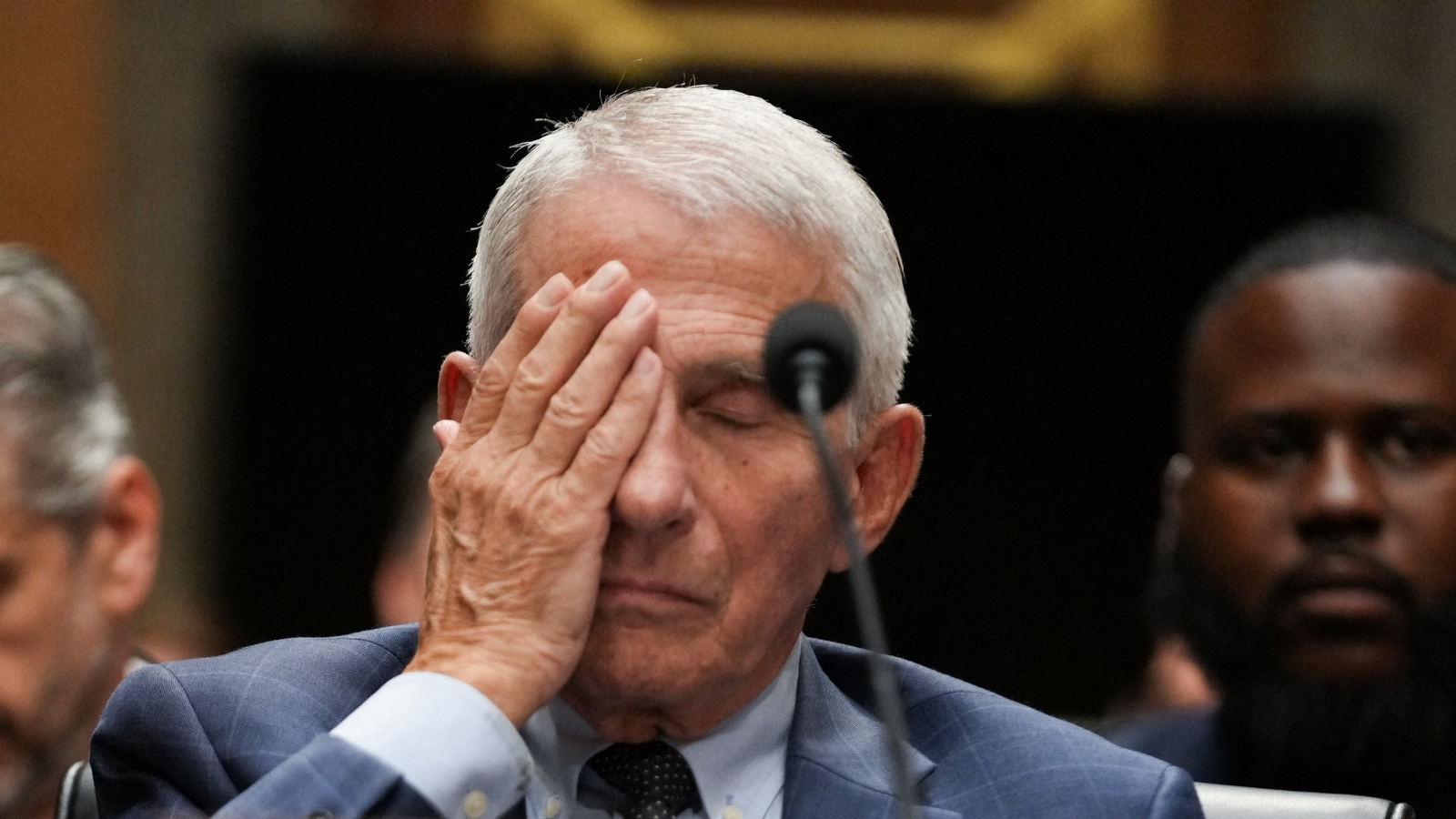
Fluorescent lights hummed against the drop ceiling of a wood-paneled hearing room in Washington. Stacks of white paper sat neatly before men and women in dark suits. Microphones pointed like metal stems toward the witness table. Outside, the city moved through its relentless rhythm of traffic and sirens, indifferent to the microscopic architecture that had rewritten life on Earth three years prior. Inside, the air tasted of old paper and nervous sweat.
Dr. Anthony Fauci sat down.
For decades, his name had been a fixture of public health briefings, whispered in laboratories, and printed on millions of textbooks. He had advised seven presidents. He had navigated the terrifying early days of HIV, when fear outpaced science. Yet, on this particular afternoon, the atmosphere held a different gravity entirely.
Let us be clear about what happened next.
When a witness in a Congressional hearing invokes the Fifth Amendment, the sound echoes differently than any spoken testimony. It is a legal shield, rooted in the foundational architecture of the Constitution, designed to protect citizens from self-incrimination. But when a career public servant invokes it, the public reaction is rarely nuanced. Gasps ripple through press galleries. Cameras click faster. Eyebrows lift on both sides of the dais.
Why did he do it?
To understand that moment, we have to look past the political theater and examine the intersection of legal strategy, intense congressional scrutiny, and the dizzying complexity of government bureaucracy.
The Anatomy of a Hearing
Congressional oversight hearings are rarely designed for quiet contemplation. They are arenas. Lawmakers come armed with binders containing thousands of pages of internal emails, grant applications, and casual Slack messages recovered from the deepest recesses of federal servers. Every sentence a scientist wrote in 2020 is treated as a prophecy or a confession.
Imagine walking into a room where every word you ever typed in a private message to a colleague could be projected onto a giant screen, stripped of its original context, and reinterpreted through a partisan lens.
That was the reality facing the veteran immunologist.
The specific line of questioning often centers on the origins of the virus and the allocation of research grants to foreign laboratories. Investigators want a clean, simple narrative: a direct line from a specific dollar to a specific outcome. But science is rarely a straight line. It is a messy, collaborative web of peer review, sub-grants, institutional oversight, and bureaucratic layers.
When an individual faces aggressive questioning where minor misstatements, faded memories, or semantic misunderstandings can be weaponized into criminal perjury charges, legal counsel offers a definitive piece of advice.
Stop talking.
The Weight of Silence
Silence is uncomfortable. We are wired to fill the void, to explain ourselves, to look our accusers in the eye and clear our names. When someone chooses silence instead, it creates a vacuum. Into that vacuum rush speculation, anger, vindication, and grief.
For critics, the invocation of constitutional rights felt like an admission. They argued that a man who spent decades telling the public to follow the science should be willing to stand before the people and answer every question without reservation. They saw it as the ultimate evasion, a retreat behind legal armor when accountability finally knocked on the door.
For defenders, the gesture was viewed as a necessary defense against a hyper-partisan witch hunt. They pointed out that aggressive committees often seek scalp-taking soundbites rather than objective truth. In their view, taking the Fifth was not about hiding a conspiracy; it was a rational response to an irrational environment where the rules of normal inquiry had broken down entirely.
Both sides missed the human tragedy humming underneath the legal maneuvers.
The Human Element
We forget that public figures are people who wake up in the morning, drink coffee, and feel the ache of old bones.
Consider the trajectory of a life spent in medicine. In the 1980s, young researchers walked hospital wards filled with patients suffering from an unknown wasting disease. They held hands with people everyone else abandoned. They worked seventy-hour weeks because the alternative was watching more people die. Decades pass. The grey hair arrives. The accolades pile up, followed swiftly by the brickbats.
By the time the pandemic hit, the machinery of federal health agencies was ancient, slow-moving, and woefully unprepared for a digital age where misinformation travels faster than pathogens. Decisions had to be made in real-time with incomplete data. If you lock down, businesses fail and children fall behind in school. If you stay open, hospitals overflow and morgues spill into refrigerated trucks.
There was no right answer. There were only choices between varying shades of catastrophe.
When the dust settled, society needed a scapegoat. Human beings crave narrative closure. We want villains to boo and heroes to cheer. We cannot accept that a global crisis can simply be the result of a cruel natural phenomenon colliding with human error, institutional inertia, and bad luck. We want a mastermind.
What Comes After the Gavel
The gavel falls. The cameras pack up their lenses. The transcripts are filed away in government archives, destined to be read by historians who will view our current fury with the cold, unfeeling distance of time.
Anthony Fauci walked out of that hearing room through a phalanx of security guards, his expression guarded, his steps measured.
The fundamental tension of our era remains unresolved. How do we hold powerful institutions accountable without destroying the willingness of experts to serve the public good? How do we balance the absolute necessity of transparency with the constitutional right of individuals to protect themselves from overzealous prosecution?
There are no easy answers in the transcripts. There is only the lingering echo of a door closing on an era of public trust, leaving us to wonder how we will ever find our way back to shared facts in a fractured world.


