Chalk.
That is the first thing you notice on a youth soccer field when a Saturday morning is going right—the crisp white boundary lines drawn over damp grass, the faint earthy tang of morning dew, the bright polyester jerseys moving like scattered confetti across green turf. You expect a twisted ankle. You expect a stray ball to thwack against a folding chair or a sibling to cry over a lost shin guard. You do not expect steel, speed, and silence where laughter lived three seconds before.
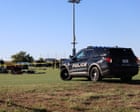
Two people died when a Kansas woman drove through a soccer game, including a six-year-old child, and eleven more were injured.
Read those words once. Read them again. Even when a headline gives you the skeleton of a tragedy—two dead, a six-year-old among them, a Kansas woman behind the wheel, a soccer game torn apart, eleven injured—the cold numbers have a strange way of flattening the horror into something polite and distant. A statistic sits quietly on a screen. A grief-stricken family does not.
I have stood on enough sidelines over the years to know the rhythm of a weekend tournament. The thermos of lukewarm coffee in one hand, the camp chair unfolding with a metallic snap, the low murmur of parents trading updates about school schedules and travel ball fees while ten-year-olds chase a scuffed ball back and forth. You build a small, temporary fortress out of portable canopies and orange cones. Inside that perimeter, the rules feel simple. Stay in bounds. Play fair. Go home tired and sunburned.
When a vehicle crosses that line, the fortress doesn't just bend. It evaporates.
The Thin Wall Between Ordinary and Unthinkable
To understand why a story like this stops people cold, you have to look at what a soccer pitch actually is in the American heartland. It is not a stadium with concrete barriers, turnstiles, and armored bollards. Usually, it is a municipal park or a set of fields tucked beside a suburban road or a rural highway—places where grass meets asphalt with nothing between them but a strip of gravel, a low curb, or a few inches of dirt.
That proximity is part of the charm. You park fifty yards from the corner flag, haul out the wagon packed with juice boxes and spare cleats, and walk straight onto the grass. Convenience and openness make community sports possible. Yet that same openness leaves almost zero margin for error when a two-ton machine leaves the pavement.
Consider a hypothetical scenario, purely to trace the physics and human timing of such a moment. Picture a parent—let's call her Maya, though she is entirely invented for this illustration—standing near the touchline with her phone half-raised to catch her child's first clean pass. Her attention is split between the ball and the field, the way every sideline parent's attention is split. In the span of two heartbeats, a sound enters the air that does not belong to whistles or cleats: the rising whine of an engine or the sharp crunch of tires leaving asphalt. By the time the human brain registers that something is wrong, a car traveling at even thirty-five or forty miles per hour covers more than fifty feet per second.
There is no time to organize a crowd. There is no time to think through a protocol. There are only reflexes, screams, sudden impact, and the agonizing seconds after the dust settles when everyone realizes the scale of what just happened.
I admit I find myself staring at stories like this with a mixture of anger and helplessness. How does something so routine turn so lethal so fast? Sometimes investigators uncover medical emergencies, sudden mechanical failures, confusion, impairment, or distraction. Sometimes the full picture takes days, weeks, or longer to emerge as witness accounts are gathered and crash reconstructions are completed. Waiting for verified answers when lives have already been shattered is one of the hardest parts of any public tragedy. Speculation rushes in to fill the quiet, yet real accountability requires patience and truth rather than guesswork.
What Eleven Injuries Mean Behind a Headline
When a report says eleven more were injured, it is easy to treat that number as a footnote to the fatalities. In reality, eleven injuries means eleven separate bodies, eleven separate shocks to the nervous system, and dozens of family members whose entire day changed in an instant.
One injured person might have a fractured collarbone from being thrown sideways. Another might have deep lacerations, concussions, or crushed limbs. Another might not have been struck directly by the vehicle at all, yet suffered severe trauma diving out of its path onto hard ground or colliding with debris. And then there are the injuries you cannot wrap in gauze or put in a sling—the children who saw a teammate or a friend go down, the parents who froze because they couldn't reach their child fast enough across chaos, the coaches and bystanders who tried to render aid before sirens even echoed in the distance.
Think of it like dropping a heavy stone into a shallow pond. The splash at the center is devastating and unmistakable, yet the ripples keep traveling outward long after the water looks calm again. A community field in Kansas isn't just grass and goalposts; it is a gathering place where neighbors know each other's names. When violence or tragedy arrives there, the shockwave moves through classrooms, grocery aisles, living rooms, and group chats for months.
Why a Six-Year-Old Changes Everything
There is a reason headlines single out a six-year-old. At six, life has barely begun to take shape. A six-year-old is learning how to tie shoes without getting frustrated, losing baby teeth, sounding out words on a page, and figuring out which way to run when everyone around them is shouting instructions. Six-year-olds play the kind of soccer where half the team clumps together around the ball like bees around clover, completely indifferent to tactics or scoreboards.
Losing a child at that age violates an unspoken contract we all carry around—that the older ones are supposed to go first, that children are supposed to grow up, that adults are supposed to keep them safe. When a six-year-old dies on a soccer field, grief stops being abstract. Anyone who has ever held a small hand crossing a parking lot feels a sudden, hollow ache in their chest.
And we should pause, too, on the other fatality mentioned in the report. A second life was lost alongside that child. Even when one detail naturally draws intense public sorrow, another family is living through the exact same abyss—a sudden empty chair at dinner, unanswered texts, a life cut short without warning. Every name and every life behind a tragedy carries its own weight, even in early reports where full details are still emerging.
The Quiet Questions Communities Always Face Afterward
Whenever a crash happens near a park, a schoolyard, or an athletic complex, the conversation eventually shifts from immediate grief to hard, uncomfortable questions. Nobody wants to sound bureaucratic while people are still mourning, yet ignoring physical vulnerabilities doesn't protect anyone next weekend.
If we use a simple metaphor, a town's public spaces often rely on an "honor system" of safety. We paint white lines on grass. We post speed limit signs along adjacent roads. We assume drivers will stay in their lanes, stay alert, stay sober, and stay in control. Most of the time, that honor system holds. Vehicles stay on the road. Games end with popsicle runs and tired kids in the backseat.
But an honor system has no physical resistance. A painted line cannot stop two tons of moving steel. A wooden split-rail fence or a row of decorative shrubs cannot stop a vehicle that has lost control or veered off course.
Across the country, park boards, city engineers, and youth sports leagues have wrestled with this reality for years. Putting steel bollards or heavy planters around every single soccer field in America isn't always practical or affordable, especially in smaller towns or sprawling multi-field complexes where ambulances, maintenance trucks, and families need access points. Add concrete barriers everywhere and you can create new hazards or block emergency vehicles. Leave everything wide open and fields remain exposed to stray or out-of-control vehicles.
There is no neat, painless formula there. That tension—between open, welcoming community spaces and physical protection from vehicular harm—is real, messy, and expensive. Still, when a tragedy strikes in Kansas or anywhere else, local leaders and parents inevitably look harder at sightlines, parking layouts, speed transitions near parks, and whether high-traffic areas have enough separation from moving cars.
Holding Space for Truth Without Turning Pain Into Spectacle
In the hours and days after a shock like this, the information landscape gets noisy fast. Rumors spread on social media before official briefings finish. People demand simple villains or instant answers because complex, painful truths are harder to sit with.
Good journalism and grounded public conversation require a different discipline. They require stating clearly what is confirmed—two dead, including a six-year-old, after a woman drove through a soccer game in Kansas, leaving eleven others injured—while refusing to invent motives, exaggerate unverified claims, or reduce human beings to clickbait.
I have watched how quickly a community can fracture when grief collides with anger and uncertainty. One neighbor blames road design; another blames the driver; another feels guilty for not being there or grateful their own family was spared. Survivor's guilt is a quiet, heavy burden nobody talks about enough. The parent whose child plays on the next field over, or who left ten minutes early, often carries a strange, unsettled weight that makes no logical sense yet refuses to go away.
What Remains When the Whistles Stop
Eventually, the yellow crime-scene tape comes down. The ambulances leave. Local officials release updates as investigations progress, and fundraisers or vigils bring neighbors together under the open sky.
Yet a soccer field is never quite just grass again after something like that happens on it. Even if games return weeks or months later—and often communities do choose to reclaim their spaces together—someone standing near that touchline will glance toward the road a little more often. Someone will listen a little closer to the sound of passing traffic. A six-year-old's absence will echo in the quiet spaces between cheers.
That is the real cost behind the numbers. Not just the two lives lost, not just the eleven people hurt, not just the investigation in Kansas, but the sudden loss of innocence on a patch of green where nothing bad was supposed to happen.
The ball rolls out toward the grass. A whistle blows somewhere in the distance. And for a long time afterward, everyone standing near the edge of the field knows just how fragile a sunny Saturday can be.