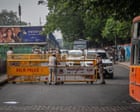
Every time political tension spikes in New Delhi, the script plays out with clockwork predictability. Activists announce a march toward Jantar Mantar or Parliament Street. Within hours, the Delhi Metro Rail Corporation (DMRC) issues a terse advisory at the behest of the Delhi Police. Entry and exit gates at Rajiv Chowk, Patel Chowk, Central Secretariat, and Mandi House are locked down.
The mainstream press immediately reaches for the same tired playbook. Reporters file copy framing the closures as an iron-fisted crackdown on democratic dissent, a heavy-handed state apparatus suffocating political expression before a single slogan can be shouted. Meanwhile, commuters grumble about missed office hours, and opposition leaders tweet about authoritarianism.
Both sides are looking at the chessboard upside down.
Shutting down metro stations ahead of an election protest march is not a masterstroke of state containment. In the modern information economy, locking those gates is an unforced tactical error by law enforcement—and an absolute gift to protest organizers. By attempting to choke off physical assembly, authorities routinely manufacture the exact visual spectacle, media amplification, and broad-based public resentment that demonstrations struggle to generate on their own.
The Illusion of Containment in a Hyper-Connected Grid
To understand why metro lockdowns backfire, you have to strip away the emotional rhetoric around civil liberties and look purely at urban logistics and crowd dynamics.
Police commanders operate under a twentieth-century crowd-control doctrine: deny the venue, disperse the mass, win the day. In an era before smartphones and decentralized transit networks, cutting off a central rail hub meant stranding agitators on the periphery of a capital city. If people could not reach the symbolic center of power, the protest died on the vine.
Modern New Delhi does not work like that. The Delhi Metro spans nearly 400 kilometers across the National Capital Region, moving millions of passengers daily across interconnected lines. When police order the closure of three or four central stations, they do not stop the movement of people; they merely create artificial bottlenecks one stop away.
I have watched urban security operations across major global capitals make this exact blunder time and again. Planners stare at a map, draw a red circle around a government district, and assume locking the subway doors creates an impenetrable moat. Instead, it turns surrounding neighborhoods into pressure cookers.
When thousands of commuters and demonstrators are dumped simultaneously at Barakhamba Road or Janpath because Rajiv Chowk is shuttered, you do not prevent a gathering. You force an unscheduled, unpoliced spill onto surface arterial roads. Traffic gridlocks instantly. Emergency vehicles get trapped. Instead of a contained march moving along a predictable, barricaded corridor from point A to point B, police suddenly face dozens of splintered flashpoints across Connaught Place and Lutyens' Delhi.
The Attention Economy Rewards Friction
Protest movements rarely fail because of police barricades; they fail because of apathy. Organizing a demonstration in a sprawling metropolis of over thirty million people is brutally difficult. Even well-funded political parties struggle to get tens of thousands of bodies onto the asphalt on a weekday morning, and media networks routinely ignore small-to-medium rallies unless something dramatic occurs.
Enter the preventive transit shutdown.
The moment DMRC posts a gate-closure notice on X, the story stops being a routine political dispute between a party and the Election Commission or the central government. It becomes a breaking citywide infrastructure crisis. Local television news channels switch to split-screen coverage. Radio jockeys warn drivers to avoid central Delhi. Push notifications hit millions of phones.
Consider the sheer publicity value of that intervention. A protest group with a meager media budget could spend weeks distributing pamphlets and running targeted social media ads without achieving a fraction of the reach handed to them by a single police directive closing Mandi House station.
Urban sociologists and researchers studying civil resistance—most notably Erica Chenoweth and Maria Stephan in their foundational work on nonviolent conflict—have consistently demonstrated that state overreaction acts as a force multiplier for mobilization. When authorities impose visible, sweeping restrictions that disrupt everyday life, they validate the protesters' core narrative that the system is brittle and defensive.
Manufacturing Sympathy Through Commuter Rage
Ask any seasoned political strategist in India what kills a street protest fastest, and they will give you one word: inconvenience.
Middle-class office workers in Delhi, Noida, and Gurugram generally have zero patience for political rallies that block their commute. When demonstrators sit in the middle of ITO or march down Ring Road, ordinary citizens blame the protesters for making them late to work or trapping them in exhaust fumes. The public mood turns hostile toward the activists.
Watch how that blame shifts the second the metro gates slam shut.
When the Delhi Police order station closures before a march even begins, commuters do not blame the activists sitting miles away at a staging ground. They blame the uniformed personnel standing behind steel shutters refusing to let them exit the platform.
Imagine a scenario where three hundred activists plan to march toward the Election Commission headquarters. Left alone, they walk down a barricaded stretch of Ashoka Road, shout slogans for two hours, submit a memorandum to a junior official, and go home by lunch. Fewer than five thousand people even notice they were there.
Now replay that scenario with a preemptive metro shutdown. Half a million daily riders experience delays, overcrowded feeder buses, and surge pricing on ride-hailing apps. Every single frustrated commuter asks why the stations are closed, reads the headline about the election protest, and absorbs the message that the state is panicking over a march. The police inadvertently convert neutral, apolitical bystanders into witnesses to state disruption.
Why Law Enforcement Keeps Repeating a Failing Playbook
If the operational downsides are so glaring, why do security agencies continue reaching for the metro kill-switch ahead of every major political mobilization?
The answer lies in bureaucratic risk aversion, not strategic brilliance.
In India's policing hierarchy, career advancement and survival depend heavily on avoiding catastrophic failure under your watch. Nobody gets fired for causing a two-hour traffic jam in central Delhi or drawing sharp editorials about commuter inconvenience. A senior officer will have their career torpedoed if a crowd breaches the outer perimeter of Parliament, storms a constitutional body, or generates viral footage of violent clashes outside a high-security zone.
Therefore, police leadership optimizes for absolute worst-case prevention, regardless of the collateral damage to urban mobility or political optics. Shutting down metro stations is a defensive, cover-your-bases maneuver. It allows commanders to tell their superiors that every possible entry vector was sealed off.
This institutional incentive structure creates a massive blind spot. Police view the metro system purely as a tactical delivery mechanism for insurgents rather than the circulatory system of a functioning economy. Because the DMRC operates under statutory frameworks—specifically provisions within the Metro Railways (Operation and Maintenance) Act—that obligate compliance with law enforcement directives during public order emergencies, police treat station closures as a frictionless button they can press at will.
Dismantling the Real Questions Around Election Protests
Whenever these shutdowns hit the news cycle, public debate gets bogged down in predictable, dead-end arguments. Let's look at the actual questions people ask—and why the framing itself is broken.
Is shutting down metro stations during protests legal?
Yes, technically it is. Under Section 144 of the Criminal Procedure Code (and its updated equivalent under the Bharatiya Nagarik Suraksha Sanhita) alongside transit security regulations, district magistrates and police commissioners possess broad authority to restrict public movement and suspend transport nodes to prevent breaches of the peace. Debating the strict legality misses the point entirely. Just because an authority has the statutory power to pull a lever does not mean pulling it achieves the desired security outcome.
Does closing stations actually reduce crowd sizes at the protest site?
Directly outside the barricaded zone, yes, temporarily. Across the broader central district, no. Crowd dispersion simply shifts the perimeter outward. Instead of managing a concentrated group inside a designated protest zone like Jantar Mantar—which was specifically designed as a safety valve for democratic venting—police end up chasing mobile groups across commercial markets, residential colonies, and peripheral metro exits.
Who loses money when DMRC shuts down central hubs?
Everyone except the protesters. DMRC loses direct farebox revenue during peak morning and evening rush hours. Retail businesses in Connaught Place and surrounding markets suffer immediate footfall drops. The broader economy absorbs millions of rupees in lost productivity as workers sit stranded in surface traffic. Meanwhile, the political organizers pay zero financial penalty for the shutdown.
The Honest Downside of Letting the Trains Run
Taking a contrarian stance against preventive metro lockdowns requires intellectual honesty. Leaving central stations wide open during a high-stakes election protest carries genuine operational hazards that cannot be waved away with idealistic talk about free speech.
If intelligence inputs point to coordinated, violent subversion—groups arriving with incendiary materials, organized cadres intent on vandalizing public infrastructure, or credible terror threats—keeping high-capacity underground stations open creates a severe tactical vulnerability. Underground concourses are enclosed spaces where stampedes can turn lethal within seconds if tear gas is deployed or panic breaks out.
Furthermore, once a crowd of fifty thousand people successfully converges at a single central point, dispersing them without using disproportionate force becomes exponentially harder. Police commanders rightfully fear the tipping point where a peaceful assembly morphs into an uncontrollable mob, leaving them with a binary choice between surrendering public buildings or ordering a lathi charge that guarantees international condemnation.
Pretending those risks do not exist is naive. A city cannot simply throw open the gates to Parliament Street and hope for the best during volatile election cycles.
What Smart Urban Policing Looks Like Instead
The choice is not between total paralysis of the capital's transit grid and chaotic anarchy at the doorstep of democratic institutions. Modern crowd management requires surgical precision rather than blunt-force shutdowns.
Keep the trains moving, filter at the street level.
Instead of locking metro station gates and trapping thousands of legitimate commuters underground or forcing them onto the streets, keep the transit exits open and establish multi-layered pedestrian screening rings two hundred meters outside the station perimeter. Commuters walk right past to their offices; organized marchers carrying banners and loudspeakers are intercepted and channeled into designated holding areas.Expand designated protest zones instead of shrinking them.
For decades, authorities have steadily squeezed the physical space permitted for dissent in New Delhi, pushing demonstrators further away from centers of power and imposing strict numerical caps. When you eliminate legitimate, visible venues for political expression, you force organizers to weaponize surprise flash mobs and transit disruptions just to be seen. Giving political groups a clear, televised, high-visibility stage removes their incentive to turn the entire city into an obstacle course.Weaponize transparency in real time.
Vague advisories announcing station closures "due to security reasons" breed rumor, panic, and resentment. If intelligence genuinely dictates closing a single exit gate adjacent to a sensitive building, police and transit authorities should communicate the exact operational boundary clearly while keeping opposite-side exits open for commercial traffic.Measure policing success by economic continuity, not empty streets.
As long as police commanders are judged solely on whether a road looks empty on a drone feed, they will keep shutting down the city to protect their own careers. Municipal leadership needs to track transit uptime and commercial disruption as core metrics alongside public safety during political demonstrations.
The Real Lesson of the Locked Gates
Political movements live and die by narrative control. In the run-up to an election, opposition parties and activist coalitions are desperate to frame the incumbent establishment as fearful, out of touch, and intolerant of accountability.
Every time the Delhi Police order the shutters pulled down at Rajiv Chowk or Central Secretariat ahead of a march, they hand their adversaries the exact photographic evidence needed to prove that thesis. A locked iron gate in front of a public train station is the most potent visual metaphor for state insecurity ever invented.
Until security planners realize that disrupting the daily lives of half a million citizens to stop a few thousand marchers is strategic self-sabotage, protest organizers will never need to build a better mobilization machine. The state will keep building it for them, one locked metro station at a time.