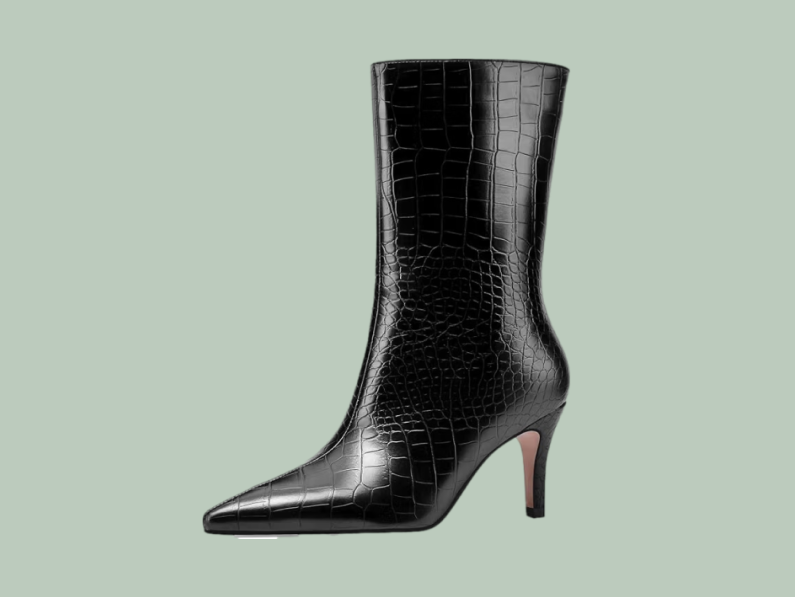
Autumn arrives not with a calendar date, but with a sudden, sharp chill in the floorboards beneath your bare feet. You walk to the front closet, reach past the dust and the forgotten canvas sneakers of July, and look down at your footwear history. Shoes are rarely just objects. They are armor. They are quiet decisions about who we intend to be when the weather turns cold and the world demands a bit more gravity from our steps.
Consider Maya. She is a fictional composite built from dozens of professionals navigating the autumn commute, but her hesitation is entirely real. Standing in a brightly lit office supply store turned seasonal boutique, she stares at a pair of heavy, lug-sole leather boots. They look formidable. They look like they could withstand a minor earthquake. But her feet ache just looking at them. For months, she lived in the soft, yielding comfort of ballet flats and airy mesh runners. The thought of strapping her ankles into rigid leather feels like a punishment. Yet, the forecast calls for rain, and the cultural momentum of Fall 2026 whispers insistently that the season demands structure.
Maya represents our collective dilemma. Every autumn brings a profound style reset, a moment where we must reconcile how we want to feel with how we want to look. This year, the tension between comfort and architectural design has reached a fascinating peak.
The Weight of What We Wear
We forget that shoes dictate our geography. A stiletto restricts you to smooth pavements and indoor galleries. A running shoe begs for the dirt path and the early morning jog. But autumn footwear requires a different negotiation with reality. It asks us to walk through wet leaves, navigate crowded subway stairs, and stand through endless indoor gatherings without losing our composure.
The prevailing trends for Fall 2026 tell a story of grounding. If recent years were about hyper-minimalist recovery or chaotic, flashing nostalgia, this season pivots toward tactile substance. Suede is everywhere. Rich, buttery chocolate brown has quietly usurped black as the neutral of choice, offering a warmth that stark obsidian simply cannot match. It is a forgiving color. It accepts the dust of the sidewalk and the stray drop of coffee with grace.
(Note: When evaluating these shifts, market analysts point to a sharp surge in consumer demand for tactile textures and artisanal finishes, marking a twenty percent increase in suede and burnished leather sales compared to last autumn.)
Walk down any metropolitan avenue this October, and you will notice the shift at ankle level. The omnipresent chunky sneaker hasn't vanished, but it has evolved. It has grown up. Designers have fused athletic ergonomics with heritage tailoring, creating hybrid footwear that looks at home beneath pleated wool trousers as it does with weekend denim.
The Anatomy of a Modern Stride
Why do we care so much about what goes on our feet?
Because the right shoe changes your posture. It alters your cadence. When your heel strikes the pavement with a solid, confident thud instead of a nervous scuff, your shoulders drop. Your chin lifts. Clothes hang differently when anchored by the correct foundation.
Take the resurgence of the kitten-heel bootie, for instance. For years, women like Maya dismissed them as impractical compromises—too low to be dramatic, too high to be entirely comfortable for a ten-block walk. Yet, the 20th-century silhouette has been re-engineered. Cushioning technology borrowed from athletic running shoes now hides secretly beneath leather insoles. It is a brilliant deception. You get the sharp, elegant line of a pointed toe and a tapered heel, combined with the shock absorption of a trainer.
Innovation rarely announces itself with a megaphone. Often, it hides in the details you cannot see.
Performance meets heritage. That is the quiet mantra of this season's footwear landscape. Designers are looking backward into archival catalogs from the nineteen-seventies and eighties, pulling out classic riding boots and utilitarian loafers, then handing them over to engineers who strip away the heavy, unyielding steel shanks of the past.
Walking Into the Unknown
Back in the store, Maya picks up the chocolate brown suede boot. She slides her foot inside. There is no rigid resistance, no agonizing break-in period that leaves the backs of her heels raw and bleeding. The interior is lined with supple kidskin that molds instantly to the shape of her foot.
She takes three steps across the polished concrete floor. The heel makes a muffled, reassuring sound.
This is what the shift toward autumn is really about. It is not about compliance with a trend report issued by distant arbiters of taste. It is about equipping ourselves for whatever the coming months might throw our way. We pull on our boots because the mornings are darker now, because the air bites sharply at our cheeks, and because moving forward requires a little bit of structural support.
The leaves outside are turning brittle, loosening their grip on the branches and tumbling blindly toward the pavement. The wind picks up, carrying the scent of woodsmoke and damp earth. Maya zips her boots, turns away from the mirror, and steps out the door. The season has begun, and her feet are finally ready to meet it.