The steel hull of a modern cruise ship vibrates with a low, reassuring hum. It is the sound of absolute isolation, a self-contained ecosystem floating on a vast blue desert. For the four thousand souls on board, that hum usually promises escape. But three days into the crossing, the air inside the central atrium began to feel heavy. It wasn’t a mechanical failure. The ventilation system was pushing thousands of cubic feet of cooled air through the cabins every minute. The heaviness was psychological. It was the weight of a whisper.
Rumors on a cruise ship travel faster than the norovirus outbreaks that modern liners are so tightly engineered to prevent. But this wasn’t the familiar stomach bug. This was something whispered in the crew mess and caught in fragments by passengers lingering too long near the medical bay on Deck 3. Recently making headlines lately: The Crossing of Two Worlds inside a Manila Terminal.
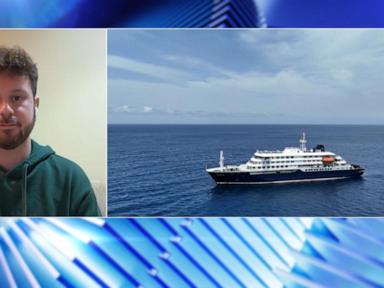
A travel blogger, filming what was supposed to be a routine luxury review, captured the shift in real time. The camera lens, initially focused on shimmering infinity pools and five-course dinners, slowly turned toward the corners of the ship. Toward the closed fire doors. Toward the sudden, jarring appearance of personal protective equipment in the companionways.
The ship had become a host to hantavirus. Additional insights into this topic are detailed by Condé Nast Traveler.
To understand the panic that followed, you have to understand the specific cruelty of this pathogen. In the popular imagination, viral outbreaks at sea mean bad seafood or unwashed hands at the buffet. We think of sanitation wipes and quarantine cabins. Hantavirus shatters that familiar script. It is an infection born of the wilderness, traditionally associated with rustic cabins, rural barns, and the dusty corners of the American Southwest. It belongs to the dirt. Finding it inside a multi-million-dollar floating palace of glass and chrome feels like a glitch in reality.
The virus does not pass from human to human. You cannot catch it from a cough in the theater or a shared handrail on the Lido deck. Instead, it is a phantom left behind by rodents. Specifically, it is shed in their saliva, urine, and droppings. When those fluids dry, they turn to dust. When that dust is disturbed, the virus becomes airborne.
Imagine a single deer mouse burrowing into a pallet of dry goods stored in a portside warehouse weeks before embarkation. The pallet is loaded into the deep, dark underbelly of the ship—the massive storage holds that passengers never see. The dry air of the hold dehydrates the organic matter. The ventilation system, powerful and relentless, pulls from the lowest decks to circulate air. The invisible particles enter the slipstream.
This is not a metaphor; it is the mechanical reality of how an environmental pathogen breaches a sealed human habitat.
The blogger’s footage didn't show people collapsing in the hallways. The reality of a health crisis at sea is far more mundane and far more terrifying. It is defined by the slow erosion of normalcy.
First came the announcements over the public address system, delivered in the calm, measured tones that maritime academies drill into officers. The captain spoke of "precautionary environmental scrubbing." Then came the subtle changes in geography. The lower decks were cordoned off with simple, polite signs: Temporary Maintenance.
But you cannot maintain a shadow.
Passengers began spending more time on the open upper decks, braving the spray and the stiff Atlantic wind. They wanted air that hadn’t passed through the lungs of the ship. In the cabins, the television screens looped the standard safety videos, but the eyes of the guests were fixed on the gaps beneath their stateroom doors.
The medical reality of Hantavirus Pulmonary Syndrome is a countdown. The early symptoms are deceptive. They mimic the fatigue of travel, the slight muscle aches of a long shore excursion, the chill of an over-air-conditioned dining room. But once the virus takes hold in the endothelial cells—the microscopic lining of the blood vessels within the lungs—the trajectory steepens sharply. The vessels begin to leak fluid into the air sacs. The body effectively suffocates from within. According to data from the Centers for Disease Control and Prevention, the mortality rate for the pulmonary form of the virus hovers near thirty-eight percent.
That statistic is a cold number on a page until you are sitting in a eleven-by-fourteen-foot cabin, listening to the person in the next room cough through the thin drywall.
The true horror of the situation on board was the claustrophobia of scale. On land, if a building is compromised, you walk out the door. You step onto the asphalt. You breathe the ambient air of the city. At sea, the boundary between safety and the void is a fraction of an inch of painted steel. Beyond that steel is water, thousands of feet deep, moving at twenty knots. There is nowhere to step out to.
The blogger's daily dispatches became a study in human isolation. The tone shifted from the performative enthusiasm of social media to the raw vulnerability of a hostage diary. One particular frame caught the essence of the voyage: a view through a porthole at twilight. The sun was dipping below the horizon, painting the water in shades of bruised purple. In the reflection of the glass, the blogger’s face was pale, illuminated only by the cold blue light of a smartphone, searching for a cellular signal that hadn't existed for forty-eight hours.
The ship was running out of air because trust had evaporated.
When a vessel enters this state, the hierarchy of luxury collapses. The distinction between the penthouse suites on the upper decks and the inside cabins on the lower decks disappears. Everyone breathes the same collective breath. The crew, mostly young men and women from developing nations working long contracts to send money home, found themselves on the front lines of an invisible war. They were tasked with deep-cleaning areas that might hold the dust of a ghost. Armed with bleach solutions and respirators, they wiped down the structural bones of the ship while the passengers watched from behind closed doors.
The ship eventually made port. The arrival was not greeted with the usual steel drum bands and tropical drinks. It was met by white vans, flashing lights, and customs officials who stayed behind glass partitions.
The passengers walked down the gangway into the blinding light of the pier, their luggage trailing behind them like heavy reminders of a vacation that never happened. Many of them didn’t look back at the ship. They simply walked toward the waiting buses, their shoulders hunched, breathing deeply of the humid, stagnant port air. It was heavy with the smell of diesel and salt, but it was wide. It was uncontained.
The blogger stopped filming as they reached the tarmac. The final video wasn't a summary of the experience or a warning to future travelers. It was just a steady shot of the horizon, where the sea met the sky in a straight, uncaring line, completely indifferent to the tiny iron islands we build to cross it.