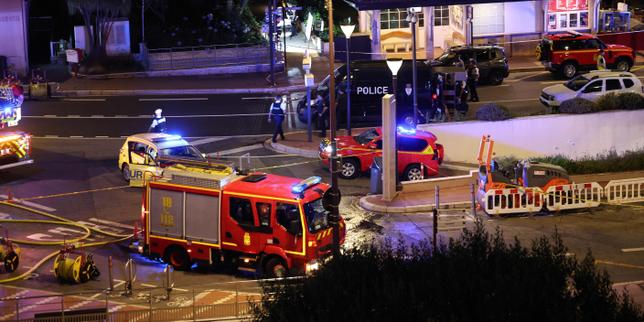
An explosive device hidden inside a backpack detonated on the Rue Révérend-Père-Louis-Frolla in Monaco on June 29, 2026, leaving three people critically injured, including Ukrainian banking tycoon Vadim-Ermolaev. The attack shattered the absolute tranquility of the microstate, known globally as a sanctuary for the ultra-wealthy. This targeted blast bypassed the heavy surveillance apparatus of the Principality, indicating a sophisticated operation that goes far beyond local malice. While authorities hunt for a suspect captured on camera fleeing toward the French border town of Beausoleil, the incident exposes a dangerous shift in the geopolitics of billionaire havens.
Safe Harbors No Longer Protect Against Foreign Conflicts
For decades, the ultra-wealthy operated under an unwritten rule. No matter how fierce the corporate or political battles raged in Eastern Europe, Monaco remained neutral ground. The streets were clean, the police omnipresent, and the private banks discreet. Monday night changed that calculation completely.
The detonation occurred just after 21:00 near a residential building close to the Boulevard d’Italie. A lone individual walked into the frame of Monaco's extensive CCTV network, calmly placed a backpack, and walked away. Minutes later, the explosion tore through the quiet street. The primary target appeared to be Vadim Ermolaev, an oligarch with massive holdings in real estate, banking, and manufacturing, along with two members of his family.
Emergency services instantly triggered the Plan Rouge, a high-intensity crisis management framework designed for mass-casualty events. Firefighters from Menton, La Turbie, and Nice crossed the border to assist local brigades. The response was rapid, but the institutional shockwave will take years to dissipate.
The Illusion of Total Surveillance
Monaco boasts one of the highest police-to-population ratios in the world. It is a territory where every square meter is scrutinized by high-definition cameras, and facial recognition technology is embedded into the urban fabric. Yet, a operative managed to execute a precision strike in a residential zone and escape on foot across the French border.
This failure highlights a structural vulnerability in Western European security enclaves.
- High-density surveillance works efficiently against opportunistic, low-level criminality.
- It offers minor defense against a motivated adversary using burner identities and calculated blind spots.
- The physical proximity of French border towns like Beausoleil makes rapid egress simple for anyone moving on foot.
The investigation now rests with the Monegasque Public Security and the French national police, who are scouring the Alpes-Maritimes region. The immediate assumption of an act of malice has quickly evolved into a targeted corporate or political assassination attempt, forcing regional intelligence services to re-examine the financial networks operating within the Principality.
Extraterritorial Violence Moves to High Value Enclaves
This attack is not an isolated anomaly but rather the manifestation of a brutal trend where Eastern European corporate warfare spills into Western Europe. When international sanctions, asset freezes, and shifting domestic political alliances squeeze multi-millionaires, the battle for survival plays out in the Mediterranean basin.
Monaco Security Paradox:
[Maximum Police Presence] -> Effective against domestic crime
[Open Border with France]  -> Vulnerable to professional extraction
[Global Wealth Influx]     -> Imports high-risk geopolitical rivalries
The financial elite do not just bring capital to Monaco; they bring their history, their enemies, and their vulnerabilities. When traditional legal and financial structures fail to resolve high-stakes commercial disputes in contested regions, actors resort to kinetic methods. The Rue Frolla blast proves that an ocean of capital can no longer insulate individuals from the harsh realities of their home jurisdictions.
Monaco faces a delicate balancing act. To maintain its status, it must guarantee absolute safety to its residents. However, if it transforms into a fortress with closed borders and hyper-restrictive entry protocols, it risks choking the very luxury lifestyle that defines its economy. The coming weeks will reveal whether the Principality intends to tighten its immigration and financial oversight or treat this explosion as a tragic, unrepeatable exception.