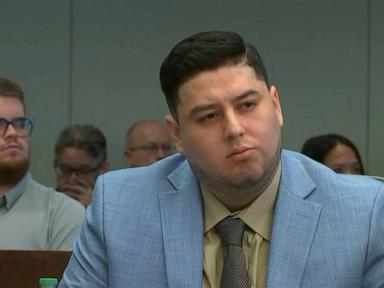
Fourteen years is an eternity in the life of a criminal investigation. Memories fracture, physical evidence degrades, and public urgency evaporates into the quiet agony of an unsolved file. Yet, in the fall of 2026, the courtroom doors in Durham County finally swung open for the trial of Miguel Salguero-Olivares, the man accused of killing University of North Carolina student Faith Hedgepeth. For over a decade, the murder of the 19-year-old sophomore sat as a gaping wound in the collective conscience of North Carolina. Her body was discovered on September 7, 2012, inside an off-campus apartment on Old Chapel Hill Road, bludgeoned to death with a Bacardi rum bottle left bloody at the scene.
The story told by initial headlines focused on the sheer tragedy of a young life cut short. But the deeper reality of the Faith Hedgepeth case is an uncomfortable study in institutional friction, genetic genealogy milestones, and the heavy price of investigative blind spots. This trial was never just about a single courtroom confrontation. It was the endpoint of a sprawling, bureaucratic labyrinth that took nine agonizing years merely to land an arrest.
The Anatomy of a Stalled Investigation
To understand why it required nearly a decade to bring Salguero-Olivares to court, one must examine the early missteps that plague regional homicide investigations when initial leads turn cold. In the autumn of 2012, Chapel Hill and Durham law enforcement agencies faced an overwhelming scene. DNA profiles were pulled from the apartment, including foreign male DNA found on the victim's body and physical belongings. Yet, matching those profiles against national databases yielded nothing.
For years, the investigation operated under a shroud of localized rumors. Early police focus naturally turned to the inner circle—friends, acquaintances, and the last people to see her alive. This hyper-local concentration, while standard procedure, often creates tunnel vision. Detectives chased a myriad of circumstantial theories while the actual physical evidence sat waiting for a technological breakthrough that local agencies could not independently fast-track in the mid-2010s.
The breakthrough arrived not through a midnight confession or a tipster's phone call, but through the mundane mechanics of a routine traffic stop in August 2021. When Salguero-Olivares was arrested for driving while intoxicated, standard state protocols mandated the collection of his DNA. When processed through the North Carolina state database, that sample generated a familial and direct match to the genetic profile recovered from the 2012 crime scene.
An entire decade evaporated in the span of a laboratory comparison.
Inside the Courtroom Maneuvers
When jury selection finally commenced in late September 2026, overseen by Judge Keith Gregory, the defense and prosecution immediately clashed over the permissible boundaries of evidence. Defense attorneys attempted to pivot toward third-party guilt arguments, focusing intensely on the circumstances surrounding Hedgepeth's roommate and the timeline of the night before the murder.
Judge Gregory's pretrial rulings sharply limited these attempts, demanding strict adherence to evidentiary relevance rather than speculative finger-pointing. This legal containment is vital in high-profile cold cases. Juries bombarded with a decade's worth of internet sleuthing, true-crime podcast theories, and social media speculation run the risk of distraction. The court's job is to distill fourteen years of noise back down to raw, admissible physical and forensic facts.
The state’s case relied heavily on establishing the immutable link between Salguero-Olivares's genetic signature and the crime scene. Prosecutors systematically walked jurors through the physical evidence, the timeline of the early morning hours of September 7, 2012, and the forensic timeline that prosecutors argued pointed exclusively to the defendant.
The Broader Systemic Failure
Cold cases like this one expose a harsh systemic truth. Modern forensic technology—specifically advanced DNA phenotyping and comprehensive database matching—often moves faster than the infrastructure of local police departments. Thousands of rape kits and unidentified DNA samples sit in regional evidence lockers across the United States, waiting for the exact kind of database expansion that finally snared Salguero-Olivares during a routine traffic infraction.
If not for that specific drunk-driving arrest nine years after the murder, the file might still be gathering dust in a Chapel Hill archive. That is the chilling takeaway for criminal justice analysts. Justice in America frequently depends less on airtight investigative momentum and more on statistical probability and happenstance.
The trial concluded with a conviction, bringing a legal closure that Faith Hedgepeth's family fought tirelessly to secure. But the shadows cast by the fourteen-year delay remain. Every month an investigation languishes is a month where evidence degrades, witnesses relocate, and public accountability slips further away.
The courtroom gavel has fallen, but the structural flaws that allowed a killer to walk free for over a decade demand a permanent reckoning within the ranks of American law enforcement.