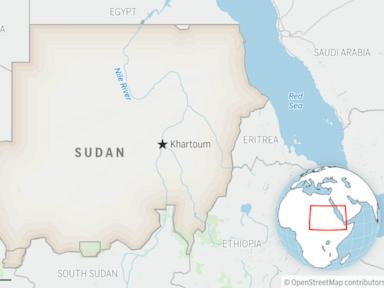
Forty-one lives ended in a matter of seconds when an unmanned aerial vehicle dropped its payload near the Ethiopian border. The strike, attributed to paramilitary forces operating in Sudan, shattered a fragile pocket of sanctuary where displaced civilians thought the war could not reach them. This was not a stray shell or collateral damage from a chaotic infantry skirmish. It was a calculated, high-altitude execution that highlights the lethal democratization of drone technology in modern asymmetric warfare.
When commercial off-the-shelf components meet the cynical calculus of civil war, the result is a mechanized slaughter that defies conventional humanitarian protections. Sudan has become a testing ground for automated and semi-autonomous violence, where regional proxies and domestic factions alike utilize airborne munitions to terrorize populations far from the primary frontlines.
The Logistics of Atrocity
To understand how a remote strike obliterates a border settlement, one must look at the supply chains fueling the conflict. The Rapid Support Forces and allied militias have increasingly integrated unmanned systems into their tactical doctrine. These are not state-of-the-art military-grade Predator systems operated from comfortable bunkers thousands of miles away. They are often ruggedized, commercial platforms retrofitted with improvised explosive payloads, or foreign-supplied loitering munitions that bypass traditional air defense networks.
Border regions like the one near Ethiopia have historically served as safety valves. When fighting engulfs Khartoum or the Darfur states, civilians stream toward the peripheries, seeking refuge across international lines. By targeting these transit corridors, paramilitary commanders achieve a dual objective. They stem the flow of refugees to deny their opponents a stable demographic base, and they project terror into zones that international monitors struggle to reach.
The strike near the border killed forty-one people, but the casualty figures only capture the immediate physical destruction. The psychological shockwave radiates much further. It signals to every displaced family that mobility is a death sentence, and that proximity to an international boundary offers no immunity from the sky.
The Technological Shift in African Conflicts
For decades, African civil wars were characterized by small arms, technical vehicles, and mass infantry movements. The barrier to entry for strategic devastation was high, requiring artillery batteries or fixed-wing air support that only well-funded governments could maintain. That era is dead.
The proliferation of cheap drone technology has leveled the playing field for non-state actors, lowering the cost of mass casualty infliction while increasing the perpetrator's distance from the crime scene. You do not need an air force base to launch a drone strike. You need a flatbed truck, a GPS signal, and a modified quadcopter or fixed-wing drone kit purchased through shadow brokers in the Middle East or North Africa.
This shift has outpaced the international community's legal and diplomatic frameworks. Existing conventions on armed conflict assume a clear distinction between combatant and non-combatant, a distinction that evaporates when a drone operator miles away stares at a grainy thermal feed and releases ordnance on a crowded marketplace or a humanitarian staging post. Accountability becomes an illusion. When pressed, commanders issue boilerplate denials or blame rogue elements, knowing that investigations in active conflict zones are painfully slow and easily obstructed.
The Geopolitical Blind Spot
The international response to the Sudanese humanitarian catastrophe has been defined by polite diplomatic fatigue. While Western capitals issue stern communiqués and convene emergency summits, the structural drivers of the violence remain untouched. Regional powers continue to funnel cash, fuel, and hardware across porous borders, treating Sudan as a chessboard for influence while millions starve and bleed.
The borderlands with Ethiopia are particularly volatile. Tensions between Khartoum and Addis Ababa have simmered for years over disputed agricultural lands like the Al-Fashqa triangle, creating a paranoid security environment where every movement is viewed through a lens of existential threat. When a paramilitary group strikes near this frontier, the geopolitical reverberations threaten to draw neighboring states deeper into the quagmire. Yet, diplomatic efforts remain paralyzed by competing interests and a fundamental lack of leverage over commanders who profit directly from the war economy.
Gold smuggling, weapon trafficking, and extortion fund the operations of both the Sudanese Armed Forces and the Rapid Support Forces. As long as these revenue streams remain intact, moral outrage from human rights groups will do nothing to halt the drone manufacturing plants and supply lines feeding the slaughter.
The Human Cost of Automated Indifference
Statistics numb the mind. Forty-one dead. Hundreds injured. Entire families erased before they could cross an international border to safety. Behind every digit in a casualty report is an ordinary life reduced to shrapnel and ash by a machine operated by someone who never had to look their victim in the eye.
This is the grim reality of modern warfare in the digital age. Distance breeds detachment, and detachment breeds cruelty. As the war in Sudan grinds past its darkest milestones, the skies above the borderlands will remain hazardous, filled with the low hum of engines carrying death to the dispossessed. The survivors pick up the pieces, bury their dead in shallow desert graves, and wait for the next buzz in the clouds.