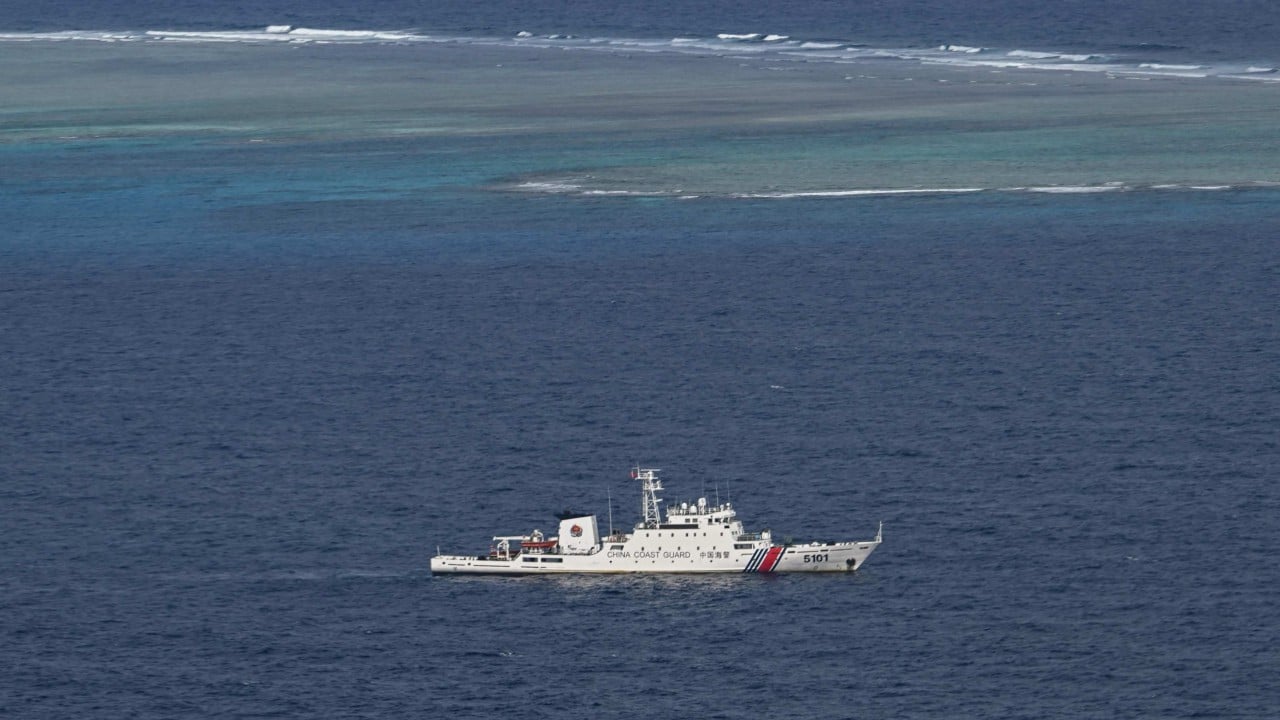
The sea floor is the new frontier of maritime conflict. Manila and Beijing are locked in a bitter struggle over seabed claims in the South China Sea, moving the theater of confrontation from surface waters down to the dark, resource-rich benthic zone. Beijing has formally accused the Philippines of flagrantly infringing on its sovereignty through recent seabed resource assessments and jurisdiction assertions in disputed areas. This escalation marks a dangerous shift in Indo-Pacific geopolitics. Submerged features, continental shelf submissions, and marine scientific research are now the primary flashpoints of an intensifying geopolitical rivalry.
For decades, analysts focused on grey-zone tactics involving coast guard vessels, water cannons, and disputed reefs like Scarborough Shoal or Second Thomas Shoal. Those surface skirmishes captured global headlines. They missed the deeper strategic game unfolding underneath the waves. The seabed holds massive economic value, including untapped oil, natural gas deposits, and vital polymetallic nodules containing critical minerals needed for the global green energy transition. Control over the water column was never the ultimate goal. Control over the floor of the sea determines resource independence and long-term regional hegemony.
The Legal Architecture of the Submerged Struggle
To understand why Beijing is reacting with such diplomatic and physical fury, one must examine the legal mechanisms governing maritime boundaries. Under the United Nations Convention on the Law of the Sea, coastal states are entitled to a territorial sea, an exclusive economic zone, and a continental shelf. A nation's continental shelf extends up to two hundred nautical miles from its baseline, and potentially further under specific scientific criteria defined by the Commission on the Limits of the Continental Shelf.
The Philippines has actively asserted its sovereign rights over its extended continental shelf in the West Philippine Sea. Manila submitted data to the UN commission regarding the Benham Rise, now officially named the Philippine Rise, on the eastern side of the archipelago. More critically, Philippine marine scientists and government agencies have increasingly turned their attention to western maritime boundaries, attempting to survey and document seabed resources within their exclusive economic zone.
Beijing views these moves through a radically different legal and strategic lens. The Chinese government relies on its expansive nine-dash line, rebranded recently in official maps with a tenth dash, to claim historic rights over nearly the entire South China Sea. Any independent resource assessment, hydrographic survey, or unilateral jurisdictional claim by Manila inside these overlapping areas is categorized by Beijing as a direct challenge to its core interests.
Diplomatic cables from Beijing consistently frame Philippine actions as provocations designed to internationalize a bilateral dispute. The accusation of flagrantly infringing on sovereignty is not merely rhetorical posturing. It is a calculated legal groundwork designed to justify aggressive interdiction by maritime militia and coast guard assets against any vessel conducting scientific or commercial seabed operations licensed by the Philippine government.
Mapping the Economic and Strategic Stakes
Why risk military escalation over mud and rocks thousands of feet underwater? The answer lies in the shifting imperatives of twenty-first-century industrial economies. Hydrocarbons remain a significant factor, but the calculus now includes critical raw materials.
Energy security drives Manila's urgency. The Malampaya gas field, which powers a massive portion of Luzon's electricity grid, is slowly depleting. Philippine energy planners know that finding alternative natural gas reserves within domestic waters is an existential necessity. The Reed Bank, known internationally as Vanguard Bank, sits squarely within the Philippine exclusive economic zone but is fiercely contested by Beijing. Seismic surveys in this region have repeatedly triggered standoffs between Philippine-contracted exploration vessels and Chinese paramilitary ships.
Beijing approaches the seabed with a dual mandate of resource acquisition and strategic denial. By asserting jurisdiction over the entire South China Sea floor, China aims to secure a massive buffer zone for its strategic nuclear submarine fleet based on Hainan Island. Deep trenches and underwater topography provide natural acoustic hiding spots for submarines. Ensuring that foreign navies and allied states cannot map, monitor, or conduct acoustic research on these seabeds is a top priority for the People's Liberation Army Navy.
When Manila authorizes a survey or asserts a claim, it punctures Beijing's containment architecture. It introduces allied intelligence-gathering potential and legal precedents that undermine the enforcement of the nine-dash line.
The Regional Ripple Effect and Allied Posturing
Bilateral disputes in the South China Sea never happen in a geopolitical vacuum. Washington watches every movement on the seabed with acute interest. The Mutual Defense Treaty between the United States and the Philippines explicitly covers armed attacks on public vessels, aircraft, and armed forces anywhere in the Pacific, including the South China Sea.
As the theater of conflict extends to the seabed, security planners in Washington and Manila face thorny legal and operational questions. Does a blockade or ramming of a seabed research vessel trigger the defense pact? Where does the threshold of armed conflict lie when contested zones involve remote-operated underwater vehicles, acoustic sensors, and civilian-flagged marine research ships?
Other Southeast Asian nations are tracking these developments with profound unease. Vietnam, Malaysia, and Indonesia all possess overlapping maritime claims and active offshore energy sectors. Vietnam, in particular, has faced continuous Chinese pressure on its oil and gas blocks in the Vanguard Bank area. If Beijing successfully establishes a precedent that standard Philippine seabed resource management constitutes illegal infringement, that precedent will be weaponized against every other littoral state in the Association of Southeast Asian Nations.
ASEAN as a collective body remains largely paralyzed. Consensus is difficult to forge when several member states have deep economic and political ties to Beijing. China continues to push for a finalized Code of Conduct in the South China Sea, but these negotiations drag on for decades while facts are established on the water through sheer force and maritime presence.
The Technology of Subsurface Dominance
The technical realities of modern seabed operations amplify the friction. This is not the era of simple divers and rudimentary sonar. Modern marine research relies on advanced bathymetric mapping, deep-sea submersibles, autonomous underwater vehicles, and continuous seismic profiling.
When a Philippine-flagged or contracted vessel deploys high-resolution sonar equipment to map the benthic contours of a disputed bank, it gathers dual-use data. Geologists see hydrocarbon deposits. Naval tacticians see underwater highways, thermal layers, and chokepoints. This duality explains why simple scientific research is routinely treated as an act of espionage or territorial encroachment.
China maintains a formidable fleet of specialized marine research and survey vessels operated by various state ministries and the Chinese Academy of Sciences. These ships routinely operate throughout the South China Sea, often inside the exclusive economic zones of the Philippines, Malaysia, and Vietnam, without prior consent. Yet, when Manila attempts to conduct similar operations within its own internationally recognized maritime zones, Beijing deploys its vastly superior coast guard and maritime militia fleet to shadow, block, and harass the operators.
This asymmetrical enforcement mechanism creates an impossible environment for Philippine civilian agencies. Without a comparable naval and coast guard deterrent, Manila must rely on asymmetric diplomacy, strategic transparency, and the amplification of international maritime law to protect its sovereign rights.
The Path Ahead for Benthic Geopolitics
The confrontation over seabed claims is accelerating toward a dangerous equilibrium. Neither side can afford to back down without suffering catastrophic domestic political fallout. In Manila, public sentiment is overwhelmingly pro-sovereignty and anti-China, fueled by years of aggressive encounters at sea. Philippine President Ferdinand Marcos Jr. has adopted a much more transparent and assertive foreign policy stance than his predecessor, actively publicizing maritime confrontations through a strategy known as assertive transparency.
Beijing, meanwhile, faces a leadership deeply committed to national rejuvenation and the absolute preservation of territorial claims as defined by the ruling party. Compromising on the South China Sea is viewed in Beijing as a sign of weakness that could invite further challenges along other contested frontiers, from Taiwan to the Himalayas.
Diplomatic channels remain open, but they are increasingly hollowed out by strategic mistrust. Hotlines between coast guards exist on paper, but operational friction on the water routinely bypasses diplomatic containment. The seabed has transformed from a silent, forgotten expanse into the ultimate litmus test for the future of the international rules-based order in Asia.
Manila will continue pushing its maritime boundaries through domestic legislation, UN submissions, and international partnerships. Beijing will continue meeting those efforts with relentless gray-zone pressure, economic coercion, and legal denunciations. The conflict beneath the waves has only just begun.