History rarely knocks on the door with a polite rapping of knuckles. More often, it arrives like a sudden storm rattling the loose glass of a high-rise window, forcing everyone inside to pause, look up from their papers, and wonder how the weather changed so fast.
Across the diplomatic corridors of Washington and Tehran, the air is heavy with that exact kind of sudden pressure. Discover more on a similar issue: this related article.
Imagine sitting in a windowless room where the air conditioning hums just a fraction too loud, drowning out the ticking of a clock that everyone pretends not to hear. On the table sits a ledger of old grievances, unexploded ordnance from decades of distrust, and a fresh set of demands handed down across oceans. Seven conditions. Seven distinct boundaries drawn in the sand by a nation that has spent forty years mastering the art of enduring isolation.
To understand why these terms matter, you have to step away from the shouting heads on cable television and look at the raw mechanics of survival. Additional journalism by The Washington Post highlights similar perspectives on the subject.
For years, the script between the United States and Iran has followed a rigid, predictable choreography. Sanctions tighten like a tourniquet. Rhetoric sharpens into a blade. The global economy shudders at the price of a barrel of crude oil. Everyone waits for a breakthrough that never quite materializes, trapped in a slow-motion quagmire where neither side can advance and neither side can afford to retreat.
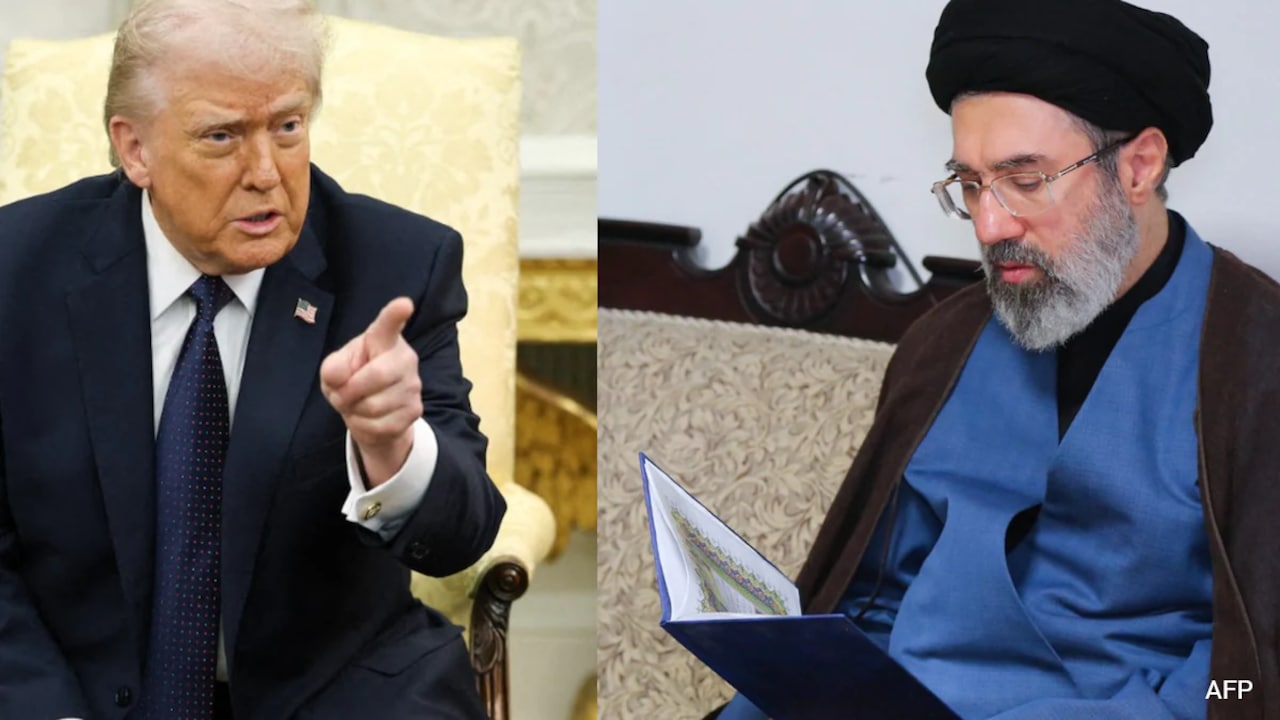
Then a dispatch arrives from Tehran. Not with a threat of immediate fire, but with a list. Seven precise diplomatic checkpoints designed to test whether the incoming administration of Donald Trump is willing to fundamentally alter the board, or simply move the same bruised pieces around.
Let us look closely at what those seven demands actually represent, stripped of their bureaucratic varnish.
First, there is the dismantling of the economic architecture built to starve a society of its basic medicine and commerce. To a policy analyst in a crisp suit in Virginia, a sanction is a line on a spreadsheet—a clean, bloodless lever of statecraft. To a pharmacist in Tehran watching the shelf-life of life-saving chemotherapy drugs expire because international banking wires are frozen, that same line is a physical wall. The first condition demands the complete lifting of maximum-pressure sanctions, not as a reward at the end of a long negotiation, but as the absolute floor of engagement.
Second, the demand for verifiable non-interference. For generations, the shadow war has played out across third-party soil—in the fractured alleys of Beirut, the arid plains of Iraq, and the ports of Yemen. Tehran’s terms ask for a mutual ceasefire in the regional proxy chess match, a recognition that attempting to rewrite the domestic politics of sovereign neighbors through covert funding only breeds permanent instability.
Third is the matter of regional security architecture. The Gulf is narrow water, crowded with oil tankers and gray-hulled warships that brush past each other in the dark like blind giants. One miscalculated radar ping, one nervous nineteen-year-old sailor flipping the wrong switch, and the whole region goes up in smoke. The Iranian conditions propose a native security pact among regional states, intentionally cutting out the transatlantic middlemen who treat the Middle East as a permanent staging ground.
Fourth, the restoration of economic access to global financial networks. You cannot trade in a modern globalized economy when your currency is treated like a toxic asset. The demand here is straightforward: reintegration into SWIFT and the international banking grid, allowing the sale of oil and petrochemicals without running a gauntlet of secondary penalties that turn every maritime transaction into an international thriller.
Fifth, accountability regarding past agreements. Trust is not a renewable resource; once burned, it leaves behind a residue of cynicism that is nearly impossible to scrub clean. When the Joint Comprehensive Plan of Action was shredded with a stroke of a pen years ago, it taught policymakers in Tehran a harsh, unforgiving lesson about the fleeting nature of American political continuity. Any new framework must come with structural guarantees that survive a change in the White House.
Sixth, the cessation of cyber warfare and sabotage targeting critical infrastructure. Beneath the surface of diplomatic cables lies a silent, frantic war waged in the dark. Centrifuges spin out of control, power grids flicker, and water treatment plants stumble—all without a single shot fired. The sixth condition draws a red line around civilian infrastructure, demanding an end to the digital incursions that threaten hospitals, transit systems, and homes.
Seventh, mutual respect for sovereignty and an end to regime-change rhetoric. Words matter. When the stated or implied goal of the world's most powerful military is the collapse of your government, compromise becomes an existential hazard. The final condition is psychological as much as it is political: a formal, verifiable pivot away from subversion toward coexistence.
Listen to the critics in Washington, and they will tell you this is a list of impossibilities. They will point out that handing over seven concessions before a single diplomat sits down at the table violates every rule of modern hardball negotiation. They will call it extortion. They will urge a doubling down on pressure, arguing that if you squeeze hard enough, the walls will eventually crumble from the inside.
That perspective ignores history.
Pressure does not always produce compliance. Sometimes, it produces iron. It hardens a population, justifies internal crackdowns, and convinces leaders that surrendering an inch will only invite a mile of demands. We have run this experiment for decades. The dials have been turned as far to the right as they can go, and the quagmire remains just as deep, just as muddy, and just as dangerous as it was on day one.
Consider what happens if we refuse to look past the pride of the superpower.
The tankers keep burning diesel while skirting longer, more expensive routes. Inflation eats away at the savings of ordinary families from Tehran to Tabriz, while ordinary Americans watch gas prices fluctuate wildly based on the latest rumor coming out of the Strait of Hormuz. The standoff persists because both sides are terrified of looking weak to their domestic bases.
True strength does not lie in refusing to listen. It lies in having the strategic confidence to examine an opponent's terms without flinching.
The seven conditions presented by Iran are not a love letter. They are a map of grievances, a detailed inventory of every scar accumulated over forty years of economic siege and clandestine warfare. They tell us precisely what hurts, exactly where the distrust runs deepest, and what it will cost to pull the two nations back from the precipice of a wider conflagration.
As the political machinery in Washington digests these demands, the real test will not be whether Trump accepts them wholesale. That is diplomatic fantasy. The test will be whether anyone in power possesses the imagination to see past the old playbook.
Because the quagmire will not drain itself. Every day spent waiting for the other side to blink is another day closer to the midnight hour where a misstep turns a cold war hot. The walls are high, the history is heavy, but somewhere beneath the rhetoric, the seven conditions are waiting on the table—a stark reminder that peace is rarely found by demanding unconditional surrender, but by having the courage to talk to the enemy as they actually are.