The generator outside a small bakery in northern Tehran has a very specific sound when it is about to die. It coughs twice, sputters like a wet cough in a quiet room, and then drops the neighborhood into a sudden, suffocating silence.
Picture a baker—let’s call him Reza, a composite of the thousands of shop owners currently watching the sky across the Middle East—standing over a cooling rack of flatbread at four in the morning. For months, Reza has lived by the rhythm of air-raid sirens and the frantic refresh of encrypted messaging apps. Then, out of nowhere, came the whisper of a seven-day peace proposal. Seven days. One hundred and sixty-eight hours of quiet. Enough time, maybe, to fix the generator, to let his daughter sleep in her own bed instead of a concrete stairwell, to pretend that the world had stepped back from the ledge.
And then, just as quickly as the rumor of a pause arrived, the door slammed shut.
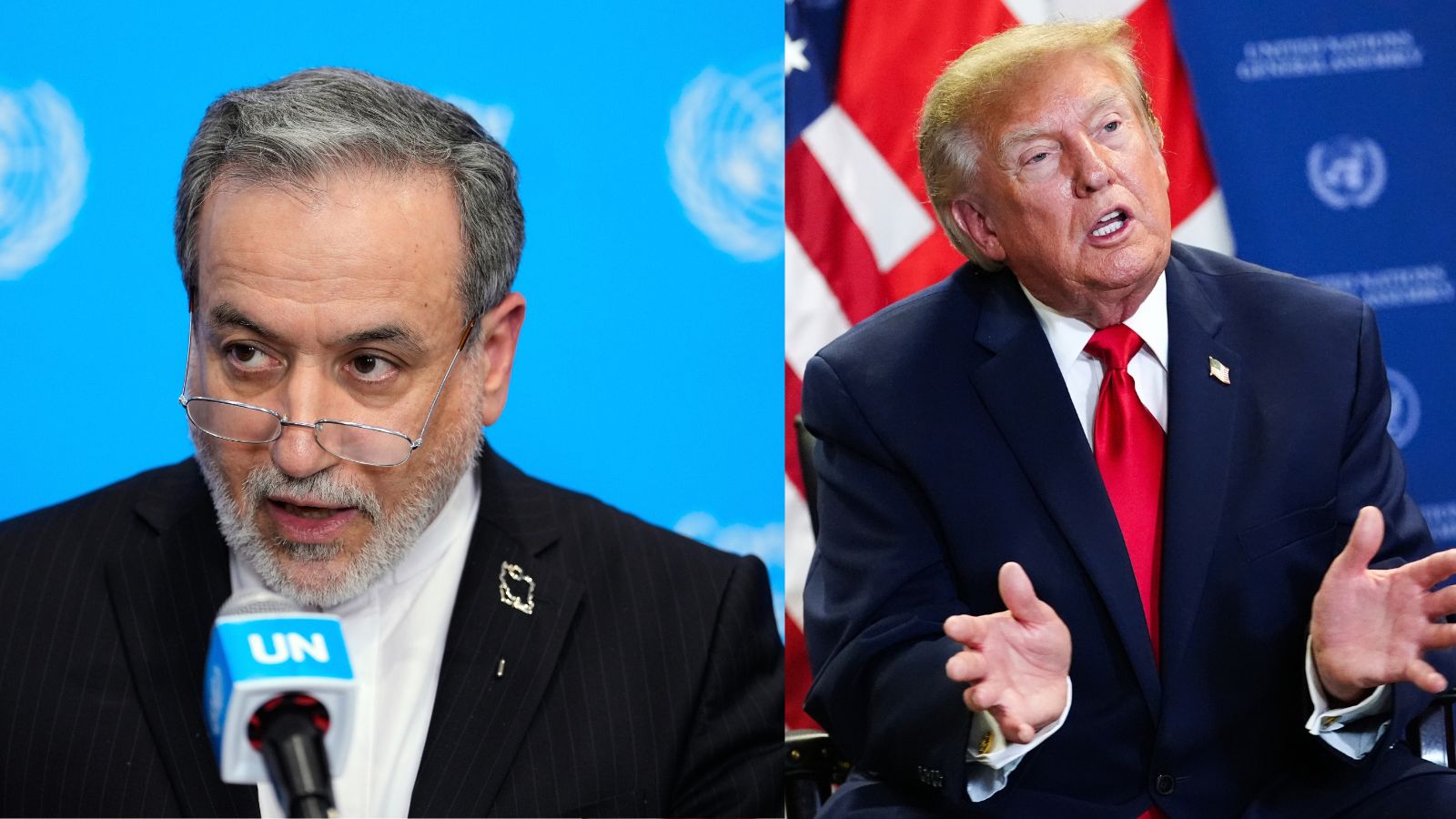
When Donald Trump flatly rejected Iran’s seven-day peace proposal, dismissing the offer even as analysts warned that full-scale hostilities are poised to roar back to life the moment American voters finish casting their ballots, the headlines treated it like another move on a geopolitical chessboard. A bluff called. A negotiation tactic. A calendar footnote wedged between campaign rallies and diplomatic cables.
But out here, away from the podiums and the pundits, a seven-day truce isn't an abstract policy position. It is oxygen. And watching it get pulled away right before an American election feels less like statecraft and more like watching two giants argue over the price of matches while standing waist-deep in dry grass.
The Architecture of a False Dawn
To understand why a single week of quiet became the center of a global standoff, you have to strip away the diplomatic jargon and look at what a seven-day pause actually buys.
In military terms, seven days is an eternity and a blink at the exact same time. When Tehran floated a week-long cessation of hostilities, it wasn't offering a permanent peace treaty, nor was it surrendering its regional leverage. It was offering a breather. Think of it like two exhausted heavyweight boxers leaning against each other in the eleventh round—both bleeding, both breathing heavy, both desperately needing the referee to step in just long enough to spit out their mouthguards and clear the blood from their eyes.
From Washington’s perspective, however, accepting that breather looked like walking into a trap.
Trump’s rejection wasn't born in a vacuum. For decades, American presidents of both parties have wrestled with the exact same nightmare scenario when dealing with the Islamic Republic: the tactical pause. If you give an adversary seven days of guaranteed safety from airstrikes, what do they do on day two? They move the mobile launchers. They bury the enrichment centrifuges deeper under granite. They re-establish broken supply lines to proxy militias from Lebanon to Yemen. In the cold calculus of the Pentagon and the White House, a short-term truce doesn't stop a war; it merely allows the other side to reload without getting shot at.
So Trump said no. No pause. No seven-day grace period. No half-measures that leave the underlying machinery of conflict intact while giving Tehran a stage-managed diplomatic victory right as the United States heads into its election cycle.
Wait. Stop and think about that timing for a second.
Why now? Why a seven-day window, and why does every intelligence briefing point toward a massive escalation the moment the American polls close?
The Election Clock and the Powder Keg
If you have ever lived through a major geopolitical crisis during an American election year, you know the strange, unsettling paralysis that descends on Washington every autumn. Everything—every troop movement, every sanctions waiver, every fiery speech at a podium—gets filtered through the prism of domestic votes.
Politicians hate surprises in the final stretch before Election Day. A spike in global oil prices caused by a burning tanker in the Strait of Hormuz can swing three battleground states in forty-eight hours. Images of American service members caught in a widening regional firestorm can rewrite an entire campaign narrative overnight. Because of this, the weeks leading up to US polls often create an artificial ceiling on military action—an unspoken pressure to keep the lid on the boiling pot until the ballots are counted.
Iran’s leadership knows how to read an American calendar just as well as any strategist in Washington.
By offering a seven-day peace proposal right on the doorstep of the US elections, Tehran placed a calculated bet. If Trump accepted, he would be locked into a diplomatic process that restricted American and allied military options during the most sensitive political window of the year, while Iran gained international credit for appearing reasonable. If he rejected it—which he did—Tehran could point to Washington as the obstacle to peace, all while preparing for the inevitable storm once the election curtain falls.
This is the invisible trap that makes the current moment so uniquely dangerous. Both sides are staring at the exact same clock. Once the polls close in the United States, that artificial political restraint evaporates. The fear of upsetting voters disappears. The strategic calculations shift overnight from How does this look on the evening news? to How do we finish what we started before the new year?
What Happens When the Restraint Vanishes
Let’s step back from the high-altitude view of war rooms and campaign headquarters and look at what "war resuming after the polls" actually means in physical reality.
I remember standing in a coastal town in the eastern Mediterranean years ago during the final days of a different ceasefire. The strangest part wasn't the noise of the war; it was the silence right before it restarted. People walked faster. Nobody lingered at outdoor cafés. Every conversation ended with a quick glance at the horizon, as if the sky itself were holding its breath. You could feel the collective blood pressure of an entire city rising hour by hour as the deadline approached.
That is the exact psychological reality gripping millions of people from Tel Aviv to Tehran, from Beirut to Baghdad right now.
When diplomatic off-ramps are publicly rejected, the market for hope crashes immediately. In Tehran, the rial—already battered by years of sanctions and regional instability—trembles every time a hardline speech hits the wires. Families hoard canned beans, bottled water, and backup batteries. Hospital administrators quietly review their triage protocols, checking diesel reserves for emergency generators because they know power grids are always among the first targets when major hostilities resume.
Meanwhile, in northern Israel and along the borders of Lebanon and Syria, families who have already spent months living out of suitcases in temporary hotels realize they aren't going home anytime soon. Schools remain shuttered. Harvests rot in the fields because nobody wants to drive a tractor within range of a guided missile.
And what about the rest of the world? You don't have to live within range of a ballistic missile to feel the shockwaves of what happens if this conflict reignites at full intensity after the US election.
Consider the Strait of Hormuz—a narrow waterway barely twenty-one miles wide at its tightest point. Roughly a fifth of the world’s petroleum passes through that sliver of water every single day. It is the jugular vein of the global economy. If a post-election escalation spills into the Gulf, insurance rates for cargo ships skyrocket within hours. Tankers anchor in safe ports instead of making the run. Within two weeks, the price of diesel in Ohio, groceries in London, and electricity in Tokyo begins to climb. A rejected seven-day truce halfway across the world suddenly shows up as an extra forty dollars on your weekly grocery bill.
The Illusion of the "Clean" Strike
There is a dangerous fantasy that always creeps into the public conversation whenever diplomacy breaks down: the idea that a decisive military campaign can somehow solve a decades-old political impasse cleanly, quickly, and permanently.
We have seen this movie before. We saw it in 2003. We saw it in 2011. Every time, the pitch sounds remarkably similar. Just one more push. Just take out their command centers, degrade their launch capabilities, show overwhelming strength, and they will have no choice but to fold.
History rarely cooperates with that script.
Modern asymmetric warfare isn't a neat duel between two uniformed armies on an open plain. It is a web. When you strike one node, three others light up hundreds of miles away. Drones assembled from commercial parts in underground workshops cost a fraction of the multi-million-dollar interceptor missiles required to shoot them down. You can destroy runways, radar stations, and weapons depots from thirty thousand feet, and still find yourself locked in an exhausting war of attrition against an adversary whose primary goal isn't winning a conventional battle—it is simply surviving long enough to make the cost unbearable for everyone else.
That is why Trump’s rejection of the seven-day proposal carries such immense weight. By refusing the pause, the administration is signaling that it will not play by Tehran’s rules of incremental, managed escalation. It is betting that uncompromising pressure—and the credible threat of devastating force once the election passes—will force Iran to abandon its nuclear ambitions and regional proxy network altogether.
It is a high-wire act without a net. If the gamble works, supporters will hail it as a masterclass in peace through strength—the moment an American leader refused to be strung along by empty diplomatic stalls.
If it miscalculates, however, there is no easy reset button.
The Human Ledger
I find myself thinking back to the people caught underneath this grand game of chicken, because history books have a terrible habit of reducing human lives into footnotes and casualty statistics.
In the diplomatic cables, a rejected seven-day peace proposal is a bullet point. In the intelligence assessments, a post-election resumption of hostilities is a "high-probability scenario." In the defense contractor boardrooms, it is a surge in quarterly orders for air-defense interceptors and precision munitions.
But in the real world, it is measured in much smaller, quieter tragedies.
It is the young couple in Isfahan canceling their wedding for the third time because nobody knows if the bridges will still be standing next month. It is the American destroyer crew in the Red Sea standing twelve-hour watches in sweltering heat, staring at radar screens for incoming anti-ship missiles, wondering if they will make it home for the holidays. It is the mother in Haifa practicing the sixty-second sprint from her living room to the reinforced safe room with two toddlers in her arms, timing herself on her phone so she knows they can beat the siren.
Diplomacy, at its core, is rarely about friendship or trust. You don't negotiate peace with your allies; you negotiate it with the people you despise, the people whose worldview offends everything you stand for. A seven-day truce wouldn't have healed forty-five years of hostility between Washington and Tehran. It wouldn't have dismantled a single centrifuge or erased a single grievance.
All it would have done was buy seven days where nobody died, seven days where diplomats could yell at each other across a table instead of through warheads, seven days where the clock stopped ticking toward the edge.
Now, the clock is running again. The American campaign signs will come down off the lawns, the television ads will fade to black, and the ballots will be tallied in quiet gymnasiums and church basements across fifty states.
And somewhere in northern Tehran, long before dawn, a baker will stand beside a sputtering generator in the dark, listening to the sky, waiting to hear what the morning brings.