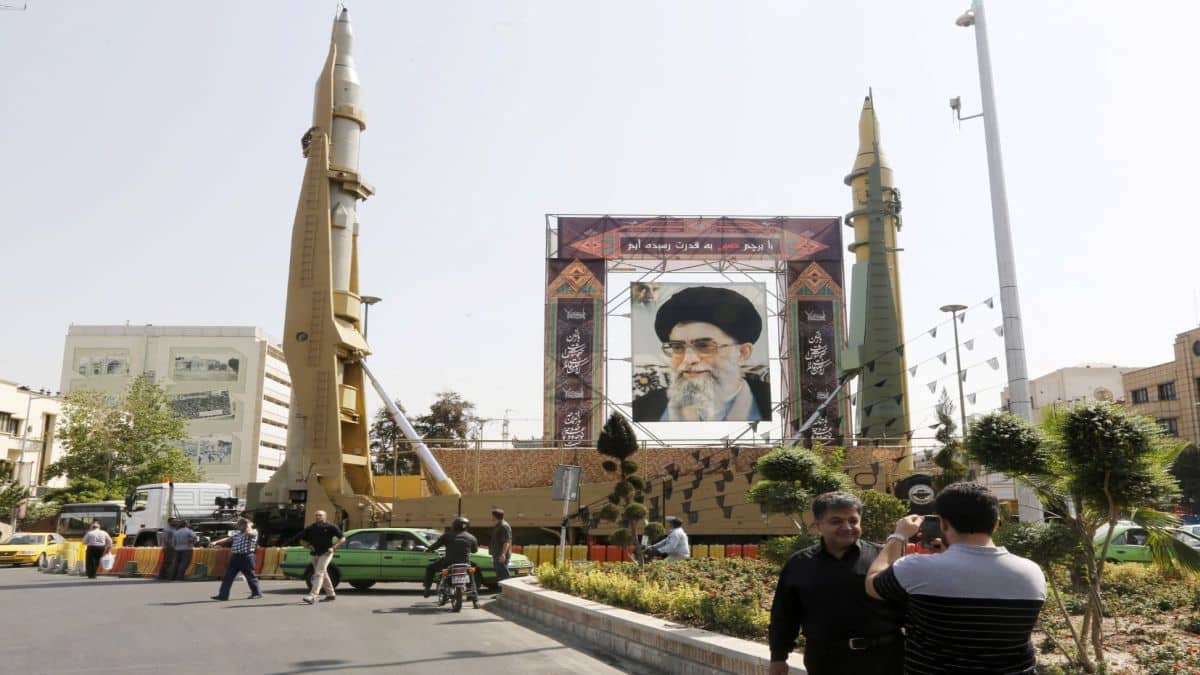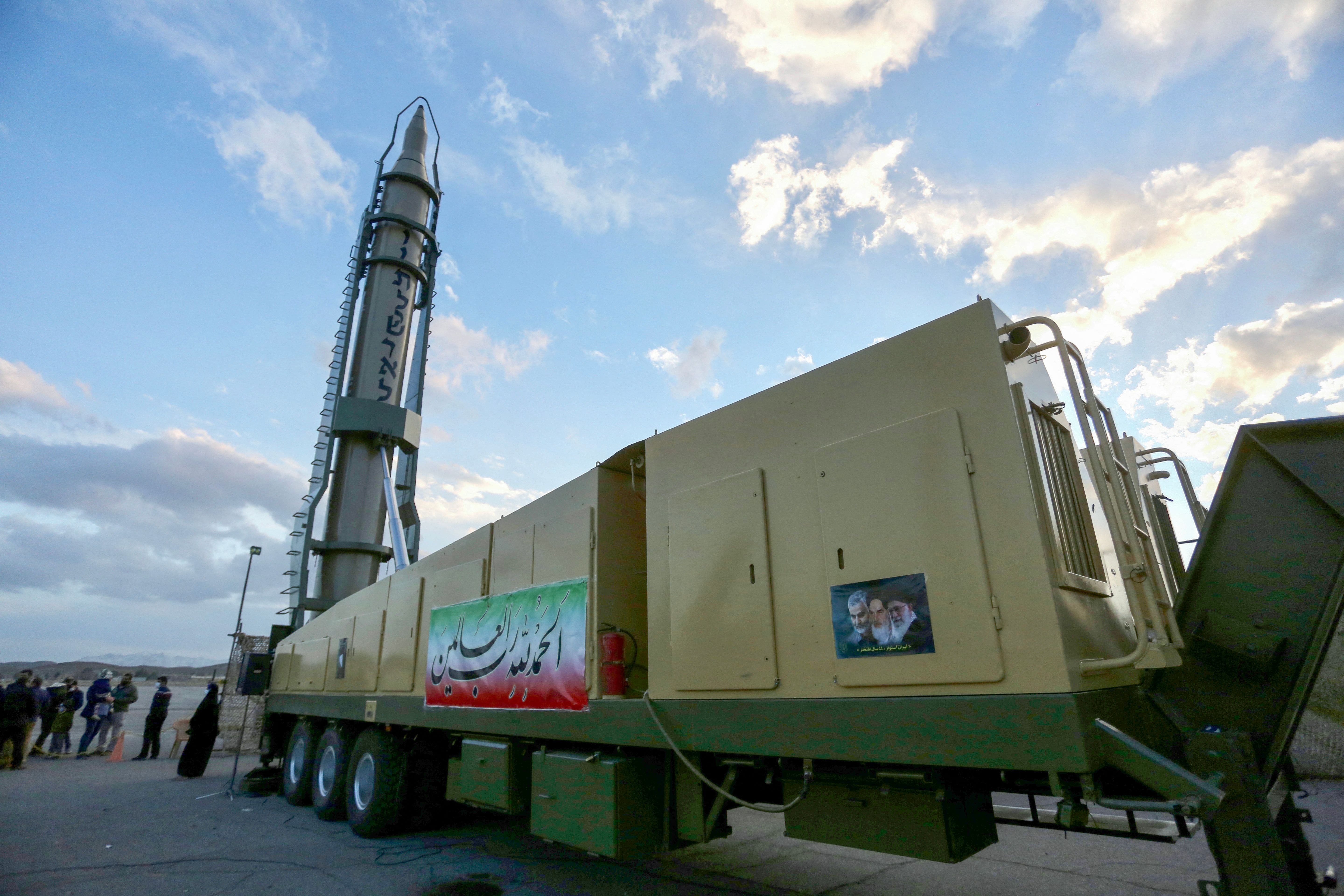
The media loves a "dancing" missile. They treat the Iranian Sejjil as some sort of physics-defying ballerina of the stratosphere, a terrifying enigma that renders western defenses obsolete. They focus on the wrong metrics. They obsess over the wrong hardware. They are falling for a magic trick designed by Tehran’s public relations department, and Western defense contractors are more than happy to play along because fear sells interceptors.
The Sejjil isn't a miracle. It is a very specific, very expensive answer to a question that the Middle East has already moved past. If you are looking at the Sejjil as the pinnacle of regional warfare, you are looking at a 20th-century solution to a 21st-century problem.
The Solid Fuel Obsession is a Distraction
Mainstream analysts point to the Sejjil’s solid-fuel engines as the "breakthrough." They tell you it’s about launch time. Liquid-fuel missiles, like the older Shahab series, are temperamental. They require a parade of fueling trucks, hours of preparation, and a massive thermal signature that a blind satellite could spot from orbit.
The "insider" consensus says solid fuel makes the Sejjil a "pre-emptive strike" weapon because it can fire in minutes. That’s a shallow read. The real value of solid fuel isn't just speed; it's logistical invisibility. You can hide a Sejjil in a tunnel for five years, pull it out, and fire it.
But here is the nuance everyone misses: speed of launch does not equal invincibility. In a world of ubiquitous drone surveillance and AI-driven pattern recognition, a massive transporter-erector-launcher (TEL) is still a giant target. It doesn't matter if you can fire in six minutes if the reaper drone has been loitering over your garage for six hours. The Sejjil's "advantage" assumes a level of Western blindness that hasn't existed since the Gulf War.
The Dancing Missile Fallacy
The term "dancing missile" refers to the Sejjil-2’s supposed ability to maneuver during its atmospheric reentry phase. This is the part where the "experts" start sweating. They claim that by shifting its trajectory, the missile can evade interceptors like the Arrow-3 or the THAAD.
Let’s dismantle this.
Maneuvering at Mach 12 isn't "dancing." It’s a brutal exercise in thermodynamics. To change direction at those speeds, a reentry vehicle (RV) has to endure staggering G-forces and heat. If you maneuver too much, you bleed energy. If you bleed energy, you become a slower, easier target for terminal-phase interceptors.
- The Energy Tax: Every jerk of the "dance" reduces the range and the impact velocity.
- The Accuracy Trade-off: High-speed maneuvering on a ballistic path is a nightmare for guidance systems. The more it "dances," the less likely it is to hit a specific building.
- The Interceptor Reality: Interceptors don't need to hit the missile head-on like a bullet hitting a bullet anymore. Modern systems use proximity fragmentation and "hit-to-kill" kinetic energy that accounts for predicted deviance.
The Sejjil’s maneuverability is a psychological weapon, not a physical one. It is designed to make the cost of defense higher than the cost of the attack. It forces the defender to fire four interceptors instead of one. It’s an economic attrition strategy, not a technical bypass.
Range is a Political Statement, Not a Military One
The Sejjil-2 boasts a range of roughly 2,000 kilometers. Analysts look at the map, draw a circle from Tabriz, and gasp because it covers Tel Aviv, Riyadh, and parts of SE Europe.
This is the wrong way to look at range.
A 2,000km range means a high apogee. A high apogee means the missile spends a lot of time in the "midcourse" phase—the vacuum of space. This is where the Sejjil is most vulnerable. This is where the SM-3 and GBI (Ground-Based Midcourse Defense) systems play. By building a longer-range missile, Iran has actually pushed the engagement window into a zone where Western sensors have the most time to track, discriminate, and kill the threat.
If Iran wanted a weapon that was truly difficult to stop, they wouldn’t build a 2,000km ballistic giant. They would build a 500km cruise missile that hugs the terrain at Mach 0.8. But a cruise missile doesn't look as scary on a parade float. The Sejjil is a tool of deterrence through theater.
The Warhead Weight Lie
We need to talk about the payload. The Sejjil is designed to carry a warhead of about 500kg to 1,000kg. In the world of conventional high explosives, that is... nothing.
To take out a hardened airbase or a command center with a 750kg warhead, you need pinpoint accuracy—circular error probable (CEP) of less than 10 meters. The Sejjil, despite its "upgrades," is likely rocking a CEP of 50 to 100 meters at best.
Against a city? It’s a terror weapon. It hits a block, kills some civilians, and makes the news. But as a tool of strategic military utility? It’s inefficient. You are spending millions of dollars on a single-use rocket to deliver the same explosive weight as a few Mk 82 bombs dropped by a cheap aircraft.
The only way the Sejjil makes sense mathematically is if the warhead isn't conventional. Everyone knows this, but few say it plainly: The Sejjil is a nuclear delivery system in a tuxedo. To analyze it as a conventional weapon is to participate in a polite lie.
What the "Experts" Get Wrong About Missile Defense
People ask: "Can the Sejjil beat the Iron Dome?"
This is a stupid question. Iron Dome is for short-range Katyusha rockets and mortar shells. It has nothing to do with a Sejjil. The fact that this question appears in "People Also Ask" sections proves how deep the public misunderstanding goes.
The real contest is between the Sejjil and the Arrow-3.
The Arrow-3 is an exo-atmospheric interceptor. It hits the Sejjil in space. At that altitude, the missile isn't "dancing." It’s a predictable object following Keplerian physics. The "dancing" only happens when it hits the atmosphere. By then, the Arrow-3 has already had its shot.
The status quo says that missile defense is a "shield." It isn't. It’s a filter. It catches 90%. But in a Sejjil scenario, the 10% that gets through is the only thing that matters. The "contrarian" truth is that the Sejjil doesn't need to be a great missile. It just needs to be a numerous one.
The Saturation Strategy
The real threat isn't the Sejjil’s tech. It’s the Sejjil’s production line.
If I fire one Sejjil, it dies. If I fire twenty Sejjils, thirty Fattah-1s, and a swarm of five hundred Shahed drones simultaneously, the most sophisticated defense system on earth will suffer a "buffer overflow."
The Sejjil is the heavy hitter in a "multi-modal" attack. It’s the guy who walks through the front door while twenty kids are climbing through the windows. You focus on the guy with the Sejjil because he looks dangerous, and while you're aiming at him, the drones eat your radar arrays.
Why We Should Stop Obsessing Over Sejjil Specs
Stop looking at the fins. Stop looking at the thrust-to-weight ratio.
The Sejjil is a symbol of a nation that has realized it cannot win a conventional air war. Iran cannot build a 5th-generation fighter jet. They cannot compete with the F-35. So, they have poured their entire intellectual capital into "the poor man’s air force."
The Sejjil is an admission of weakness, not a display of strength. It is the weapon of a state that knows its only hope is to make the "cost of entry" for a conflict so high that the West stays home.
The real danger isn't that the Sejjil is a "super-weapon." The danger is that we believe the hype. When we treat it as an unstoppable "dancing" marvel, we give Tehran exactly what they want: a strategic veto over regional policy without them ever having to press the launch button.
The Brutal Reality of the Next Conflict
If the Sejjil ever "debuts" in a full-scale conflict, it won't be a surgical strike. It will be chaos.
Imagine a scenario where a dozen Sejjil-2s are launched from underground silos. Within seconds, US and Israeli satellites detect the thermal plumes. The X-band radars in Turkey and the Negev lock on. The interceptors fly.
In space, the battle is silent and mathematical. Some Sejjils die. But then the debris—thousands of pieces of hot metal—begins to rain down. The "dancing" warheads that survive the midcourse filter hit the atmosphere. They vibrate, they glow, and yes, they shift.
The defense systems on the ground are now dealing with a saturated sky. They have to distinguish between the real warhead, the decoys, and the burning fragments of the missiles they already "killed."
This is the "nuance" the competitor articles miss. Missile defense isn't a video game where a "hit" means the threat disappears. A "hit" just changes the nature of the threat.
The Sejjil is a 20-ton sledgehammer being thrown from 2,000km away. Even if you break the handle, the head is still coming at you.
Stop asking if the Sejjil can "dance." Start asking how many interceptors we have in the warehouse, because the dance is a distraction, and the real music is about to start.
Don't buy the "wonder-weapon" narrative. The Sejjil is a sophisticated, solid-fuel, atmospheric-reentry truck. It’s dangerous because it’s simple, not because it’s magic. The moment we stop being "mystified" by it is the moment we can actually start planning for what happens when the silos open.
The Sejjil isn't the future of war. It is the last, loudest gasp of a dying era of ballistic diplomacy.