Natural disasters in active tectonic zones present a brutal test of infrastructural redundancy and rapid institutional response. When a high-magnitude seismic event strikes an archipelagic nation like Indonesia, standard media coverage typically collapses into emotional vignettes of ruined infrastructure and rising casualty tallies. This superficial framing obscures the actual mechanics of disaster response. Evaluating an emergency deployment requires deconstructing the operational variables that dictate survival rates during the critical initial window.
The immediate aftermath of a major tectonic rupture is governed by strict temporal decay curves in search and rescue efficacy. Understanding why certain regions recover efficiently while others experience prolonged paralysis requires examining the systemic constraints that shape emergency management.
The Three Pillars of Seismic Emergency Response
Effective crisis management following a high-magnitude earthquake depends on three distinct operational pillars. When any single pillar fails, the entire response architecture experiences compounding bottlenecks.
1. Kinematic Access and Geographic Pockets
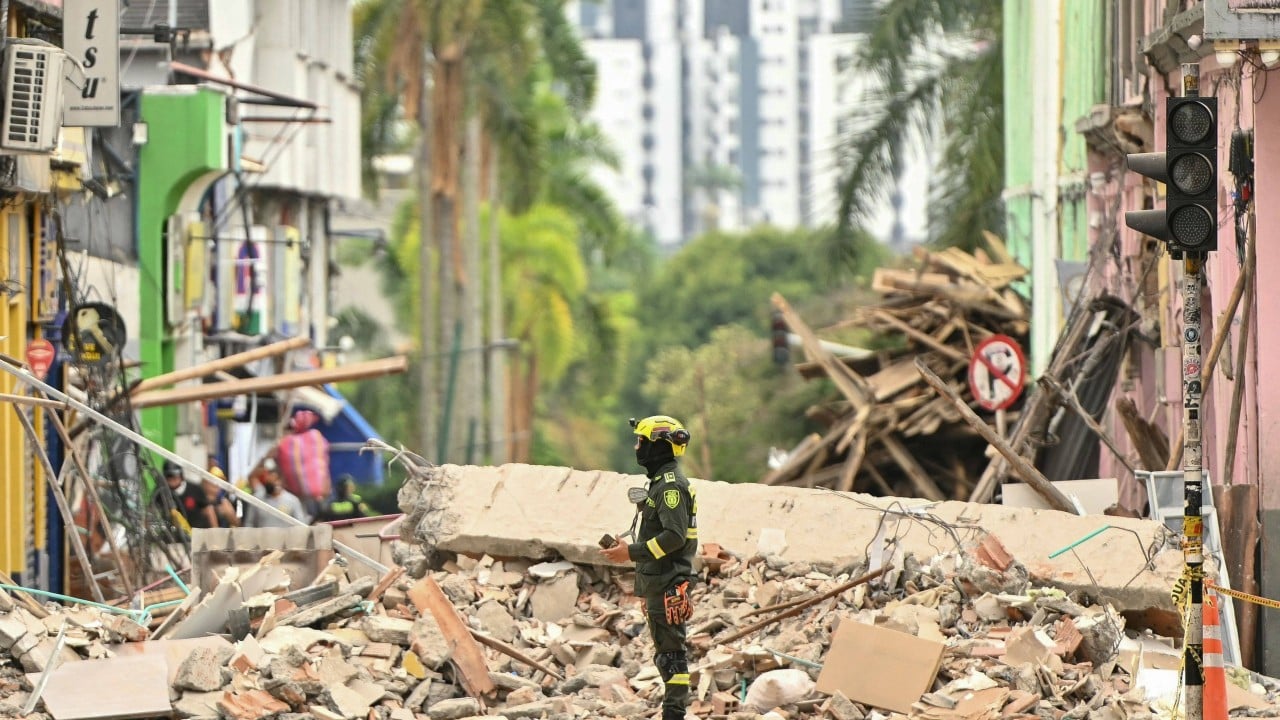
The primary determinant of survival time is accessibility. Rugged archipelagic topography combined with high-magnitude shallow shaking frequently triggers widespread slope failures. Landslides physically sever arterial mountain corridors, converting regional transit networks into isolated pockets.
When trunk highways are blocked by debris, heavy machinery cannot reach ground zero without specialized air transport assets. Consequently, the speed of initial reconnaissance dictates whether field hospitals can be established before primary trauma victims succumb to injuries.
2. Information Integrity and Power Infrastructure
Disaster zones suffer from immediate informational asymmetry. Seismic shockwaves routinely shear electrical grids and telecommunication towers. Without reliable power, local authorities cannot aggregate accurate casualty data or coordinate asset allocation.
This information vacuum distorts resource distribution. Aid agencies are forced to operate on delayed telemetry, deploying medical teams and heavy rescue units to visible urban centers while remote villages remain entirely unmapped and unsupported.
3. Institutional Tiering and Inter-Agency Coordination
Emergency mobilization relies on a hierarchical handoff between municipal, provincial, and national disaster agencies, alongside specialized military units. The friction coefficient between these tiers dictates operational velocity.
Clear jurisdictional protocols allow national search and rescue agencies to deploy specialized urban teams and heavy logistics without bureaucratic delay. Conversely, decentralized disaster governance can create friction when local authorities lack the logistical scale to manage multi-regency devastation independently.
The Cost Function of Delayed Logistics
The economic and human toll of an earthquake is heavily dictated by the time elapsed between initial shock and the arrival of heavy intervention assets. The relationship between response latency and mortality rate is non-linear.
Response Latency (Hours) ---> Exponential Decay in Survivor Extraction Probability
As hours pass following a structural collapse, the probability of extracting live casualties drops exponentially due to dehydration, crush syndrome, and secondary structural shifts caused by aftershocks. In mountainous or island environments, aftershocks present a continuous hazard, complicating every phase of deployment. Secondary tremors risk destabilizing already compromised buildings where rescue personnel are operating, forcing tactical pauses that further delay extraction operations.
Deconstructing Structural Vulnerability
The spatial distribution of damage is rarely uniform. It is a function of geological amplification, building typology, and population density.
- Geological Amplification: Soft sedimentary basins and reclaimed coastal soils amplify seismic shear waves, increasing peak ground acceleration compared to solid bedrock foundations.
- Typology Deficits: Non-engineered masonry and unreinforced concrete structures exhibit brittle failure modes under lateral loads, resulting in catastrophic pancake collapses.
- Temporal Vulnerability: The local time of impact dictates occupancy loads. Early morning occurrences frequently catch populations inside residential envelopes, whereas midday events affect schools and commercial hubs differently.
Addressing these structural variables requires shifting from reactive emergency management to predictive risk mitigation. Retrofitting unreinforced masonry and hardening arterial bridges against landslide susceptibility remain the most effective methods to flatten the post-disaster casualty curve.
Strategic Allocation Under Extreme Constraints
Resource scarcity during mass-casualty events forces commanders to execute harsh triage optimizations. When aviation assets are limited and ground routes are obstructed by debris fields, deployment choices must follow strict marginal utility calculations. Priority is allocated to zones exhibiting the highest concentration of trapped survivors relative to extraction complexity.
The immediate operational priority must focus on clearing primary arterial corridors to re-establish supply chains, enabling the transition from acute search and rescue phases to long-term demographic stabilization and shelter provision.