The glow of a three-in-the-morning monitor does not feel like a battlefield. It feels like cold coffee, the faint hum of a cooling fan, and the quiet, rhythmic clicking of keys in a darkened apartment thousands of miles away from Rome. Yet, in that sterile blue light, a lock is picked. Not with a crowbar or a blowtorch, but with a string of stolen credentials and a silent script.
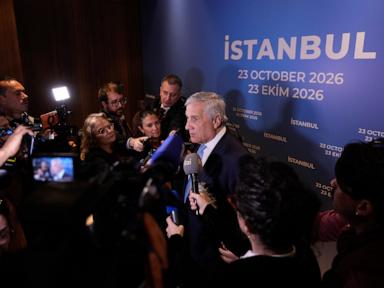
Weeks later, in the marble-lined corridors of Palazzo Chigi, Prime Minister Giorgia Meloni steps up to a bank of microphones. Her voice is steady, practiced, carrying the familiar cadence of European diplomacy. She confirms what intelligence circles in Rome have been whispering about in frantic, encrypted bursts: data belonging to Italy’s Foreign Minister, Antonio Tajani, has been scraped, packaged, and dumped onto the dark web. And she points a firm, unyielding finger directly at pro-Russian hackers.
Read the standard morning briefing, and the story looks simple. Neat. Contained. A politician got hacked; Moscow’s digital proxies are at it again; cybersecurity teams are investigating. You take a sip of your espresso, flip to the sports section, and move on with your Tuesday.
That reaction is precisely what the attackers are counting on.
Because when we reduce a state-sponsored data breach to a dry headline about "cyber hygiene" or "diplomatic tension," we miss the terrifying reality of modern warfare. Nobody fired a shot across the Mediterranean. No tanks rolled toward the Alps. Instead, the private architecture of a nation’s top diplomat was turned inside out and pinned to the digital equivalent of a public bulletin board.
The Architecture of an Invisible Invasion
To understand what actually happened in Rome, forget the Hollywood tropes of hooded figures frantically typing green code across black screens. Real cyber espionage is patient. Boring, even. It resembles a burglar who doesn’t smash your living room window, but instead steals your spare key from under the doormat, makes a wax impression, puts the original back, and waits six months before walking through your front door while you are on vacation.
Consider a hypothetical scenario to see how this unfolds in practice. Picture a mid-level aide working late in a European ministry—let’s call him Marco. Marco is exhausted. He has four hundred unread emails, a flight to Brussels in six hours, and a phone that won’t stop buzzing. An email arrives appearing to come from an internal IT administrator, asking him to verify his login credentials before a scheduled server migration. It takes four seconds for Marco to click the link and type his password. He doesn’t notice the single misspelled letter in the web address. He goes to sleep.
In that four-second window, the door swings open.
From that single foothold, attackers don't immediately grab the crown jewels. They linger. They map the network. They watch who talks to whom, which servers hold the sensitive briefings, and where the old, forgotten databases live. When pro-Russian collectives—groups operating under banners like NoName057(16) or their more surgical, intelligence-linked cousins—target an official like Antonio Tajani, they are rarely looking for a single nuclear launch code. They are looking for leverage.
They want the mundane details that make a human being predictable. Travel itineraries. Private phone numbers. Drafts of speeches before the sharp edges were sanded off. Correspondence with international counterparts that reveals where an alliance is strong and where a quiet fracture might be widening. Once harvested, this information isn't locked in a Kremlin vault; it is weaponized by being dumped onto the dark web, an unindexed corner of the internet accessible only through specialized software like Tor, where anonymity is currency and accountability does not exist.
Why put it there? Why not keep it secret?
Humiliation. Chaos. Fear.
By throwing a foreign minister’s private data into the dark web’s open-air bazaar, the perpetrators send a blunt message to every official in Rome, Paris, Berlin, and Washington: We are already inside your house, and we can turn the lights on whenever we want.
The Weight of Being Watched
I remember the first time I realized my own digital life wasn't a vault, just a glass house with thin curtains. Years ago, a minor breach at a mundane service provider exposed my home address, my personal phone number, and a decade's worth of private correspondence. Nothing earth-shattering. No state secrets. Just the ordinary receipts of a normal life.
Yet the physical sensation of reading your own private details on a public forum is unmistakable. Your stomach drops. Your skin prickles. Suddenly, every unknown number that calls your phone feels sinister; every shadow outside your window carries weight. You start editing your thoughts before you even type them, haunted by the phantom presence of an unseen reader looking over your shoulder.
Now, multiply that visceral paranoia by the responsibilities of a man tasked with steering a G7 nation’s foreign policy during the most volatile geopolitical era since the Cold War.
Antonio Tajani is not merely an individual; he is a node in a massive web of international trust. When he speaks to Ukrainian officials about air defense, or negotiates energy security with North African leaders, or coordinates sanctions within the European Union, those conversations rely on an unspoken promise of confidentiality. Diplomacy requires a dark room where leaders can say what they actually mean before stepping into the harsh glare of press conferences.
When hackers breach that perimeter, they poison the well of trust. Every diplomat who has ever sent a candid text message to Rome suddenly wonders if their words are currently being indexed by Russian intelligence analysts—or worse, sold to the highest bidder on an underground forum. The damage isn't just the data that was taken; it is the silence that follows. People stop speaking honestly. Alliances stiffen. Caution replaces candor.
Meloni’s Calculated Gamble
This brings us back to Giorgia Meloni’s decision to publicly name the culprit.
In the shadowy etiquette of international espionage, governments usually swallow their pride in silence. Attributing a cyberattack with absolute certainty is notoriously difficult. Hackers route their traffic through compromised servers in Brazil, rent infrastructure in Germany, and use open-source tools written by teenagers in Southeast Asia. Intelligence agencies often prefer to absorb the blow quietly rather than reveal how much they know—or how badly they were penetrated.
Meloni chose the opposite path. By openly blaming pro-Russian hackers, she dragged a covert operation into the harsh daylight of European politics.
Why take that risk? Because silence has become too expensive.
Since taking office, Meloni has walked a delicate tightrope, balancing her right-wing domestic coalition with an unexpectedly fierce, unwavering commitment to NATO and Ukraine. Moscow has watched Italy’s posture with acute irritation. For decades, Russia cultivated deep economic, energy, and political ties in Rome. Seeing an Italian prime minister stand firmly behind Kyiv—and rally European support around the effort—represents a strategic loss the Kremlin is eager to reverse.
Publicly calling out the breach serves two immediate purposes. First, it inoculates the Italian government against whatever might surface from that dark web dump. If altered documents, out-of-context emails, or embarrassing personal details begin circulating on social media next week, the public already knows the source. The poison is labeled before anyone drinks it.
Second, it frames the attack not as an embarrassing IT failure by Italian bureaucrats, but as an act of foreign aggression. It transforms a technical vulnerability into a rallying cry for national resilience.
The History We Keep Forgetting
If this feels like a uniquely twenty-first-century nightmare, we are suffering from a failure of historical memory. The tools have changed, shifting from wax seals and intercepted couriers to phishing links and encrypted forums, but the underlying human impulses are ancient.
During the Cold War, the KGB perfected a doctrine known as kompromat—the systematic collection of compromising material used to blackmail, discredit, or neutralize political targets. Agents spent years building dossiers on Western diplomats, tracking their financial troubles, their romantic indiscretions, their private doubts. In 1974, the revelation that Günter Guillaume, one of West German Chancellor Willy Brandt’s closest aides, was an East German spy brought down the entire government. Not because Guillaume stole a single magic document, but because his presence proved the inner sanctum was compromised.
Modern Russian cyber operations are simply kompromat automated at scale.
Instead of recruiting a single human mole over five years, a state-backed hacking group can launch ten thousand automated probes in an afternoon. They don't need an agent hiding in a Parisian café with a miniature camera; they just need one unpatched router, one reused password, or one tired civil servant clicking a PDF on a Friday afternoon.
And the scale is staggering. According to European Union cybersecurity assessments, state-aligned hacktivist groups have increased their targeting of European government institutions dramatically since the full-scale invasion of Ukraine in 2022. Italy, with its strategic position in the Mediterranean and its vocal support for Kyiv, sits squarely in the crosshairs. Over the past two years alone, Italian ministries, transport networks, and financial institutions have weathered waves of distributed denial-of-service attacks and quiet intrusions.
Usually, these incidents are brushed off as digital vandalism—the equivalent of spray-painting graffiti on an embassy wall. The breach of Tajani’s data is different. Graffiti washes off in the rain. Stolen personal records live forever.
The Illusion of the Air-Gapped Life
It is tempting, reading about high-level diplomatic hacks, to feel a quiet sense of immunity. I’m not a foreign minister, you think. Nobody in Moscow cares about my grocery list or my tax returns.
That comfort is an illusion.
In the ecosystem of modern cyber warfare, there is no hard border between state targets and civilian life. The exact same vulnerabilities that expose a cabinet minister are used every single day to hollow out hospitals, paralyze municipal water systems, and drain the life savings of retirees. When state-sponsored groups develop new methods to bypass multi-factor authentication or exploit hidden flaws in everyday smartphones, those weapons inevitably trickle down into the criminal underworld.
Think of cyber warfare like biological research conducted in a facility with a leaky roof. Even if the scientists claim they are only targeting a specific rival, the pathogens don't read passports. Once released onto the dark web, the tools and stolen datasets cross-pollinate. A phone number leaked in a diplomatic breach becomes the anchor for a spear-phishing campaign against a defense contractor, whose compromised email account then infects a local accounting firm, which eventually locks down a regional hospital’s patient records.
We are all wired into the same fragile grid.
Even the most sophisticated security apparatus on earth cannot fully protect a human being who simply wants their technology to work without friction. Security and convenience are locked in a permanent tug-of-war. Every extra password, every hardware key, every encrypted messaging app slows us down. Politicians, executives, and everyday citizens alike constantly trade safety for speed. We forward documents to our personal emails so we can read them on the train. We click "accept" on permissions we don't understand because we are late for a meeting.
Attackers don't hack machines. They hack habits.
What Survives the Breach
There is an unsettling truth that cybersecurity consultants rarely admit when selling multimillion-dollar defense contracts: if a determined, state-backed adversary wants into your system badly enough, they will eventually get in. No firewall is tall enough. No encryption is entirely immune to human error.
Real resilience doesn't come from pretending we can build an impenetrable fortress. It comes from how we react when the walls are breached.
When Giorgia Meloni stood before the press and named the attackers, she stripped away the shadows that make cyber espionage so potent. Secrets only hold power while people are terrified of them being spoken aloud. Information warfare relies on panic, division, and the slow erosion of public trust. When a society understands the tactic—when citizens recognize a dark web dump not as an organic scandal, but as a calculated volley in an ongoing conflict—the weapon loses half its edge.
Still, the data is out there now. Somewhere on an encrypted server, buried beneath layers of anonymized routing and cynical forum chatter, pieces of a diplomat’s private life are being downloaded, copied, and stored by strangers who wish his country ill.
Tomorrow morning, the officials in Rome will change their passwords. They will issue new encrypted phones, audit their servers, and tighten their protocols. They will build higher digital walls.
And somewhere in the dark, the quiet clicking of keys will begin again.