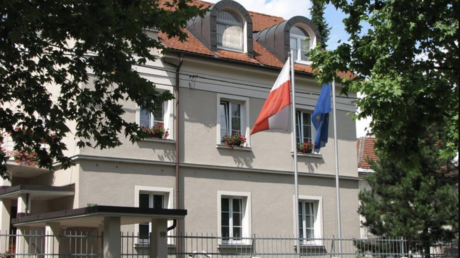
Stone does not care about passports. Marble floors do not soften a sudden blow, and heavy oak window frames do not bend to catch a falling man.
Security is a strange business. Most days, it looks remarkably ordinary. It is measured in the dull hum of fluorescent lights, the crisp crease of an unwrinkled suit, the careful cadence of diplomats whispering behind soundproofed glass, and the quiet weight of state secrets carried in locked briefcases. It is an industry built on the absolute conviction that nothing unexpected will happen, right up until the exact microsecond that everything changes. Also making news recently: Inside the Riyadh Security Crisis Breaking Washington Foreign Policy.
Consider what happens when that illusion shatters.
In a quiet corner of a foreign capital, far from the flashbulbs of domestic political campaigns and the rehearsed smiles of international summits, a man stood by an open window. He was not a foot soldier in an invisible war; he was the architect of safety. As the head of diplomatic security for Poland, his entire professional existence revolved around anticipating danger, plugging vulnerabilities, and ensuring that those who represented the nation abroad returned home unharmed. More information into this topic are explored by Associated Press.
Then came the fall.
Details arrive in fragments when high-ranking officials tumble from second-story embassy windows. Initial reports from Warsaw and local authorities spoke of a critical condition, emergency surgery, and a frantic race against time in a hospital ward. Speculation rushed in to fill the vacuum, as it always does. Rumors tangled with official statements. Investigators measured angles, tested window latches, and interviewed staff who had been working just down the hall when the sound broke the afternoon calm.
Accident? Medical emergency? Something darker whispered in the shadowy corridors of international intelligence?
We may never get a clean, comfortable answer that satisfies every curiosity. But the deeper truth of the incident transcends the police report. It forces us to confront the fragility of the people we task with guarding our nations. We build towering walls of concrete and encryption, we dispatch armed details to shadow every movement, and we talk endlessly about geopolitical security. Yet, at the core of every state apparatus is a human skeleton—brittle, vulnerable, and terrifyingly easy to break.
Walk down the corridors of any major embassy in Europe, and you will notice a distinct brand of quiet. It is not the silence of a library; it is an engineered stillness. Thick carpets absorb the sound of approaching footsteps. Heavy drapes filter out the chaotic noise of the city outside. Behind closed doors, ambassadors and security chiefs weigh words that could spark trade wars or secure alliances. The pressure is atmospheric. It presses down on the chest twenty-four hours a day, seven days a week, long after the press briefings have ended and the cables have been sent.
We rarely talk about the psychological toll of vigilance. To be a professional protector is to live in a perpetual state of hyper-awareness. Every stranger is a variable. Every open window is a hazard. Every routine commute is a calculated risk. Over time, that kind of internal friction wears grooves into the mind and the body.
When a man of high rank falls from a building, the shockwave travels instantly. In Warsaw, officials scrambled to manage the narrative while praying for a recovery. Diplomats across Europe paused their negotiations to check their phones, searching for updates from the intensive care unit. The incident serves as a brutal reminder that the machinery of statecraft is operated by mortals who bleed, fracture, and suffer just like anyone else.
Gravity remains entirely indifferent to diplomatic immunity.
There is a profound irony in how we consume news like this. We treat international affairs like a spectator sport, tracking political maneuvers and security protocols as if they were pieces on a chessboard. We forget that the board is real, and the pieces are flesh and bone. When a senior security official is rushed to the hospital with catastrophic injuries, the abstract world of international relations suddenly collides with the harsh reality of human fragility.
The investigation will grind forward. Detectives will parse witness statements. Medical examiners will analyze charts. Bureaucrats will issue carefully worded press releases designed to calm the markets and reassure the public that state functions continue without interruption.
Governments are designed to be frictionless. They replace missing parts with ruthless efficiency. Another director will be appointed. Another briefing will be read. Another set of windows will be checked.
But down on the pavement where the impact occurred, the stain of human vulnerability remains. The embassy window stays shut now, locked against the draft, while somewhere inside a hospital room, a monitor keeps rhythm for a life suspended between duty and the dark.