The California sun usually arrives with a quiet kind of arrogance, flattening the palm trees into sharp shadows and baking the asphalt until the air shimmers above the streets. But on that afternoon in Culver City, the heat felt different. It felt heavy with a distinct kind of dread. Outside the gates of the major entertainment complexes—places where stories are manufactured to soothe, distract, or thrill millions—the script had flipped.
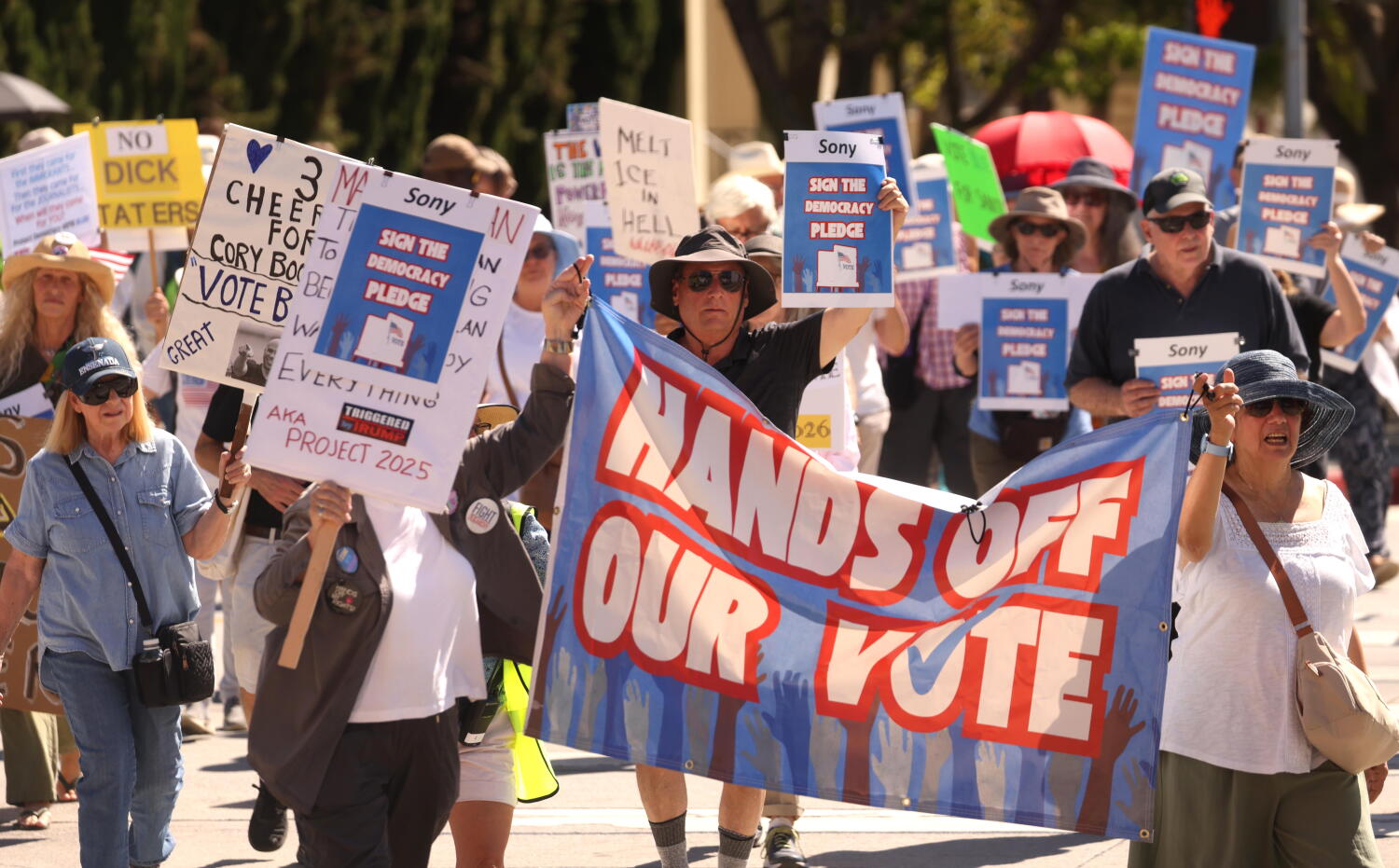
The people standing on the sidewalk were not holding studio passes or script drafts. They were holding signs. They were demanding that massive media corporations like Sony and Amazon defend democracy.
To an outsider driving down Washington Boulevard, the sight might have seemed incongruous. What does a soundstage have to do with the ballot box? Why are writers, grips, actors, and local residents shouting about civic duty at the foot of corporate headquarters that usually trade in escapism?
The answer lies in a quiet, terrifying realization. The machinery that builds our cultural narratives is beginning to crack under the weight of political polarization and corporate compliance. When the entities that hold the megaphones choose silence, the echo chamber grows deafening.
Consider what happens when a story stops being a mirror and becomes a shield.
For decades, Culver City has breathed cinema. You can smell the history in the old brick buildings and the converted industrial lots. Walk down these streets long enough, and you realize that every street corner has played host to an imaginary world. People move here because they believe in the power of narrative. They believe that if you change the story, you change the world.
Yet, on this particular afternoon, the mood was not cinematic. It was raw.
The protesters were pointing out a glaring contradiction. Media giants spend millions crafting high-flown corporate values statements about inclusion, freedom, and community responsibility. Yet, when real democratic norms face existential pressure—when voting rights are legislatively undermined, when misinformation runs unchecked across proprietary platforms, and when algorithms monetize outrage for quarterly profits—those same corporate boardrooms often retreat behind legal counsel and PR risk assessments.
Silence is a choice. In a democracy, corporate neutrality is rarely neutral. It is usually an endorsement of whoever holds the most leverage.
Listen to the rhythm of the chants echoing off the glass facades. It is rhythmic, jagged, and urgent. The people gathered here know something about structure. They know that every good story requires conflict, stakes, and a protagonist willing to risk something. Right now, they feel like the protagonists have walked off the set.
Let us look closer at the mechanics of this friction.
When a studio greenlights a project, risk analysis dictates every dollar. Will this play in foreign markets? Will it offend any regulatory bodies? Will it trigger a boycott? This calculus has conditioned corporate executives to view controversy as an enemy. But democracy is inherently messy, contentious, and full of friction. You cannot sanitize civic engagement to fit a global marketing strategy without gutting its substance.
When these studios downplay or remain silent on threats to democratic institutions, they are not just dodging politics. They are abandoning the very ecosystem that allows creative freedom to exist. Without a functioning democracy, free expression is the first casualty. Autocrats do not fund writers' rooms. Dictators do not option independent screenplays.
The protesters understand this historical loop better than the executives inside the air-conditioned offices. They know that fascism and censorship always start by narrowing the acceptable boundaries of public discourse.
Think about a hypothetical writer named Sarah, sitting in a cramped apartment just a few miles from the studio lot. She spends twelve hours a day building fictional worlds where justice eventually wins out. She writes speeches for brave characters who stand up to corrupt systems because it feels good to imagine a world with clear moral lines. Then she closes her laptop, steps outside, and watches the real world slide backward into administrative voter suppression and unchecked corporate lobbying.
The cognitive dissonance is suffocating.
That is why Sarah was standing on the pavement with a cardboard sign. The make-believe courage on the screen has to translate into real-world backbone, or the art becomes a hollow anesthetic.
Critics of these demonstrations often argue that corporations should stick to entertainment. Just give us our movies, the argument goes. Keep politics out of pop culture.
This viewpoint fundamentally misunderstands how culture works. Culture is not an isolated bubble; it is the water we swim in. Every film, every streaming series, and every algorithmically curated feed shapes what a society values. When entertainment conglomerates treat democracy as an inconvenient liability, they signal to millions of viewers that civic participation does not matter.
Worse, they provide cover for anti-democratic actors who use the distraction of mass media to quietly dismantle voting access and civil liberties behind the scenes.
The tension outside Sony and Amazon was palpable because it represented a collision between two incompatible worlds. On one side stands the corporate imperative: growth, stability, and appeasement. On the other side stands the human imperative: dignity, voice, and the right to self-governance.
You cannot reconcile those two when the house is on fire.
The afternoon stretched on. Security guards stood behind glass doors, their expressions unreadable, watching the crowd through tinted panes. Delivery trucks idled at the red lights, their drivers nodding in solidarity or shaking their heads in frustration.
Nothing was immediately resolved that day. No executives came down to sign a manifesto. No sudden policy shifts were announced via megaphones. That is not how institutional change works. Change is a slow, grinding erosion of comfort.
What the protest accomplished was something much harder to quantify. It broke the spell. It pierced the sanitized bubble of corporate invulnerability and reminded everyone within earshot that these massive media empires are built on human labor, human imagination, and human civic rights.
The signs will eventually be recycled. The streets of Culver City will cool down as the evening fog rolls in from the Pacific. The writers will go back to their keyboards, and the executives will return to their spreadsheets.
But the question remains suspended in the smoggy air like a lingering chord. When the story of our current democratic crisis is finally written, whose side will the storytellers have been on?