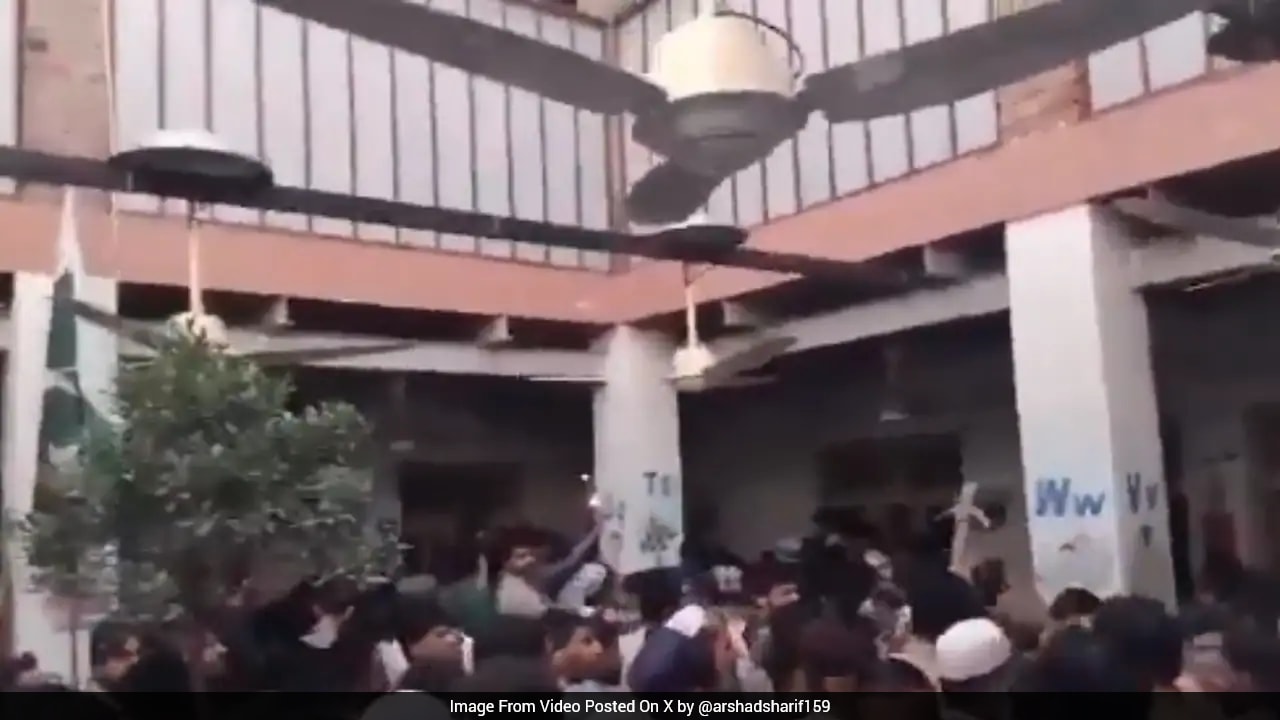
Going to school shouldn't feel like a gamble with a child's life. Yet on October 15, 2026, morning classes at the Al-Khair Education Center in Peshawar turned fatal when the roof caved in over classrooms filled with more than a hundred pupils. Early reports cited at least 27 students and a teacher killed, and later tallies rose to at least 34 children and a female teacher dead, with dozens more injured. Most of the children were under 13.
Honestly, this wasn't a freak bolt of lightning. It was a preventable structural failure sitting in plain sight. For another perspective, see: this related article.
When people search for news about the Peshawar collapse, they usually want two things right away. First, they want to know what happened and why the casualty numbers shifted in the hours after the debris fell. Second, they want to understand how a school roof gives way during morning lessons—and why similar collapses keep showing up across Pakistan.
What Happened in Peshawar and Why the Numbers Shifted
The collapse struck the Al-Khair Education Center in Peshawar during morning hours while roughly 110 students were studying across three classrooms. Rescuers and local residents pulled children from the rubble before heavy machinery could even reach tight alleys, rushing dozens of injured pupils to hospitals such as Lady Reading Hospital. Similar analysis on this matter has been provided by BBC News.
If you saw early headlines mentioning 27 students and one teacher killed, you weren't reading a different disaster. Early emergency figures frequently lag behind hospital admissions, critical-care updates, and debris clearance. Within hours, updated reporting indicated at least 32 to 34 children and a female teacher had died, alongside roughly 45 to 50 injured students. That gap happens in almost every urban structural collapse because victims arrive at multiple facilities or succumb to severe crush and trauma injuries later that day.
Police detained the school's owner and opened an investigation as grieving families accused the administration of ignoring warnings about the building's condition. According to initial accounts from local officials and police, structural weakness combined with extra weight added to an already fragile roof played a central role.
Why Fragile Roofs and Unchecked Additions Fail
I've spent years looking at how informal and budget-constrained buildings fail in dense urban neighborhoods. Usually, it's not one dramatic mistake. It's a chain of small compromises that nobody stops until gravity collects its debt.
In low-cost private schools or converted residential buildings, rooms often get crowded to meet neighborhood demand at affordable fees. When an operator adds construction material, water tanks, or extra masonry onto an aging or poorly reinforced slab, dead load climbs fast. Add subpar concrete mixing, corroded reinforcement, or water seepage over monsoon and winter cycles, and a roof that looked "fine" on Tuesday can fail on Thursday.
Let's be real about a common misconception here. People often assume structural collapses only happen in remote mountain villages or during major earthquakes. Not true. Dense cities like Peshawar, Lahore, and Karachi see structural failures in ordinary buildings too. In June 2026, more than a dozen children died in a roof collapse at a tutoring center in Lahore, and in 2025, a five-story building collapse in Karachi's Lyari area killed 27 people. In September 2026, a deteriorating boundary wall at a government school in Karachi's Orangi Town collapsed as well, putting nearby students and residents under a harsh spotlight over maintenance.
Weak infrastructure isn't an abstract phrase in these cases. It means thin slabs, unverified alterations, skipped inspections, and zero margin for error when dozens of kids sit underneath.
Regulatory Blind Spots and Hard Questions
After a tragedy like Peshawar, officials routinely promise strict investigations and tougher enforcement. Following the disaster, UNICEF stressed that safety standards must be strictly enforced and that going to school should never put a child's life at risk. Political leaders, including President Asif Ali Zardari, also voiced sorrow and called for accountability.
Yet statements don't reinforce a cracked beam. There's a real tension in how rapidly expanding private and low-fee learning spaces are regulated across Pakistan. On one hand, families rely heavily on neighborhood schools and tuition centers because demand outstrips public capacity—and in provinces with high out-of-school rates, any accessible classroom feels vital. On the other hand, light-touch oversight lets under-engineered buildings operate without credible structural sign-off.
It's worth being honest about what we don't know yet, too. Full engineering findings from the Peshawar investigation take time, and assigning legal blame to an individual owner doesn't automatically fix inspection gaps across thousands of other properties. You can argue over whether the root failure is municipal enforcement, building codes, or landlord negligence—and honestly, all three usually share some blame.
Practical Steps Parents and Communities Can Take Now
If you're a parent, guardian, or community member trying to protect children right now, you can't wait for a five-year policy overhaul. You need practical checks today.
- Inspect the physical space yourself. Ask to walk through the classrooms your child uses. Look closely at ceiling slabs, beams, and walls for damp patches, dark water stains, efflorescence (white powdery residue), or sagging plaster.
- Ask direct questions about roof loads and alterations. Find out whether construction work, extra floors, heavy storage, or new equipment has been added above classroom ceilings, and ask when a qualified engineer last checked the structure.
- Watch for overcrowding. Cramped rooms don't just hurt learning—they put more children in harm's way if a single room runs into trouble.
- Don't brush off small warning signs. Cracks that widen, doors or windows that suddenly stick due to frame shift, or plaster flaking after rain deserve immediate attention, not a quick coat of paint.
- Raise concerns collectively. Parents speaking together carry far more weight with school operators and local authorities than a single worried voice—and if a building feels unsafe, moving a child to a verified, safer space comes first.
Every child deserves a classroom that holds up without question. Real safety starts when communities stop treating visible wear and tear as normal.