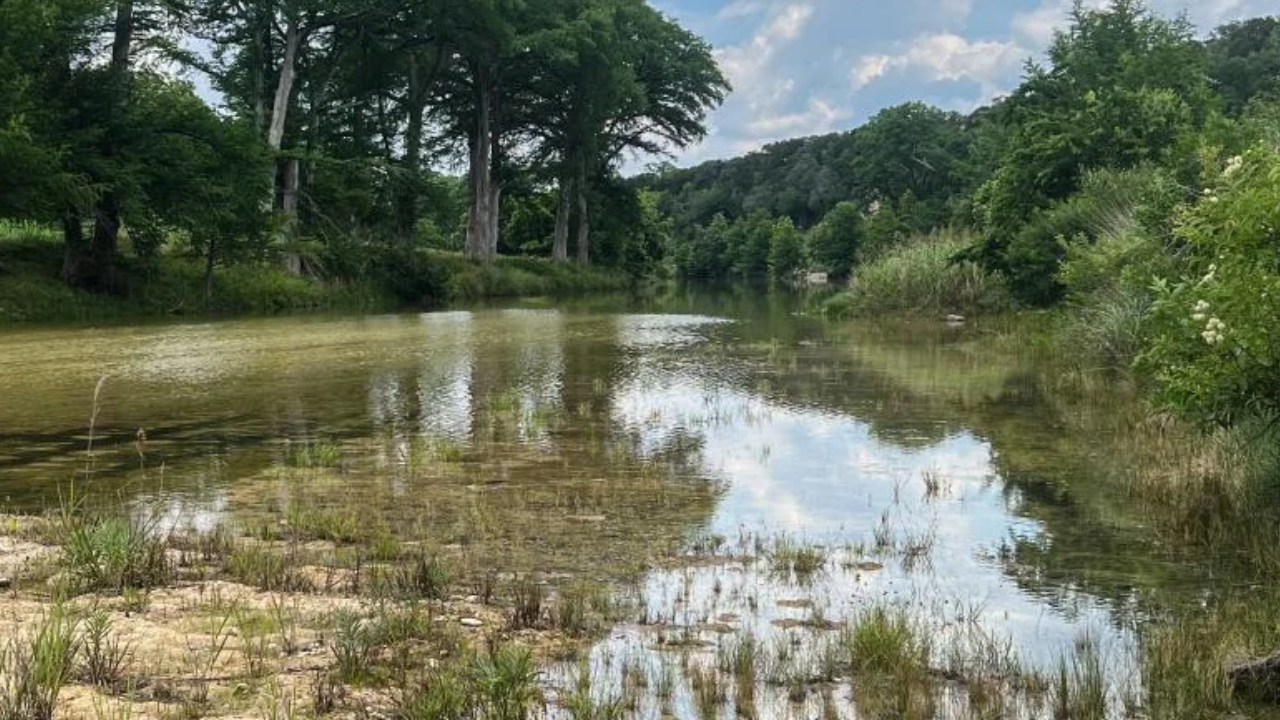
Everyone loves a feel-good press release about a legacy ranch family locking up 165 acres in a conservation easement. The headlines write themselves. Generous descendants shield pristine Texas Hill Country habitat from the concrete sprawl of the Austin-San Antonio corridor, securing vital recharge for the Blanco River. Local officials clap. Nonprofits cash donor checks. Everybody goes home feeling warm and fuzzy about the future of Central Texas water.
They are celebrating a band-aid on a severed artery. If you enjoyed this piece, you should read: this related article.
The lazy consensus in land conservation treats every preserved acre as an automatic, permanent victory for watershed health. It assumes that simply preventing rooftops and asphalt from covering karst limestone guarantees clean, abundant water flowing into the Trinity Aquifer and down the Blanco River. That assumption is hydrologically naive, financially distorted, and dangerously misleading for landowners and taxpayers alike.
The Arithmetic of a Dropping Water Table
Look at the actual numbers on a map. One hundred and sixty-five acres sounds substantial when you are standing on a ridge overlooking cypress-lined creek beds. To a regional aquifer system, it is a postage stamp. For another perspective on this development, see the recent update from Al Jazeera.
The Blanco River watershed drains roughly 440 square miles—more than 280,000 acres—across Blanco, Kendall, Hays, and Comal counties. Protecting 165 acres accounts for roughly 0.05% of that drainage basin. Even when stacked alongside neighboring protected tracts, piecemeal easements cannot outrun the sheer physics of regional groundwater extraction.
I have sat in enough Hays County groundwater district meetings and watched enough ranch succession negotiations collapse to know the dirty secret nobody prints in the Sunday paper. You can put a perpetual conservation easement on a 165-acre ranch, ban every bulldozer from setting foot on the soil, and still watch the spring-fed creeks on that exact property go bone dry within ten years.
Why? Because groundwater does not respect property lines or legal covenants.
Under Texas law, the Rule of Capture still reigns supreme over groundwater outside specific regulatory districts, and even within districts like the Barton Springs/Edwards Aquifer Conservation District or the Hays Trinity Groundwater Conservation District, permitting struggles to keep pace with explosive population growth. If a high-density subdivision punches twenty high-capacity wells into the Middle Trinity Aquifer half a mile up-gradient from your pristine, easement-protected ranch, your conservation easement does zero to stop the cone of depression from sucking your water table into the basement.
You saved the grass. You lost the water.
What Conservation Easements Actually Do (And What They Don't)
Let's strip away the romanticism and define the tool precisely. A conservation easement is a voluntary, legally binding agreement between a landowner and a qualified land trust or government agency that permanently restricts specific uses of the land—usually subdivision, commercial development, and excessive impervious cover—to protect defined conservation values.
Notice what is missing from that definition. A standard conservation easement is a negative restriction, not an active management mandate.
- It stops strip malls. It prevents the tract from being carved into five-acre ranchettes with septic tanks and paved driveways.
- It preserves permeability. Keeping native soils intact prevents stormwater runoff pollution and allows rain that falls directly on the tract to percolate downward into fractured limestone.
- It does not manage brush. Without aggressive, ongoing land stewardship, an easement-protected ranch quickly becomes a biological desert choked by Ashe juniper.
Here is where the ecological orthodoxy falls apart. Many well-meaning conservationists treat native Hill Country land as something that thrives best when left completely alone. That is dead wrong. Historically, frequent wildfires and roaming bison kept woody brush in check, maintaining open savanna grasslands. When you remove fire and leave a ranch untouched under a passive easement, Ashe juniper—commonly called mountain cedar—takes over.
Mature Ashe juniper canopies intercept a massive percentage of rainfall before a single drop ever reaches the soil, evaporating it straight back into the atmosphere. Research from Texas A&M AgriLife Extension and the Edwards Aquifer Authority has demonstrated for decades that brush management—specifically selective clearing of dense juniper thickets and restoration of deep-rooted native bunchgrasses—is what actually drives meaningful aquifer recharge.
An easement that restricts development without funding and enforcing brush clearing, prescribed burning, and rotational grazing does not maximize water yield. It just creates a prettier thicket.
The Tax Shelter Nobody Wants to Talk About
We also need to address the elephant standing in the middle of the pasture. Conservation easements are rarely driven purely by altruism. They are one of the most potent federal tax-planning instruments available to land-rich, cash-poor families facing generational estate taxes.
Under Internal Revenue Code Section 170(h), a landowner who donates a qualified conservation easement can deduct the difference between the land's fair market value before the restriction and its value afterward. In booming corridors like Blanco and Hays counties, where speculative development prices have pushed raw land values to astronomical heights, giving up development rights generates a massive charitable deduction—often allowing landowners to offset up to 50% (or 100% for qualified farmers and ranchers) of their adjusted gross income over a 16-year carryforward period.
There is nothing illegal or immoral about using the tax code to keep a family ranch intact. In fact, without Section 170(h), heirs facing a 40% federal estate tax bill would be forced to sell the dirt to developers just to pay the IRS.
The problem arises when public relations campaigns frame a savvy tax-and-estate strategy as a complete ecological rescue mission. When donors, local journalists, and residents believe the tax-deductible preservation of 165 acres has solved the Blanco River's recharge crisis, political urgency evaporates. Voters stop demanding strict municipal water-use restrictions. County commissioners keep approving high-density MUDs (Municipal Utility Districts) right next door, pointing to the nearby preserved ranch as proof that "growth and conservation are balanced."
It is moral licensing on a watershed scale.
Answering the Questions Nobody Bothered to Ask
When announcements like the Winn descendants' easement hit the local news, landowners and residents immediately start asking predictable questions. Most of the standard answers miss the point entirely.
Does a conservation easement guarantee the Blanco River won't run dry?
No. Not even close. The Blanco River is fed primarily by springs discharging from the Trinity Aquifer, such as Pleasant Valley Spring. During severe droughts—like the brutal stretches Central Texas endured in 2011 and 2022–2023—the river has repeatedly ceased flowing at key gauges in Wimberley and Kyle. Protecting 165 acres keeps local karst features intact, which helps capture localized rain events, but river flow depends on regional rainfall patterns and total basin-wide pumping rates. Until pumping caps match sustainable drought yields, the river remains vulnerable.
Are conservation easements the best use of public and donor conservation dollars?
Only when paired with strict hydrology criteria and active management endowments. Spending millions in public bond money or donor capital to buy easements on isolated, small-acreage tracts with low recharge potential is a terrible return on investment. Dollars must target high-priority karst recharge zones—sinkholes, caves, fault lines, and losing stream segments—where surface water plunges directly into the aquifer. Preserving 165 acres of tight clay soil miles away from a fault zone does almost nothing for groundwater, no matter how scenic the sunset looks.
Why don't more Hill Country ranchers just put their land in easements?
Because locking up your land forever destroys your primary source of equity and borrowing power. Ranching operates on razor-thin margins. For decades, a rancher's retirement plan and emergency line of credit was the dirt itself. Once you sign a perpetual easement, that collateral value drops overnight by 40% to 70%. Furthermore, you are inviting a third-party land trust onto your property once a year, forever, to audit your compliance. If your grandkids want to build a second house or run a commercial hunting lodge fifty years from now, too bad. The easement is permanent, even when the economics of agriculture change completely.
The Hard Truth About My Own Contrarian Take
I am not arguing against conservation easements. If you gave me a choice between a 165-acre easement on the Blanco watershed and a 165-acre tract scraped bare for 300 tract homes with Kentucky bluegrass lawns, I will pick the easement every single day of the week. Impervious cover destroys watersheds permanently. Runoff from roofs and asphalt carries hydrocarbons, heavy metals, and fertilizers straight into fragile limestone fractures, while preventing water from soaking into the ground. Easements stop that bleeding permanently.
Organizations like the Hill Country Conservancy, the Nature Conservancy, and the Cibolo Conservancy do grueling, necessary work piecing together wildlife corridors across a rapidly fragmenting state. Without them, the Texas Hill Country would already look like the concrete sprawl connecting Dallas and Fort Worth.
The danger is not the tool itself. The danger is treating the tool as the finish line.
How to Actually Save a Texas Watershed
If landowners, land trusts, and local policymakers want to move past symbolic victories and actually protect the Blanco River, the playbook has to change immediately.
- Tie Easements to Mandatory Stewardship Endowments. Land trusts must stop accepting easements on brush-choked properties unless the deal includes dedicated funding for ongoing Ashe juniper removal, native grass reseeding, and prescribed fire. Preserving land without managing its hydrology is like buying a fire truck and never putting gas in the tank.
- Prioritize Karst Features Over Scenic Views. Conservation funding must follow geological surveys, not postcard aesthetics. Every dollar should be weighted toward properties containing documented caves, sinkholes, solution cavities, and direct stream-bed recharge zones mapped by organizations like the Edwards Aquifer Authority and the Bureau of Economic Geology at UT Austin.
- Shift from Acreage Metrics to Acre-Feet Metrics. Stop bragging about how many acres were saved this year. Start measuring and reporting how many acre-feet of water were actually recharged or saved from extraction. Acreage is a vanity metric; water volume is survival.
- Enforce Buffer Zones Around Protected Tracts. Counties and groundwater districts need regulatory teeth to restrict high-capacity commercial pumping directly adjacent to major conservation easements. Otherwise, public and philanthropic money simply subsidizes water supply for neighboring developers.
Saving 165 acres along the Blanco River is a commendable move by a family that cares about its heritage. Give them credit for resisting the easy payday from a subdivision developer.
Just stop pretending it saves the river. Until Texas confronts groundwater over-pumping, fixes broken water laws, and pays for aggressive brush management on the land it already protects, every celebrated easement is just an island of green slowly drying out in a sea of concrete.


