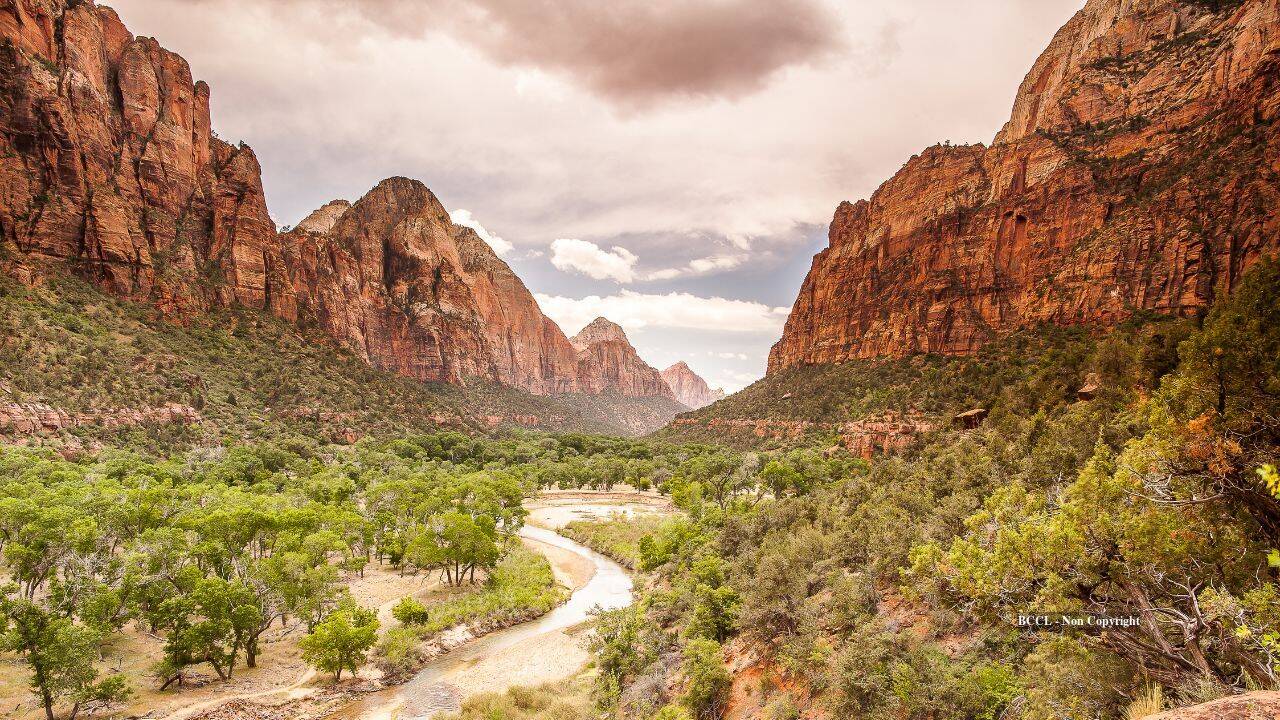
The conservation industrial complex popped champagne over a freshly signed easement blocking development on 145 acres along State Route 9 outside Zion National Park. The narrative went down smooth. Wealthy philanthropist backs a local nonprofit, the Zion Forever Project, to lock up private land so no motels, condos, or greasy spoons ever mar the pristine red-rock entryway. Everyone claps.
Except the cheering ignores the economic reality of what happens when you freeze housing and commercial supply right at the border of a national park choking on its own popularity.
I have watched gateway communities across the American West choke out their working classes under the banner of ecological purity. Locking up private land under conservation easements sounds noble on a fundraising flyer, but it weaponizes scarcity. When you permanently remove 145 acres from the pool of potential development next to a park drawing millions of annual visitors, you do not stop tourism. You simply make the remaining beds more expensive.
The False Promise of Pristine Isolation
The lazy consensus in environmental journalism treats any blocked bulldozer as an unmitigated win for the planet. The Zion Forever Project framed this 145-acre parcel deal as a shield for watersheds, wildlife corridors, and scenic vistas.
Let us look at the mechanics.
The landowner keeps the title. They walk away with tax benefits, preserved open views from their back porch, and an asset artificially insulated from competitive market pressure. Meanwhile, the public-facing justification leans heavily on stopping commercial sprawl like hotels and restaurants.
Where do those displaced visitors sleep? They do not vanish. They push further out into neighboring towns, driving up long-term rental costs for local park employees, or they pile into inefficient, bumper-to-bumper vehicles for longer daily commutes from distant municipalities. Restricting lodging supply directly adjacent to park gates directly fuels the regional housing crisis. You cannot artificially constrain land use while demand skyrockets and expect housing affordability to survive.
Who Pays for the View?
Conservation easements on private land are frequently subsidized by the public through foregone tax revenues and donor dollars steered away from direct infrastructure management.
Imagine a scenario where a municipality uses those exact same philanthropic millions to invest in high-density, low-impact vertical housing and efficient transit hubs a few miles back from the park entrance. That approach would actually lower vehicle miles traveled, reduce the park's internal shuttle strain, and house the workforce keeping the park running.
Instead, we get open space preserved for the visual pleasure of drivers whizzing by at 55 miles per hour, while the people flipping burgers at the local diner drive an hour each way because every square inch of proximate land is locked in amber.
The press release notes that visitors will eventually access an expanded trail network weaving through this newly protected private acreage. Notice the pattern. The land transitions from potential working-class economic utility or mixed-use management into an exclusive recreational playground tied directly to the upcoming multi-million-dollar Zion National Park Discovery Center.
The Economics of Exclusion
Real conservation requires brutal honesty about displacement. When you lock up gateway land under the guise of keeping things "serene and pristine," you practice aesthetic elitism. You decide that the visual experience of a tourist driving a rental car trumps the economic mobility of the valley.
Gateway communities need density, smart growth, and integrated zoning. They need compact commercial nodes that keep traffic localized rather than sprawling across three counties. By cheering for perpetual non-development on private parcels right at the throat of the park, conservationists are accelerating the transformation of southern Utah into a playground exclusively accessible to high-net-worth travelers and retired landowners.
Stop confusing scenic preservation with social or ecological sustainability. One protects the view. The other protects the ecosystem of the people who actually live there.
Stop locking the gates. Build smarter, or watch the communities that anchor our national parks turn into ghost towns for the rich.


