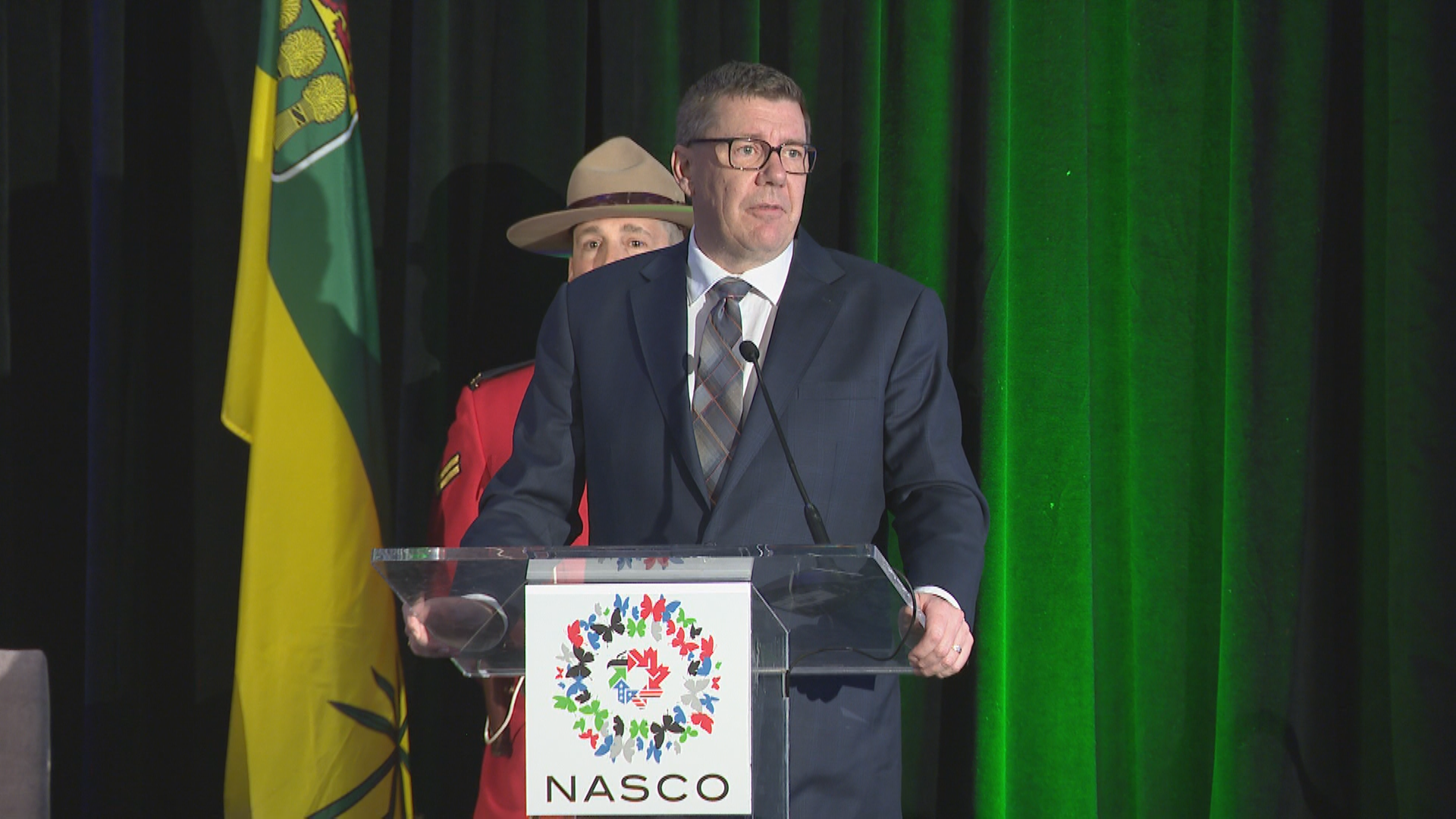
Premier Scott Moe is back from another international junket, shaking hands and talking about "global food security" while the local taxpayer picks up the tab for a Five-star hotel suite. The official press releases read like a victory lap. They tell you that Saskatchewan is "feeding the world" and "fueling the planet." They want you to believe that without these high-level diplomatic missions, the province’s economy would simply dry up and blow away like a topsoil dust storm in 1935.
It is a fairy tale.
The lazy consensus among the political class is that these trade missions are essential for opening markets. The reality is far more cynical. These trips are expensive photo ops designed to give the illusion of activity while the private sector—the people actually growing the grain and mining the potash—does the heavy lifting despite the government, not because of it.
The Myth of the Political Door Opener
The core argument from the Premier’s office is that political leaders need to "grease the wheels" of international commerce. This assumes that a buyer in Dubai or a manufacturing giant in Tokyo makes purchasing decisions based on a thirty-minute meeting with a provincial politician.
They don't.
Commodity markets are cold, calculating, and driven by two things: price and reliability. If Saskatchewan’s potash is priced right and the rail lines aren't jammed, the world buys it. If the logistics are a mess, no amount of "bilateral cooperation" talk from a Premier is going to save the deal. I’ve sat in rooms where these "agreements" are signed. They are non-binding Memofandums of Understanding (MOUs) that carry about as much legal weight as a napkin doodle. They exist to provide a backdrop for a social media post, nothing more.
If we want to actually help exporters, we should stop subsidizing the Premier’s travel and start fixing the structural rot at home.
The Logistics Crisis No One Wants to Discuss
While the government celebrates "trade wins" abroad, the actual infrastructure required to move product is crumbling or captured by monopolies. You can sign all the trade deals you want with India or Morocco, but if the Port of Vancouver is backed up or the Class I railways decide to prioritize different shipments, that grain stays in the bin.
The "nuance" the mainstream media misses is that international trade isn't a marketing problem; it’s a plumbing problem.
- The Bottleneck: Canadian rail capacity is essentially a duopoly.
- The Cost: Demurrage fees and shipping delays eat the margins of small to mid-sized producers.
- The Distraction: Every dollar spent on a trade office in London or Dubai is a dollar not spent on diversifying inland port infrastructure or streamlining local regulatory hurdles.
Focusing on international "relationships" is a convenient way to ignore the fact that the government has very little control over the global macro-environment. They are taking credit for the weather. When potash prices peaked due to geopolitical instability in Eastern Europe, the Saskatchewan government took a victory lap. They didn't cause the price spike, but they certainly used it to justify their "global engagement" strategy.
Thought Experiment: The Invisible Trade Mission
Imagine a scenario where the Saskatchewan government closed every single one of its international trade offices tomorrow. What happens?
Do the Chinese stop needing fertilizer? Does the world stop eating lentils? Of course not. The trade would continue because the demand is baked into the global population curve. The difference is that the private sector—companies like Nutrien, Cameco, and thousands of independent farmers—would continue to negotiate their own contracts based on market reality, without the performative interference of a provincial delegation.
The downside to this contrarian approach? You lose the "soft power" and the early-warning intelligence that some trade offices might provide. But let’s be honest: in the age of instant global communication, we don't need a physical office in a high-rent district to know what the market trends are in Southeast Asia.
The E-E-A-T of Economic Reality
I have watched provinces waste millions on these missions for decades. I've seen the itineraries. They are packed with "site visits" and "networking dinners" that rarely result in a signed contract that wasn't already in the works for months.
True expertise in trade doesn't come from a blazer with a provincial pin; it comes from understanding the Basis Point—the difference between the local cash price and the futures price. It comes from understanding Incoterms and the brutal reality of ocean freight.
The government’s role should be limited to three things:
- Competitive Taxation: Make it cheaper to produce here than anywhere else.
- Regulatory Sanity: Stop moving the goalposts on environmental and labor standards.
- Infrastructure: Ensure the road, rail, and port pipe is wide enough to handle the flow.
Anything beyond that is just PR.
Stop Asking if the Trip was "Successful"
The media always asks: "What did you achieve on this trip?"
The Premier always answers: "We strengthened ties and showcased our sustainable products."
This is the wrong question and a useless answer. Instead, we should be asking: "What specific trade barrier was removed that wouldn't have been removed by a trade lawyer or a corporate VP?"
The answer is almost always "None."
Most "trade barriers" are federal jurisdiction anyway. A provincial Premier has zero standing to negotiate tariffs or national trade treaties. They are essentially acting as highly-paid lobbyists for industries that already have their own, much more effective lobbyists.
The Hidden Cost of the "Golden Era" Rhetoric
The danger of this constant trade-mission theater is that it breeds complacency. By telling the public that we are "winning" because the Premier is in Paris, we ignore the stagnation of our value-added sectors. We remain a "hewers of wood and drawers of water" economy, shipping raw materials out and buying finished goods back.
If the government were serious about trade, they wouldn't be selling raw grain; they’d be incentivizing the massive expansion of domestic processing so we ship flour and pasta instead. But that requires hard policy work and long-term investment, which doesn't look as good on the evening news as a handshake in front of the Eiffel Tower.
The Actionable Pivot
If you are a business owner in Saskatchewan, stop waiting for a government trade mission to save you.
- Audit your supply chain: Your biggest threat isn't a lack of "ties" with Korea; it's your reliance on a single rail line or a specific port terminal.
- Ignore the MOUs: Look at the actual capital expenditures (CapEx) of the big players. That tells you where the market is going, not a government press release.
- Demand Infrastructure over Imagery: Next time a politician asks for your vote because of their "international record," ask them why the secondary highways in your region are restricted for half the year.
The world doesn't buy from Saskatchewan because they like our politicians. They buy from us because they are hungry and we have what they need. The moment we forget that—and start believing our own hype—is the moment we become irrelevant.
Stop celebrating the flight. Start worrying about the freight.