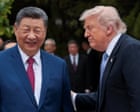
The headlines hit the feed with predictable whiplash. OpenAI chief Sam Altman apparently signaled support for Donald Trump and Xi Jinping sharing a Nobel Peace Prize, and the tech commentariat instantly lost its collective mind. Twitter lit up with performative outrage. Pundits parsed it through the lens of Silicon Valley bootlicking, transactional opportunism, or a bizarre pivot toward geopolitical satire.
They are missing the plot entirely.
This is not about sycophancy. It is not about ideological alignment, nor is it a cheeky PR stunt designed to generate free impressions. It is a cold, calculated signal regarding who actually holds the steering wheel of planetary compute and how power operates in an era where sovereign states are slowly realizing they are junior partners to artificial intelligence laboratories.
I have spent the last decade watching founders try to lobby Washington and Beijing while simultaneously pretending sovereign borders still apply to data centers consuming gigawatts of power. When you control the foundational weights of intelligence models that dictate military logistics, economic forecasting, and cyber warfare, your diplomatic calculus changes. Altman is not endorsing men. He is endorsing a brutal, pragmatic reality: global stability in the intelligence age depends entirely on an uneasy, transactional cold war truce between the two men who command the only two remaining economic superpowers capable of scaling frontier models.
Let us dismantle the lazy consensus floating around the media ecosystem right now.
The Naive Fantasy of Neutral Tech
The prevailing narrative treats artificial intelligence as a benign utility, like plumbing or cloud storage, managed by benevolent nerds who just want to help humanity write better SQL queries. This is a fairy tale told by people who have never stood inside a high-density data center or looked at a defense department procurement contract.
When OpenAI, Anthropic, or Google cross the threshold of artificial general intelligence, they cease to be software companies. They become sovereign infrastructure.
Critics shrieked at the notion that Trump and Xi—two figures synonymous with trade wars, territorial brinkmanship, and authoritarian consolidation—could be linked to peace. But think about the alternative. What happens if Washington and Beijing fail to reach a technological détente? You do not get a utopian open-source democracy. You get a fractured, balkanized nuclear standoff fought with autonomous drone swarms and algorithmic cyber weapons that operate at machine speed.
Peace, in the twenty-first century, will not be maintained by diplomats drafting toothless treaties in Geneva. It will be enforced by a mutual recognition that compute is an extinction-level deterrent. If Altman is nodding toward a joint Nobel for Trump and Xi, he is pointing out that peace requires the two alpha predators of the geopolitical jungle to acknowledge that mutual destruction now includes cognitive obsolescence.
The Transactional Architecture of Sovereign AI
To understand why this strange alliance makes sense, we have to look past the political theatre and examine the raw mechanics of infrastructure.
Silicon is the new uranium. Energy is the new oil.
Right now, the United States and China are locked in a brutal arms race over semiconductor fabrication, lithography equipment, and power generation grids. Every major lab in Silicon Valley is acutely aware that their multi-billion-dollar clusters depend on supply chains that cross the Taiwan Strait and mineral deposits mined across the Global South.
If Washington attempts a permanent, absolute embargo on Chinese technological development, or if Beijing decides to nationalize critical supply lines, the entire global economy flatlines. There is no middle ground. The chip shortage of 2021 was a stubbed toe compared to what happens when advanced AI training runs halt because rare earth metals stop moving.
Altman understands something that political scientists stuck in the twentieth century refuse to accept: technology companies are now de facto foreign policy actors. When you manage models that can optimize supply chains or design novel pathogens, you are a participant in statecraft whether you want to be or not. Backing political leaders who possess the raw executive authority to sign treaties—or spark total war—is an acknowledgment that corporate diplomacy requires dealing with the warlords who actually command the armies.
The Hypocrisy of the Tech Moralists
The loudest critics of Altman’s pragmatic stance are usually the same people who happily cash venture capital checks funded by sovereign wealth funds with abysmal human rights records, or who use devices assembled in factories with grueling labor conditions.
Silicon Valley loves to wrap its profit margins in the flag of moral purity. We hear endless panels on safety, alignment, and ethical frameworks, usually hosted by people who have never had to make a hard trade-off in a room where national security officials are holding classified briefings.
Let us be brutally honest about how power works.
If you want to prevent a catastrophic conflict between superpowers, moral posturing on social media is worse than useless; it is dangerous. It obscures the hard bargain that must be struck. A stable future requires the United States and China to establish guardrails on autonomous weapons, data sharing, and compute thresholds. That negotiation will not be led by saints. It will be hammered out by pragmatic, ruthless operators who care about leverage, deterrence, and self-preservation.
If honoring two deeply flawed political figures with a peace prize is the cultural currency required to keep them talking, negotiating, and avoiding a hot war over Taiwan or semiconductor supremacy, then take the gold medal and mint two copies.
The Real Threat Is Not Authoritarianism, It Is Irrelevance
The fear driving the anti-Altman hysteria is that Big Tech is cozying up to authoritarianism. That anxiety, while understandable, misdiagnoses the vector of risk.
The danger is not that Altman is turning into an autocrat. The danger is that sovereign governments will attempt to crush or shackle frontier labs before a stable governance framework can be built. When politicians realize that intelligence infrastructure is slipping out of their direct control, their instinct is regulation, nationalization, and panic.
By publicly elevating the leaders of the two superpowers, tech executives are engaging in a subtle form of jujitsu. They are flattering the egos of men who measure their legacy in history books, tying their political survival to the successful management of the technological revolution.
Trump wants to be remembered as the dealmaker who secured American dominance. Xi wants to be remembered as the architect of national rejuvenation. If you can convince them that allowing frontier AI to develop safely under a framework of great power stability is their ultimate legacy, you have successfully aligned their vanity with human survival.
Call it cynical. Call it Machiavellian.
It is just the price of admission for reality.
Stop pretending we live in a world where idealism wins wars or stops algorithms. We live in a world where two men hold the keys to the kingdom, and the smartest people in tech are trying to make sure they do not burn it down out of spite.
Figure out how to navigate the board as it is laid out, or get out of the way.