Information control has always been a cornerstone of statecraft in Moscow, but when a public health crisis intersects with secret research facilities, history has a habit of repeating itself in deeply unsettling ways.
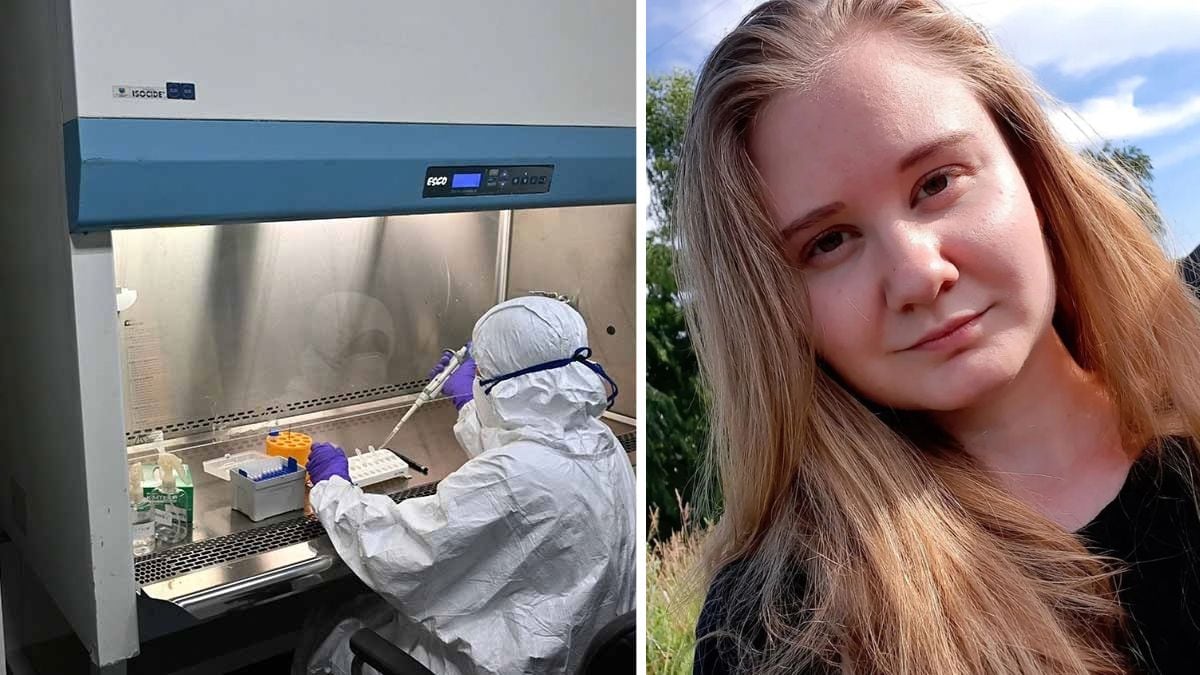
When a young researcher at the Irkutsk Anti-Plague Research Institute in Siberia died under mysterious circumstances involving severe pulmonary complications, international alarm bells started ringing instantly. Close to two hundred people were placed under quarantine, and local reports began pointing toward a potential pneumonic plague exposure. Predictably, official state channels downplayed the severity, insisting it was just routine pneumonia.
Intelligence veterans and foreign policy experts aren't buying the official narrative. Former intelligence officers who spent decades analyzing Kremlin communications point out that the playbook hasn't changed since the Soviet era. When systems punish the truth, secrecy becomes the default setting.
The Soviet Blueprint of Secrecy
To understand why a single lab death in Siberia triggers global panic, you have to look backward. The structural reflex to hide biological and nuclear accidents is baked into the institutional DNA of the Russian state.
Consider the 1979 anthrax spore leak in Sverdlovsk. When a faulty ventilation filter at a secret military facility allowed deadly spores to drift over the city, killing dozens, Soviet authorities didn't warn the public. Instead, they blamed contaminated meat at local markets. The KGB scrubbed medical records and bullied local doctors into silence. It took the collapse of the Soviet Union for the actual truth to surface.
Then came Chernobyl in 1986. When reactor number four blew, spewing radioactive clouds across Europe, Moscow stayed silent for thirty-six hours. They let citizens march in radioactive rain during May Day parades rather than admit a systemic failure.
That deep-seated institutional paranoia remains active today. When leaders operate on the assumption that every foreign government is trying to deceive them, transparency is viewed as an existential vulnerability rather than a public duty.
Why This Case Is Different
Siberia's anti-plague institutes are not ordinary universities. They are high-security facilities dedicated to studying some of the most lethal pathogens known to humanity. When a researcher passes away following sudden respiratory failure and hundreds of close contacts are abruptly siloed off from the public, asking questions is not paranoia—it's basic risk management.
Global health watchdogs, including the World Health Organization, have pressed Moscow for concrete data to clear up the ambiguity. Yet the information vacuum creates fertile ground for speculation, ranging from unverified lab-leak theories to panic-driven digital rumors.
The irony shouldn't be lost on anyone. For years, state media apparatuses have weaponized conspiracy theories about biological labs elsewhere, pushing elaborate narratives about foreign bioweapons research. Now, facing an internal incident at home, the state finds its own credibility compromised by its historical habit of obfuscation.
What Happens Behind Closed Doors
Dictatorial governance models share a fatal flaw: bottom-up fear. Local officials, lab directors, and medical personnel face enormous professional and personal risks if they report bad news upward. Telling superiors that a dangerous pathogen may have breached containment can cost a scientist their career or freedom.
Why Russia Hiding a Plague Outbreak Feels Way Too Familiar
Information control in authoritarian states has a body count.
news
When former intelligence officers start drawing parallels to the worst nuclear disaster in human history, you stop scrolling and pay attention.
That is exactly what happened when reports surfaced highlighting how Russian authorities allegedly managed a plague outbreak. Former Central Intelligence Agency officials didn't mince words. They compared the information blackout directly to the catastrophic mishandling of Chernobyl in 1986.
Information control isn't just about saving face for a regime. It is a biological hazard. When a government prioritizes secrecy over containment, a localized health threat quickly scales into an international nightmare. You cannot negotiate with a pathogen while you are busy scrubbing state media reports.
The Playbook of State Silence
We have seen this movie before. The first line of defense for a paranoid bureaucracy isn't medicine. It is denial.
Historically, authoritarian management of public health crises follows a predictable, deadly arc. First, local doctors notice unusual symptoms and flag them up the chain of command. Second, regional officials panic about their career prospects and bury the data. Third, state media brands any outside concern as Western propaganda. By the time the truth leaks out through whistleblowers or satellite imagery, the virus or bacteria has already lapped the response team.
Think back to the early weeks of global health panics over the last few decades. The pattern is identical. Officials threaten medical staff with treason charges or arbitrary arrests just for talking about rising hospital admissions. They swap out scientific metrics for political talking points.
When you treat a biological outbreak as a public relations problem, you guarantee a catastrophe. Pathogens don't care about state borders, censorship laws, or political ideology. They just multiply.
Why a Plague Outbreak Changes the Math
We tend to group all infectious diseases together, but a plague outbreak carries a uniquely terrifying historical weight. It triggers deep psychological panic because of our collective memory.
When modern states try to suppress information regarding high-consequence pathogens like Yersinia pestis, they commit a massive strategic blunder. Unlike slower-moving health crises, a plague moves fast. It demands absolute transparency, rapid contact tracing, and immediate international medical sharing.
By locking down information instead of locking down the actual vector points, the Russian state created a blind spot for neighboring countries and global health organizations. If local hospitals are overwhelmed and medical waste disposal spikes in restricted military zones, intelligence agencies notice. But noticing isn't the same as treating. By the time outside observers piece together the puzzle from open-source intelligence and fragmented local chatter, the window for effortless containment has slammed shut.
Transparency is the ultimate public health tool. Without it, doctors are flying blind. They treat symptoms without knowing the strain, the vector, or the antibiotic resistance profile.
The Intelligence Perspective
Intelligence analysts look at health outbreaks differently than epidemiologists do. While a doctor worries about viral loads and transmission vectors, an intelligence officer looks at command-and-control structures. They look for anomalies in communication blackouts, unusual troop movements near bio-facilities, and sudden purges of local health officials.
When a former CIA official looks at Moscow's handling of a potential plague event and yells about Chernobyl, they are pointing out a systemic architectural flaw. The system is designed to protect the center of power at all costs, even if those costs are measured in body bags.
In a functioning democracy, a localized outbreak triggers a messy, public, decentralized scramble. It is annoying, loud, and sometimes chaotic, but it works because data flows freely. In a highly centralized autocracy, the vertical hierarchy chokes the data flow. Subordinates tell superiors what they want to hear. Superiors tell the public what sounds reassuring.
What This Means for Global Biosecurity
We live in a hyper-connected world where a regional cover-up becomes a global crisis in hours. Commercial flights connect remote Siberian hubs to major international transit points every single day.
Relying on authoritarian regimes to self-report dangerous biological events is a failed strategy. Global health architecture needs robust, independent verification methods that do not rely on local ministries of health telling the truth. We need independent satellite telemetry, wastewater surveillance at transit hubs, and protected encrypted channels for frontline whistleblowers.
The next time a state-controlled media apparatus insists everything is under control while hospitals fill up and borders tighten, remember the lessons of Chernobyl. The panic isn't caused by the people talking about the plague. The panic is caused by the people trying to hide it.